
















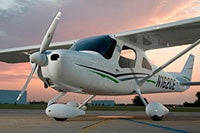
 As was the case with the first Skycatcher prototype crash, an unrecoverable spin led to the loss of the second and last flying Cessna 162 last week. The second airplane had been fitted with a larger tail as a result of the first crash. And, as in the first crash, there were complications with the parachute recovery system that led to the aircraft being wrecked, according to preliminary report issued Tuesday by the NTSB. The report says the test pilot set up an unspecified “planned test condition” and the aircraft entered a “rapid and disorienting spin” from which the pilot couldn’t recover. Unlike the previous accident, in which the ballistic parachute recovery system failed to deploy, the chute opened this time but caused further problems in the rest of the accident sequence.
According to the report, the parachute had been modified to be jettisoned by the pilot in flight. After the aircraft stabilized, the pilot tried several times to release the chute but couldn’t. Possibly concerned that his actions would unpredictably cause the chute to release, he considered taking his chances with his personal parachute but had run out of altitude and elected to ride the airplane down instead of bailing out. Initially, damage to the airplane was limited mostly to the landing gear but because the pilot was unable to release the parachute on the ground, the wind caught it and the airplane was dragged more than half a mile until it caught in a fence. It ended up inverted and heavily damaged.

