















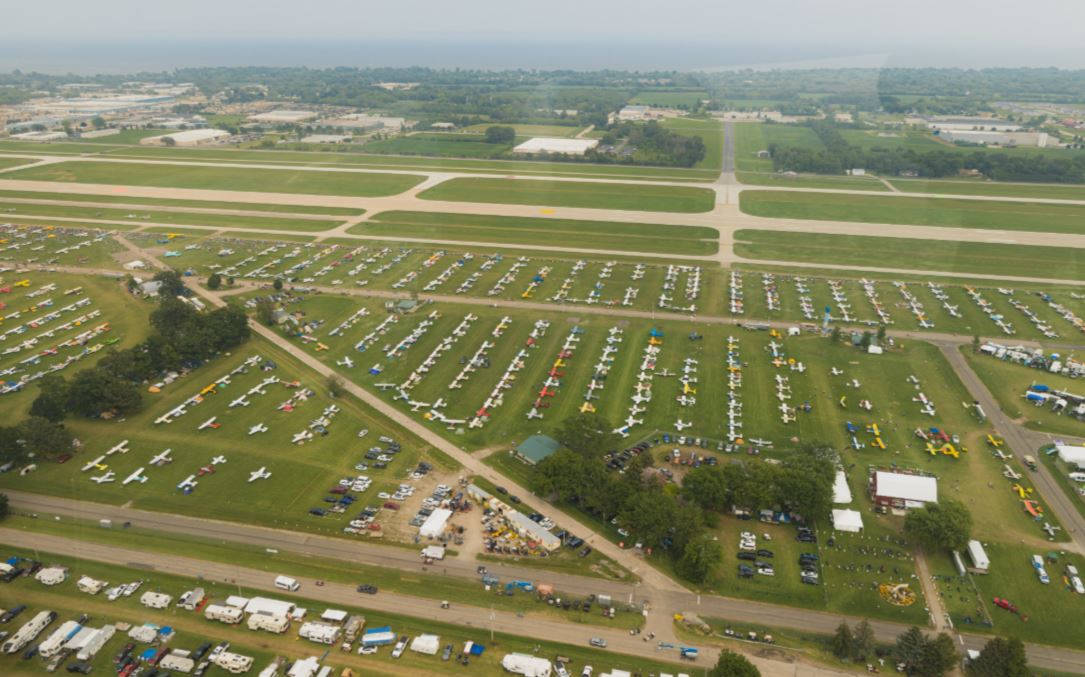

The Federal Aviation Administration (FAA) released the EAA AirVenture Oshkosh 2026 Notice, outlining updated procedures for pilots flying to Wittman Regional Airport for the Experimental Aircraft Association’s annual fly-in, scheduled for July 20–26 in Oshkosh, Wisconsin.
The document—commonly referred to as the Oshkosh NOTAM—is available for download through EAA’s official AirVenture flying-in page and is considered required reading for all pilots operating in and out of the event airspace. The NOTAM is in effect from noon CDT on July 16 through noon CDT on July 27 and governs arrivals, departures, and operations at nearby airports impacted by AirVenture traffic.
Pilots can access the full 2026 NOTAM and related flying information through the EAA’s dedicated AirVenture “Flying to Oshkosh” page, which includes procedures, planning guidance, and updates for inbound traffic.
The 2026 procedures once again include ATC-assignable transition points designed to help manage congestion during peak arrival periods. Western transition fixes at Endeavor Bridge, Puckaway Lake, and Green Lake may be activated by air traffic control when traffic volumes warrant. When in use, they will be announced via arrival ATIS and are intended to improve sequencing and reduce holding delays for inbound aircraft.
After transitioning into the arrival flow, pilots are expected to follow the standard Fisk arrival procedure, comply with ATC instructions, and maintain spacing behind preceding aircraft. The arrival system remains one of the most tightly controlled and high-density VFR procedures in general aviation, safely sequencing thousands of aircraft into Oshkosh during the event.
“The most essential information for any pilot flying to Oshkosh involves reading and thoroughly understanding the 2026 AirVenture Notice to ensure safe operations on arrival and departure,” said Sean Elliott, EAA vice president of advocacy and safety. He urged pilots to prepare thoroughly in advance and consider arrival training resources before flying in.
To support pilot preparation, the Experimental Aircraft Association will host a webinar on June 17 at 7 p.m. CDT covering flying procedures for AirVenture 2026 and updates included in this year’s notice.

0 replies