















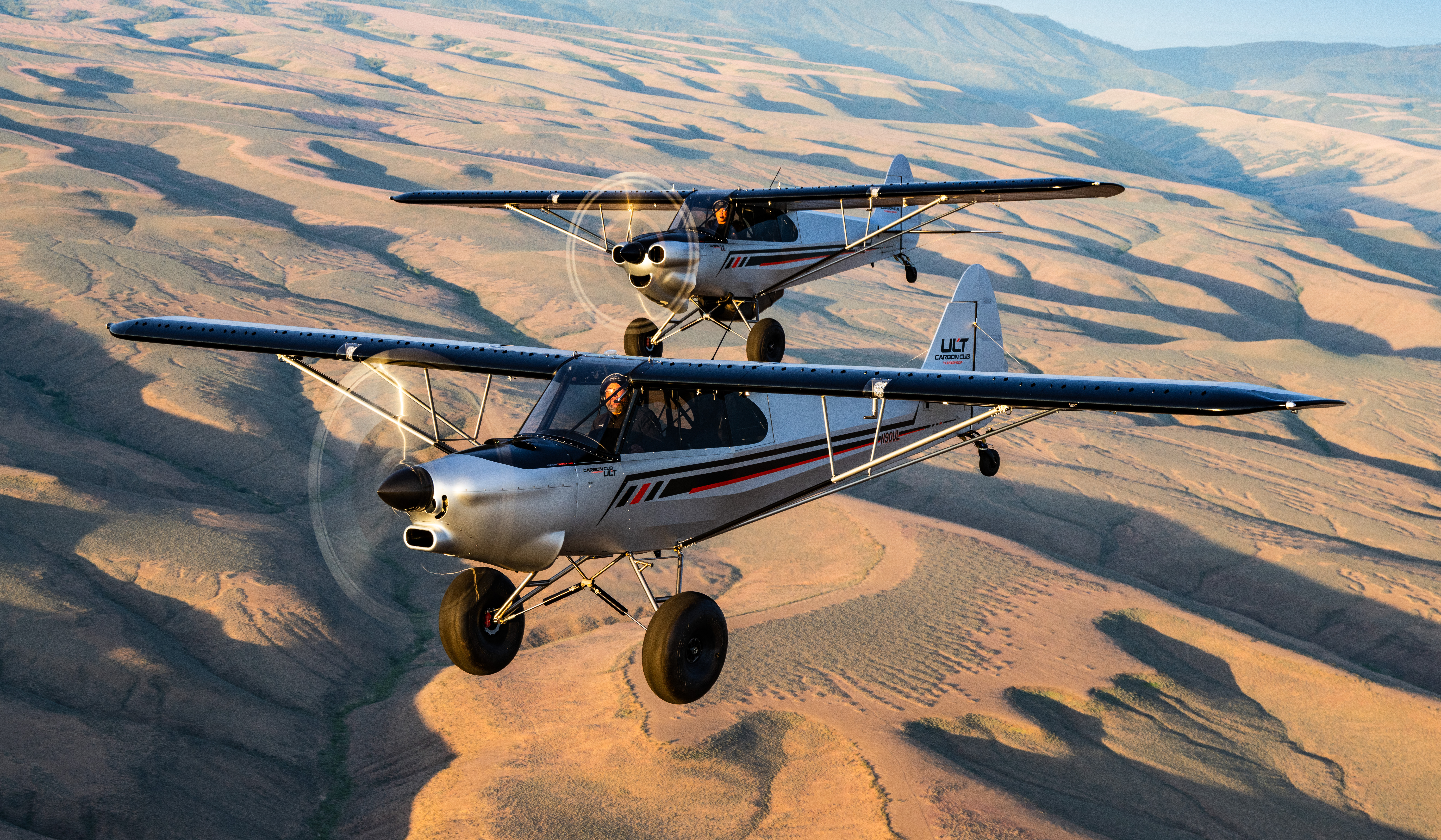

CubCrafters introduced the Carbon Cub ULT on Tuesday, a turbine-powered version of its Carbon Cub UL platform that the company says is aimed at backcountry flying under the FAA’s MOSAIC rules. According to CubCrafters, the aircraft has been undergoing flight testing near the company’s headquarters in Yakima, Washington, and will make its public debut this summer at EAA AirVenture in Oshkosh, Wisconsin.
Turbine Power
The Carbon Cub ULT uses TurboTech’s TP-R90 regenerative turbine engine, a FADEC-controlled turboprop. The system manages fuel flow, ignition, engine temperatures and propeller operation, reducing the number of engine-management steps normally associated with piston and turbine aircraft. Also included are Garmin avionics, a dedicated turbine engine display and single-lever power control.
“The first thing pilots notice is how effortless the airplane feels,” Brad Damm, vice president of CubCrafters, said. “You push and hold the start button for a few seconds and the aircraft is ready to go fly. The FADEC handles the details, the turbine is incredibly smooth and quiet, and the aircraft retains the lightweight performance and responsiveness that pilots love about the Carbon Cub. It’s one of those airplanes that makes you look for excuses to go flying.”
MOSAIC Plans
CubCrafters says the ULT name follows the Carbon Cub UL program, adding the “T” to identify the turbine version. The company said the aircraft uses the latest Carbon Cub UL airframe updates, including aerodynamic refinements and composite construction, while retaining the short-field capability associated with the Carbon Cub line.
CubCrafters also said the ULT is the first U.S.-manufactured turboprop aircraft eligible to be flown by sport pilots under the FAA’s new MOSAIC regulations. The aircraft is also TurboTech’s first production aircraft partnership in the United States.
The company is accepting deposits for ULT production positions and said initial customer deliveries are expected in 2027. CubCrafters plans to display the aircraft at AirVenture 2026 at booths 272-274.


Back country flying requires immediate throttle response in order to adapt to challenging terrain, unexpected winds, airstrip condition and wildlife obstacles. Cubcrafters’ turbine engine isn’t supposed to have the typical spool up delay that most turbine engines have due to the advanced FADEC. I’m interested to hear how the FADEC achieves this.
In the 1970s I was on a technical panel of CASI in Edmonton with a guy from Allison who was promoting use of turbine engines on small airplanes. (Dick Newman IIRC.)
He wasn’t having success because most operators did not have access to capital.
Of course eventually a few engineering/maintenance facilities installed turbine engines in Beaver and Otter airplanes, often PT6s but there were other engine models including Polish engines.
(Sadly, the company in ON that used Polish engines chose a model that was not mature in reliability, switched to a proven model but momentum was lost.)
Operators who were perennially profitable invested in turbine conversions, Harbour Air of the Vancouver BC area and Kenmore Air of the Seattle WA area. (Eventually Kenmore Air absorbed Harbour Air of Seattle, Kenmore is at the north end of Lake Washington.)
The single Otter especially benefitted from more power, having a large cabin. One use that Harbour Air and Kenmore Air make of turbine single Otters is taking groups fishing on lakes in BC, could to have power on relatively small lakes.
Of course the Twin Otter with its PT6s became legendary in the Arctic and Antarctic, started easily in cold, reliable, … Still in production by what now incorporates Viking Air of YYJ, new name deHavilland Canada which is assembling in the Calgary AB region including Twin Otters and ‘Canadairs’ as it calls the CL series of water bombers. (Using that term because the airplane is renowned in Europe as that. And now in Los Angeles.)
I forget the engine that a couple in WA state used for their Beaver, didn’t sell many. There’s a story of the lady arriving at Bellingham airport from Alaska, gets out of airplane with baby in arms to visit Customs, to the sound of air hissing from a tire.
There were engine coimbinations such as Soloy and PT6Twinpack.
Maule stopped producing the M-7-420 with a Rolls Royce/Allison turbine engine due to high fuel burn, high cost and low demand. Hopefully, Cubcrafters has figured out how to overcome those obstacles. The ability to burn jet fuel rather than AVGAS is a major advantage for international sales.
Argh, the Seattle company was Harbour Air - American spellling.
There is some weight reduction from turbine engines.
For retrofit in a single-engine airplane CofG is maintained by extented engine mounts, t a presumably slight weight penalty
On a twin, fuselage stretch forward my be needed to get cockpit ahead f propeller location, the Basler conversion used by Ken Borek air does that.
Note range penalty: Basler BT-67 - Wikipedia.
More power and better reliability are the usual motivators.