














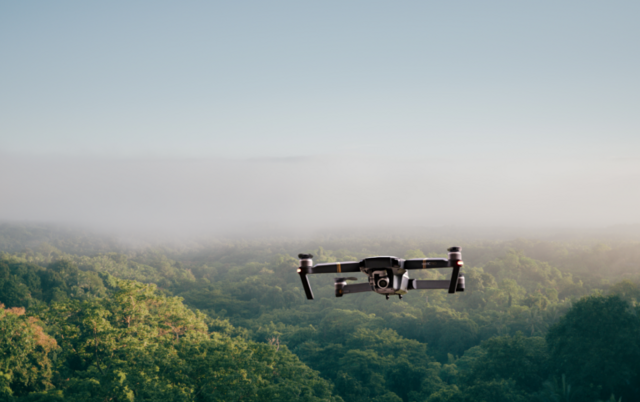

Embry-Riddle Aeronautical University (ERAU) researchers have identified growing drone activity across the U.S., spotlighting airports, heliports and residential areas as key hot spots for potential midair collisions with manned aircraft.
The nationwide study, conducted for the Federal Aviation Administration, analyzed drone flight patterns using Remote Identification (Remote ID) data collected from sensors positioned around the country.
Focusing on small uncrewed aircraft systems (UAS)—drones under 55 pounds—the study revealed that a significant number of flights exceed the FAA’s 400-foot altitude limit, which is meant to separate drone traffic from manned aircraft. Of 6,037 flights with recorded altitude data, 573 operated between 400 and 500 feet, while 781 climbed above 500 feet. Researchers estimated that drones shared airspace typically reserved for manned aircraft roughly 10% of the total observed flying time.
Flights above 500 feet were most often linked to recreational users rather than commercial operators, based on drone types. The study did not differentiate between flights conducted under FAA waivers or certificates.
Drone activity near airports emerged as a particular concern—especially around heliports. After reviewing 43 aerodromes of various sizes, researchers found small UAS operating as close as 0.5 nautical miles (about 3,000 feet) from heliports. These facilities often aren’t marked on aeronautical charts, making them harder for drone pilots to avoid.
To address that gap, the report recommends adding heliport locations to aeronautical charts to increase operator awareness and reduce the risk of close encounters.
According to the researchers, the FAA’s Remote ID requirement—active since 2023—is proving valuable for tracking drone activity hot spots and informing safety guidelines.

I’ve been dismayed for a decade over the aviation world’s enthusiastic embrace of drones, with woefully inadequate oversight, regulation, or disciplinary procedures. More and more pilots report close encounters with drones clearly flying where they shouldn’t, and more than a few have reported collisions and damage to aircraft, though I am not aware - yet - of any fatalities.
There should be mandatory, heavy penalties for flying an unauthorized drone within five miles of any airport. It should be much easier for law enforcement at any level, and even appropriately credentialed security guards, to remotely disable any drone perceived to be a threat, or even a persistent nuisance or threat to privacy. The technology exists, bureaucratic and legal obstructionism are the only impediments.
Militarized drones are a whole different threat, and their use in today’s conflicts around the world is sobering. But at least in what should be our safe, civilian world, this out-of-control threat needs to be contained.
It is legal to fly higher than 400 feet if you are operating near a taller object. For example, tower inspections. There is no requirement for a “professional drone” when doing work like this. Your 4K Mavic 4 works just fine for tower inspections.
Not identifying or segregating out operations that have waivers or exemptions seems like a deliberate effort to make the problem seem worse than it may actually be (or laziness on the part of the study authors).