















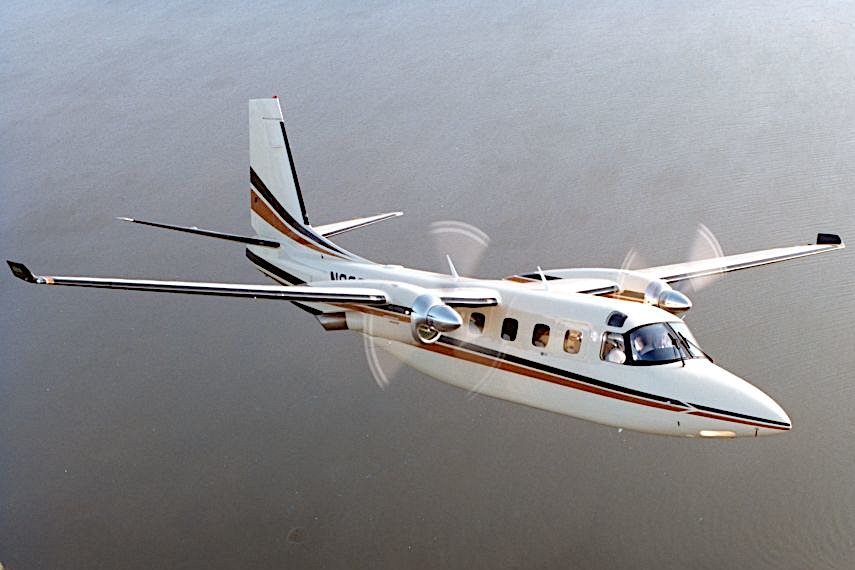

The FAA has issued an Airworthiness Concern Sheet (ACS) following up on a 1995 Airworthiness Directive involving fuselage cracks in “numerous models” of Twin Commander aircraft. AD 95-13-02 required inspections of the empennage at the Fuselage Section (FS) 409 frame and adjacent stabilizer exterior skin to “prevent failure” of the airframe.
The FAA had issued a Service Letter 345 to install inspection panels that provide limited visual access to the critical areas (including FS 386 and FS 429). But “other areas require more extensive work to gain access,” according to the FAA statement.
The new ACS is intended to not only inform owners, operators and maintenance organizations of the risk, but also to elicit feedback on potential further safety concerns.


The GA community will have to come to grips with the fact that the mostly 40-year-plus airframes of “large twins” cannot be maintained in flying condition forever, especially when pressurised.
I love that airplane. One of the best designs ever. It can be fixed, reinforced as required.
So all the older Boeing and other jets still flying aren’t airworthy…including the aging Air Force One? How about the B-52? Is it also un-airwothy? Think about that
3 things kill aircraft, hours, cycles, and corrosion. All large aircraft go through a depot level inspection every 4-5 years. Most smaller aircraft do not. Using the B-52 or KC-135 for example, during their depot inspection the aircraft are didassembled, inspected (useing many forms of NDI), and repaired or reworked. Manytimes there are life improvements such as replacing skins and frames that have damage or over age, General Aviation aircraft do not have that level of inspection unless it is about an AD. Also General Aviation doesn’t have the life cycle data that large aircraft have. You can have one airframe that just did long cross countries, and another of the same type get beat to death doing pipeline patrol or fire observer. Most light aircraft are over built, but don’t get the same scrutiny that large aircraft do. To be honest, most of us couldn’t afford it. As a note, the B-52 and Air Force One are basicly “low miles, one owner”. As an example the KC-135 I crewed had only 23000 hours when I retired in 2005.
What beverly1joan said. There is no comparison in the design standards, manufacturing, and ownership economics of predominantly privately owned “large” civilian GA twins which were manufactured and sold at a fraction of the cost with Boeing airliners and B52s.
Ok, Beech 18’s, B-24’s, 402’s, 414’s, 421’s…Barons, the list goes on. If the aircraft is maintained properly, and flown in a professional manner, they can, and do, remain airworthy until meeting the designed hour limit on the airframe…if there is one.
The FAA does not issue service letters. Service letters are issued by the manufacturer or type certificate holder.
The operative word in your response being the word “if”. “If” goes directly to the issue of affordability on a private basis.
The B-24 was a venerated WW2 and 1960 Cold War era military aircraft which someone bravely converted into an admiral attempt at a corporate transport. But in kindness to you we’ll pretend here that you did not include the B-24 in this “list which goes on and on”.
If is used in commercial aviation as well, and it must have the same degree of accountability. Enter the 737 Max. Boeing KNEW there were problems, yet in the spirit of profit over quality and safety, they swept it under the rug…oh yeah, door plugs, maintenance issue at major airlines, and last but not least, the military operating aircraft in a busy corridor in ‘stealth’ mode without ADS-B. Accountability? You’re correct! With it you have decades old aircraft capable of flying safely, without it, you have newer aircraft coming apart and possibly killing people.