
















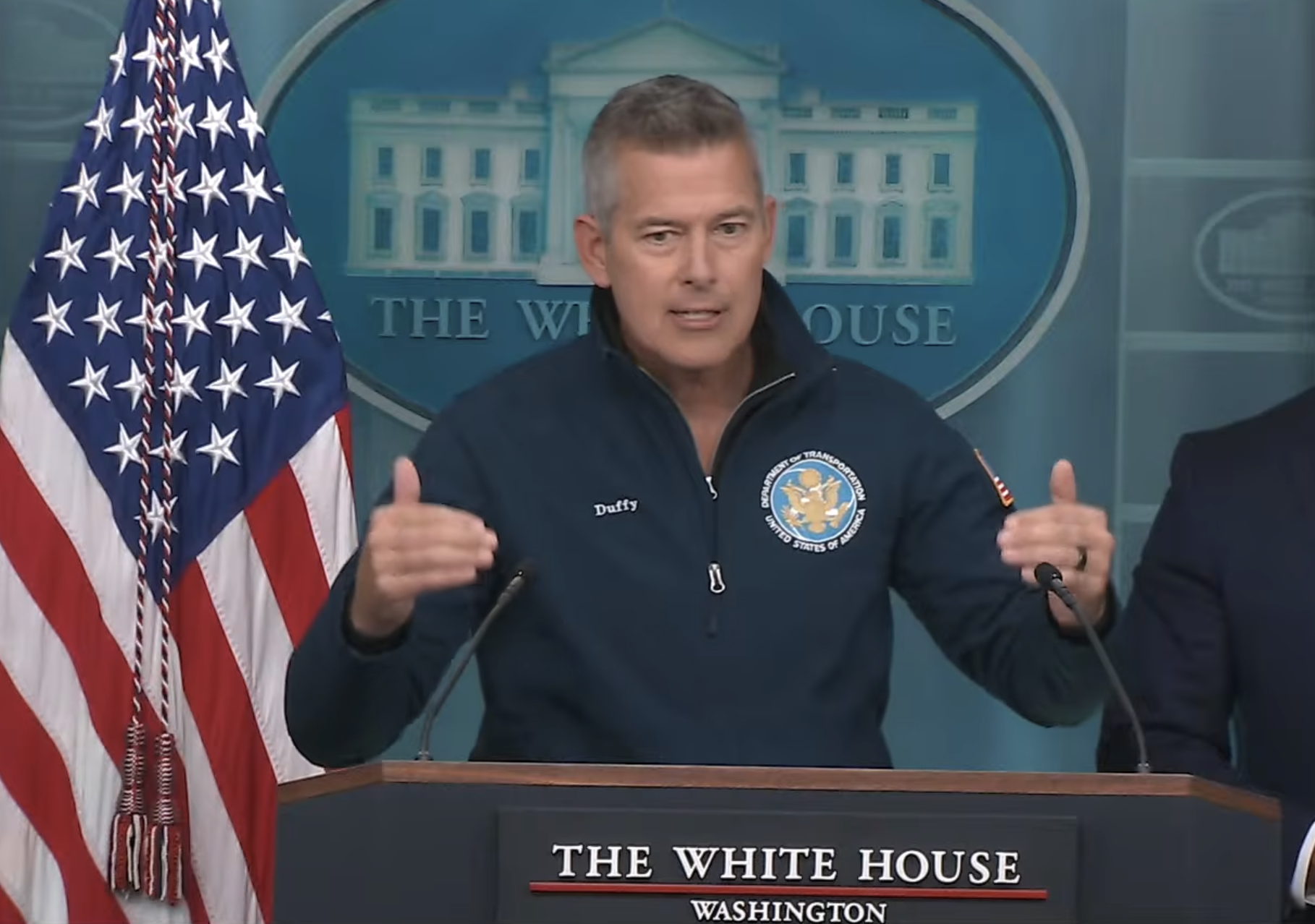

The FAA lifted its nationwide ground stop at 8:15 p.m. EST Friday, allowing departures to resume after a telecommunications outage disrupted air traffic operations across the country. The restriction began around 3:54 p.m. and lasted more than four hours. Transportation Secretary Sean Duffy said communications functionality had been restored at air traffic control facilities, although airlines would need additional time to return to normal operations.
Aging Equipment Blamed for Outage
“We started to have inconsistency in the data from the radars and our communication with airplanes, and we have procedures for this,” Duffy said during a Friday evening briefing.
Duffy said more than 3,500 aircraft were airborne when the ground stop was issued. The FAA did not experience a complete loss of radar or communications, and exceptions were made for medical flights, critical cargo shipments and law enforcement operations.
He also said larger general aviation charter flights carrying 60 to 100 passengers would receive priority over smaller aircraft as operations resumed following the ground stop. According to Duffy, recently installed digital equipment continued operating during the outage, while older analog systems experienced problems.
Officials Address AI Concerns
Officials also addressed questions about whether artificial intelligence played a role in the disruption. Homeland Security Secretary Markwayne Mullin said investigators had found no evidence of a cyberattack or AI-related interference, although the investigation remained ongoing.
Duffy was also asked whether the FAA’s recently introduced SMART AI system could have contributed to the outage. He explained that the AI-powered system provides recommendations to air traffic controllers but is not connected to the agency’s STARS or ERAM systems.
“There’s no possible way SMART would have impacted what happened,” Duffy said.
Officials attributed the disruption to overloaded switches and routers in the FAA’s aging telecommunications infrastructure. Homeland Security Secretary Markwayne Mullin said investigators had found no evidence of a cyberattack, although the underlying cause remained under investigation.
Flight Disruptions Continue
The shutdown resulted in widespread flight disruptions. At least 827 flights had been diverted by 7:05 p.m. EST, according to Cirium data cited by the Associated Press. Airlines warned that delays and cancellations would continue as aircraft and crews were repositioned.
Friday’s restriction was the first nationwide ground stop since the FAA’s January 2023 NOTAM outage.


0 replies