















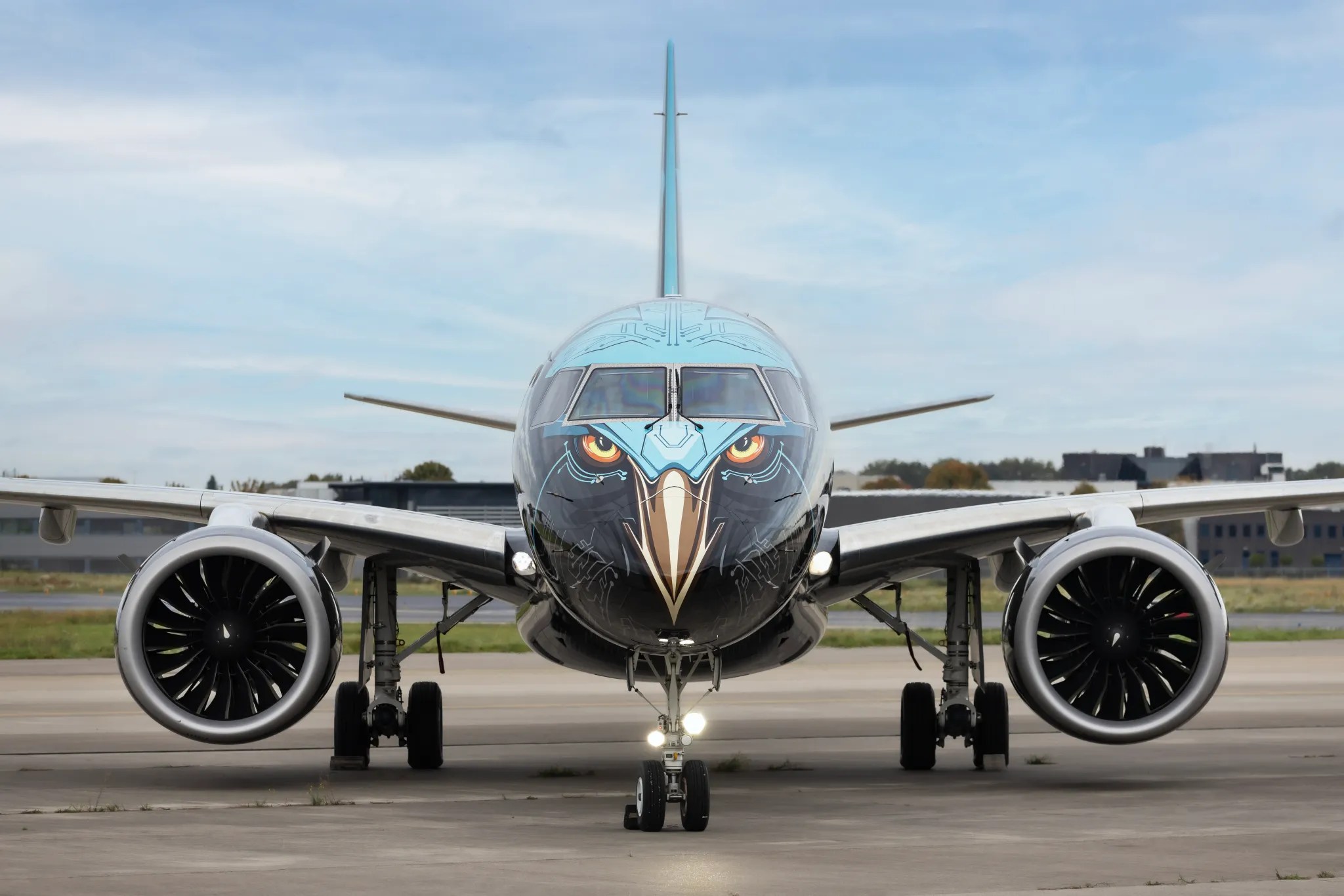

The FAA has proposed new certification requirements for Embraer’s Enhanced Takeoff System (E2TS). The proposal, published Tuesday in the Federal Register, establishes additional safety standards for the technology on Embraer’s E195-E2 commercial jet.
According to the FAA, E2TS engages when pilots advance the thrust levers to the takeoff/go-around position. The system automatically manages pitch and bank angle during rotation and initial climb, while pilots remain responsible for maintaining runway alignment during the ground roll. Embraer has developed the technology to improve takeoff performance, potentially allowing aircraft to carry additional payload or fuel when operating from shorter runways. The system has been undergoing certification testing in Brazil.
New Performance Requirements
“The current regulations do not take into consideration that the takeoff rotation is being performed by an automatic system, not a human being,” the FAA stated in its proposal.
Existing certification requirements account for variations in pilot technique, while the proposed conditions would evaluate deviations caused by sensor accuracy and system tolerances.
Under the proposed requirements, takeoff distance following an engine failure could not exceed the corresponding published distance in the aircraft flight manual after accounting for expected system variations. With both engines operating, the automated system could not increase the applicable takeoff distance by more than 1%. The FAA would also require Embraer to demonstrate that E2TS does not produce unsafe flight characteristics, including during out-of-trim conditions.
Certification Process
Embraer initially applied to amend the aircraft’s type certificate to incorporate E2TS in December 2021. The FAA said existing transport-category regulations do not adequately address the system’s automated takeoff functions, making additional certification conditions necessary.
The agency is accepting public comments for 30 days following publication. The proposed conditions would establish certification standards for the technology but would not themselves constitute approval for operational use.


Decades as a training Captain;
When pilots don’t fly, they lose the ability to fly.
Automation can be a blessing or a curse.
Sitting number one for departure at a certain international airport, watching approaching aircraft on gusty days.
The crosswind exceeding autoland limits means that pilots from an airline with an always autoland policy are doing their first manual landing since a simulator session.
Not pretty; scary!
We have had too many examples of “Pilots” who didn’t actually know how to fly, crashing perfectly flyable aircraft.
Engineers creating systems which have resulted in crashes. (MCAS among others)
Is there any real point in removing the pilot completely from the loop as normal.
Will that “Pilot” be able to cope when things are not “normal”?
History and experience advise extreme caution!
When WAYMO becomes FLYMO we won’t have to worry about humans screwing up.
Dumbing down airmanship.