















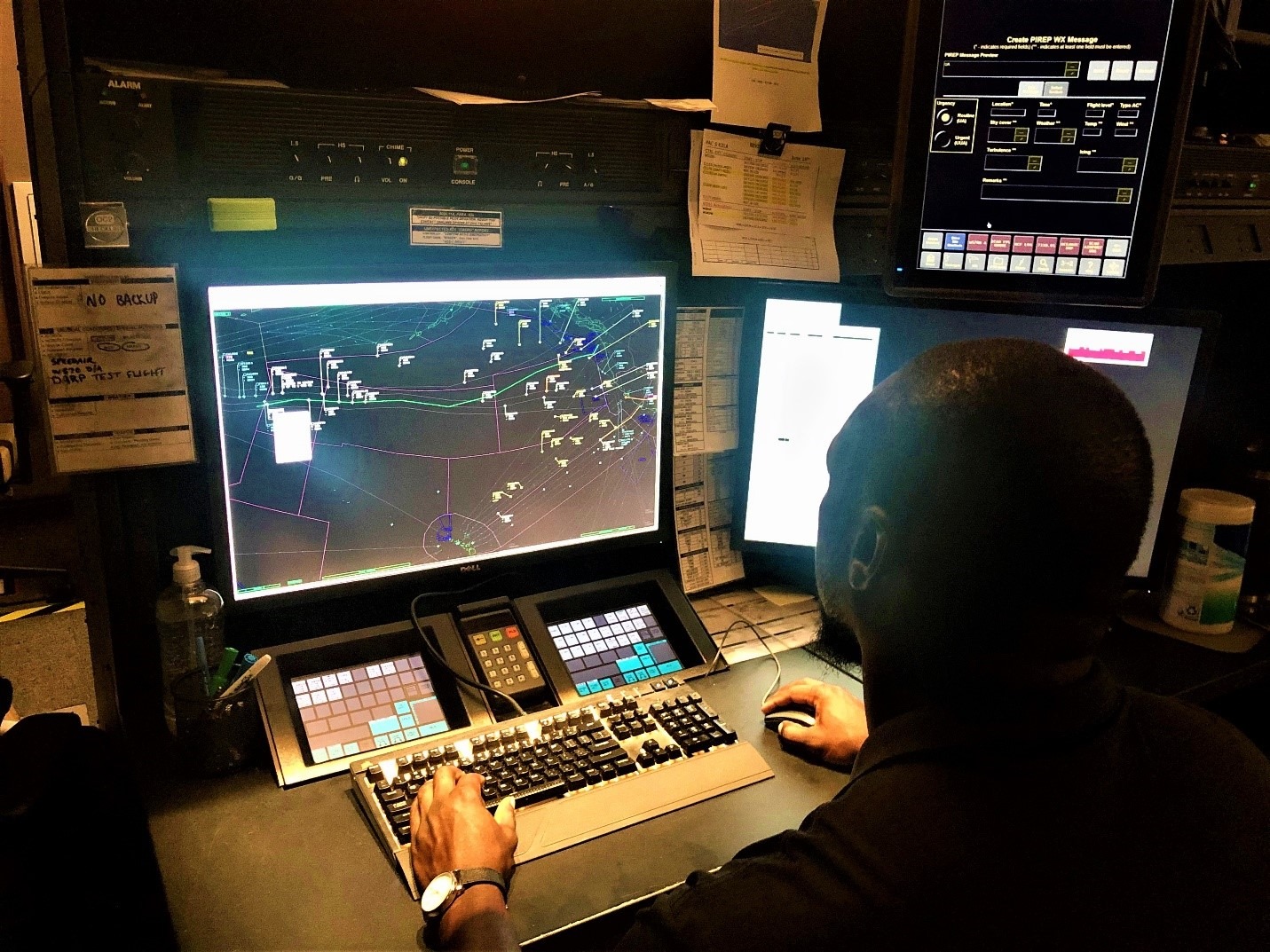

The Federal Aviation Administration has announced plans to replace its Traffic Flow Management System (TFMS) with a newer platform designed to help air traffic controllers better handle the complexities of the National Airspace System. The new Flow Management Data and Services (FMDS) program will be developed through a vendor challenge aimed at speeding the procurement process, the FAA said Wednesday. TFMS is currently used by controllers to plan and manage traffic-flow initiatives in response to weather, runway closures, staffing shortages and other operational constraints.
According to the FAA, FMDS will aim to serve as a scalable and sustainable replacement for TFMS, which has been in service for decades. The agency said the current system is facing performance and maintainability challenges.
“If we want the gold-standard of air traffic control, we need to give air traffic controllers the tools they need to succeed,” FAA Administrator Bryan Bedford said. “We look forward to partnering with a company who will help achieve our goals of safety and efficiency in the National Airspace System.”
The initiative was outlined in the 2024 FAA Reauthorization and is part of U.S. Transportation Secretary Sean P. Duffy’s plan to deliver what he said will be a state-of-the-art air traffic control system. The FAA expects to select a prime integrator for the FMDS program by the end of October, with more details available on SAM.gov.


The technology for a shift to pilot primary responsibility for separation by ADS-B IN/OUT has been available for a quarter century but blocked by the controllers’ union, TCAS bureaucracies and G/A concerns about taxation. Controllers should be a backup to the pilots and concentrate on traffic management. As such they would back up ALL flights (VFR+IFR) and probably require more rather than fewer controllers. Conflict between ATC and TCAS has already killed people and taxation awaits congressional action. The new system would relieve much of the stress of controlling and give the pilots earlier (2 minute) warning, allowing gentle resolution.