
















The Federal Aviation Administration (FAA) is threatening civil enforcement action against the Red Lake Nation after the tribe refused to return a Minnesota pilot’s aircraft more than seven months after an emergency landing on reservation land.
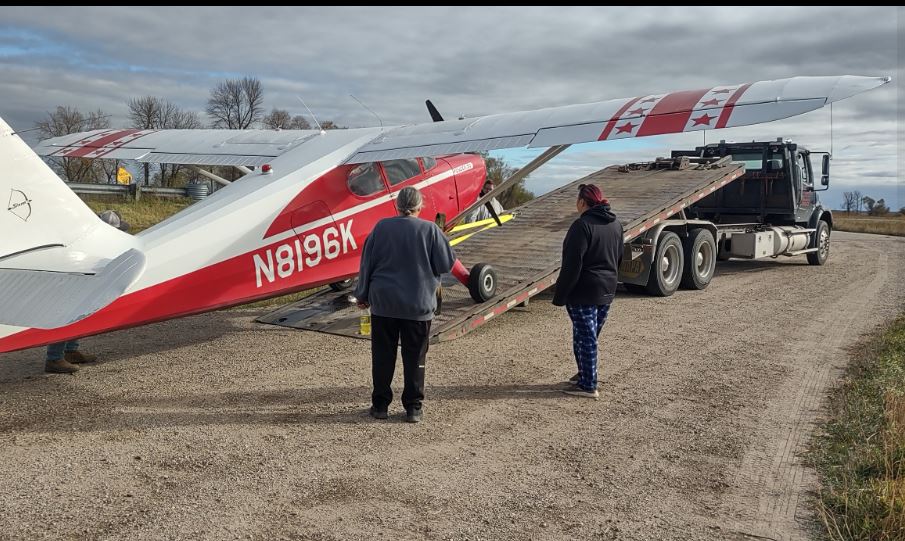
The case stems from an October 2025 incident involving pilot Darrin Smedsmo, who says he was forced to land his 1946 Stinson on Highway 89 after experiencing engine trouble while flying near Lower Red Lake. The landing occurred within reservation boundaries and reportedly caused no injuries or property damage.
Red Lake authorities later impounded the airplane, citing a 1978 tribal resolution prohibiting aircraft from operating below 20,000 feet over tribal land. The rule was originally enacted during opposition to low-level military training routes over the reservation.
According to reporting by the Minnesota Star Tribune, the FAA has now formally demanded the tribe release the aircraft and suspend legal proceedings against Smedsmo. The agency reportedly warned that failure to comply could result in the matter being referred to the United States Department of Justice for civil enforcement.
Under longstanding federal law, the FAA maintains authority over U.S. navigable airspace, including flight operations involving emergency procedures. Aviation advocates argue that authority applies regardless of tribal boundaries, particularly in cases involving emergency landings.
The Aircraft Owners and Pilots Association (AOPA) has publicly backed Smedsmo and pressed federal officials to intervene. Minnesota pilot groups have also rallied around the case, warning that the outcome could establish an important precedent for pilots operating near or over tribal land nationwide.
The tribe previously offered to release the airplane if Smedsmo paid towing costs and made a financial contribution to a tribal youth organization. He declined the proposal.
Red Lake officials have not publicly indicated how they plan to respond to the FAA’s latest warning, although tribal representatives told local media that efforts to resolve the dispute are continuing.


If I were the pilot/owner I think I would have paid the towing fee and the youth contribution to retrive my aircraft if the costs were reasonable. That would be better than having the aircraft tied up for 8 months. After all he would have had to pay to retrieve the aircraft and perhaps even storage fees even if not on tribal land. That just goes along with an off airport landing. Personally I would have been happy that there were no injuries and that there was no damage to the aircraft.
Wingmanxd:
Essentially you are accepting the Tribe’s illegal theft of an aircraft. Several tribes have, over the past several years, asserted illegal ownership of airspace. Tribes, as in this case, have committed illegal extortion by impounding of aircraft landed with legitimate emergencies. Forced “donations” amount to additional theft. Several aircraft are seriously damaged in the illegal impounds resulting in large costs to restore airworthy conditions. Your suggestion merely encourages tribes to continue these grossly illegal practices.
Perhaps the State of Minnesota should play the same game–threaten to cut off the “special status” of the tribe regarding any State funding–and making the tribe conform to all the laws that the tribe claims they are exempt from. The millions of dollars from the state and “special exemptions” from laws to the tribe that affect the rest of the residents far outweigh the cost of a nearly 80 year old airplane.
The tribe is well within their rights as a closed reservation to confiscate the airplane. Where was the outcry of unfairness when non natives were destroying thousands of dollars worth of nets and taking away the livelihood of many? Why not just pay the fine?
Clearly not, as this article states in plain English.
Just because a band of thieves wants something to be true, doesn’t make it true.
It was inevitable that someone would make this argument. What a brilliant idea no one’s ever thought of before: let’s inflict pain on the innocent civilians who are the members of this tribe. Gosh, that’s so original. I’m sure no one in U.S. history has ever done that to a tribe before.
Doing it because some dude had his airplane tied up for a few months would definitely be justified too.
As for tribes taking legal positions that are not supported by the law: again, gosh, I have never ever heard of a state or municipality ever doing that elsewhere in the United States. It just never happens. It’s only this tribe that has erred. So now, let us destroy it.
what law do you base this on? In the US airspace is regulated by the FAA and that includes emergency operation ie forced landing. NOW towing and storage can be assessed to clear an area for safety reasons but that is all. and again THAT Aircraft should not have been moved except for a minimum required until the NTSB allowed such as per all aircraft accident.
JUST because a non FFA entity passes an ordinance doe not mean it tis lawful. Huntington Beach tried this a decade ago and had it hat handed to them w an FAA action.