















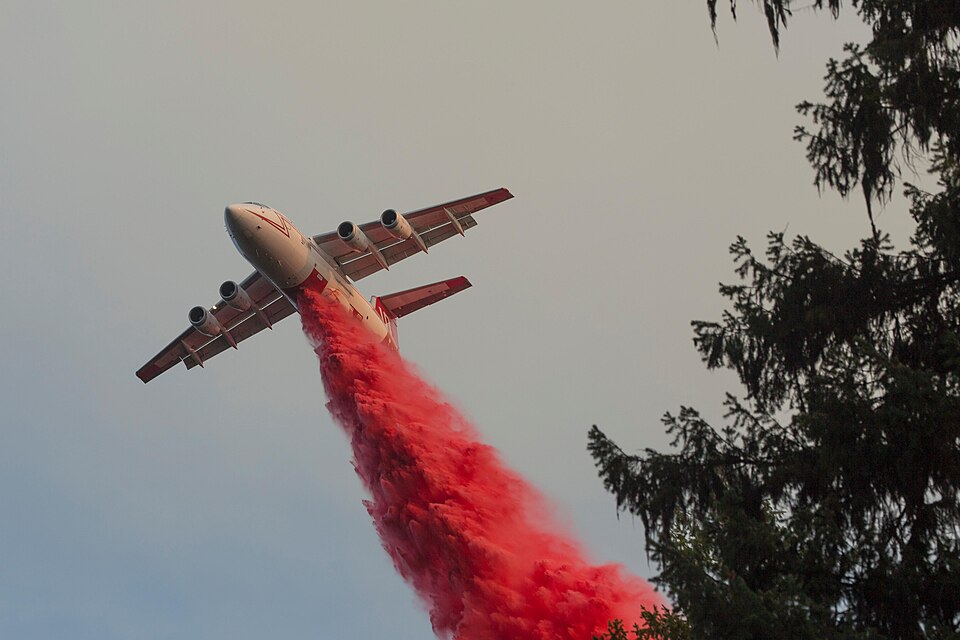

The National Transportation Safety Board is calling on the U.S. Forest Service to strengthen its corrosion testing requirements for aerial firefighting retardants after an investigation identified extensive damage to two large airtankers. In a report released this month, the NTSB determined that the agency’s existing qualification process failed to adequately evaluate the effects of a magnesium chloride-based retardant on aircraft structures.
Corrosion Found on Airtankers
The investigation involved a British Aerospace BAe-146 operated by Neptune Aviation Services and an MD-87 operated by Aero Air. Both aircraft participated in a 2023 evaluation of Fortress FR-200, a magnesium chloride-based retardant. The aircraft initially carried FR-200 exclusively before alternating between the product and a phosphate-based retardant.
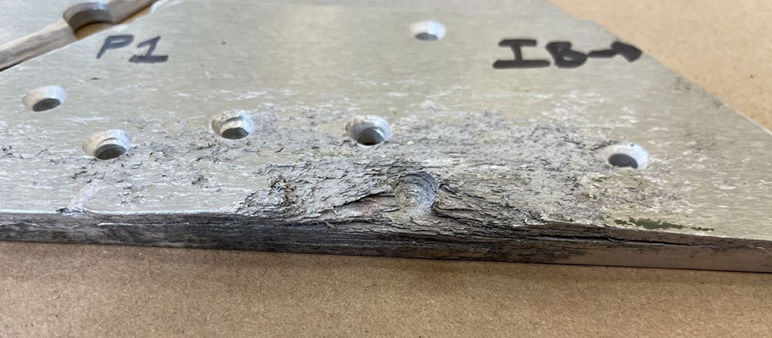
Subsequent inspections revealed corrosion affecting structural components, electrical connectors, control cables and engines. On the MD-87, investigators identified corrosion penetrating more than half the thickness of a wing spar doubler classified as primary structure. Aero Air also replaced more than 90 electrical connectors and several control cables.
“Corrosion reduces the thickness and strength of metallic aircraft structure and, if undetected or uncorrected, can result in structural failure,” the NTSB said in its report. “In this incident, corrosion developed during a single fire season and affected primary wing structure, internal fuselage structure, flight control cables, electrical connectors, tank components, and engines.”
Testing Requirements Under Review
According to investigators, the Forest Service’s existing qualification procedures relied primarily on testing individual metal samples and did not adequately account for the combinations of materials commonly found in aircraft construction. The evaluation that preceded FR-200’s full qualification also involved a single-engine airtanker equipped with a fiberglass retardant tank. Additional testing following the incident found that FR-200 could cause corrosion when used alone and that interaction with phosphate-based retardants could increase corrosion under certain conditions.
The Forest Service suspended the qualifications of FR-200 and a related product in May 2024 and removed both from its approved products list that December. The NTSB has issued two recommendations calling for expanded corrosion testing and revisions to the Forest Service’s qualification standards. The recommendations come amid separate discussions about the agency’s oversight of firefighting aircraft, including its annual inspections of contracted airtankers.


Oh!
Coulson Aviation is doing some development work on a better retardant, nothing to do with those companies nor aircraft models.
(Coulson operates B737s and C-130/Hercules.)
Shocking - that a soluble salt like Magnesium Chloride would cause corrosion! Better switch to Sodium Chloride, so corrosion won’t be mystery.
Check out waveGUARD’s Fire Terminator retardant!! It’s all natural, non toxic, 100% biodegradable, safe for plants and animals, clear, no clean up, doesn’t wash off, and has saved homes! What more could you ask for? How about no corrosion?! 800-980-4401
Sodium Chloride is soluble, so is Potassium Chloride.
CFR - Coulson Aviation
waveGUARD’s pitch is for buildings, infers vegetation too.
Structure protection is a big activity around wildfires, methods include:
In BC municipal fire departments have been sending a truck and crew, rotating crew every two weeks. They are of course trained and equipped to protect buildings, not forest fires.
I think your sarcasm was missed.Persoanlly I would grab program manager and ask what was your corrosion study based on ? wishful thinking. Chloride is nasty as heck needs to be protected from . the photo did not seem to show any chromate protective coating. My background is naval aviation and corrosion prevention is top priority. that green stuff is everywhere. someone did not do thier homework.