















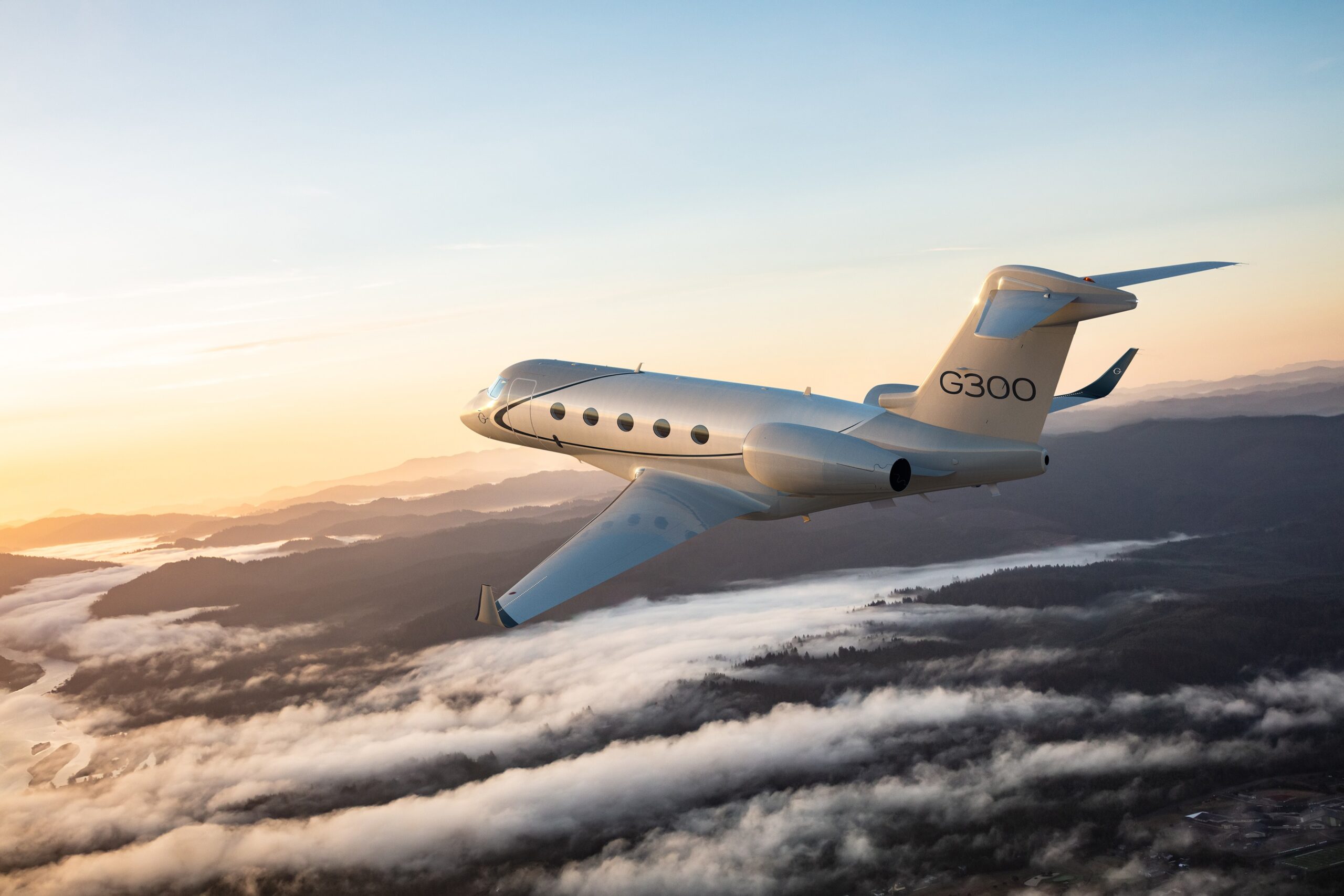

Gulfstream Aerospace unveiled its new Gulfstream G300 on Tuesday morning. The aircraft is a super-midsize jet that is intended to serve as the replacement for the company’s G280.
Gulfstream President Mark Burns presented a full-scale mock-up along with photos of the first aircraft in production during the company’s Discover the Difference customer event in Savannah, Georgia.
The G300 includes features like panoramic oval windows and debuts the company’s Harmony Flight Deck, an avionics suite Gulfstream says is aimed at enhancing pilot awareness and operational efficiency.
#NEWS: Imagine Gulfstream's legendary large cabin features in a nimble, super-midsize package. Meet the all-new G300 — the latest addition to our next-generation fleet.
— Gulfstream Aerospace (@GulfstreamAero) September 30, 2025
Learn more: https://t.co/CFeaSWkCeD pic.twitter.com/ub5RyEEG1X
According to Burns, the G300 builds on the success of the G280 while delivering new levels of technology and safety.
“We know how important the super-midsize cabin segment is to our customers, so building on the highly successful G280 program, the G300 will reenergize the category with its heightened technology and safety enhancements, alongside the legendary comfort and styling of a Gulfstream,” he said in a statement.
The company says its new jet has a range of 3,600 nautical miles at Mach 0.80 and can cruise at up to 45,000 feet. Gulfstream says the cabin is the longest in its class, accommodating up to 10 passengers with two living areas while providing 100 percent fresh air and a cabin altitude as low as 4,800 feet when cruising at 41,000 feet.
The Harmony Flight Deck incorporates six touch screens with Phase-of-Flight intelligence and a Synthetic Vision-Primary Flight Display. Pilots also gain Gulfstream’s Predictive Landing Performance System, which dynamically calculates runway stopping points in real time. Powered by Honeywell engines and a clean, swept wing, the G300 is optimized for fuel efficiency and short-field performance.
Gulfstream reported that the program has already logged 22,000 hours of testing at its Integration Test Facility and nearly 2,000 hours on the first aircraft, with two additional test models in production.


0 replies