















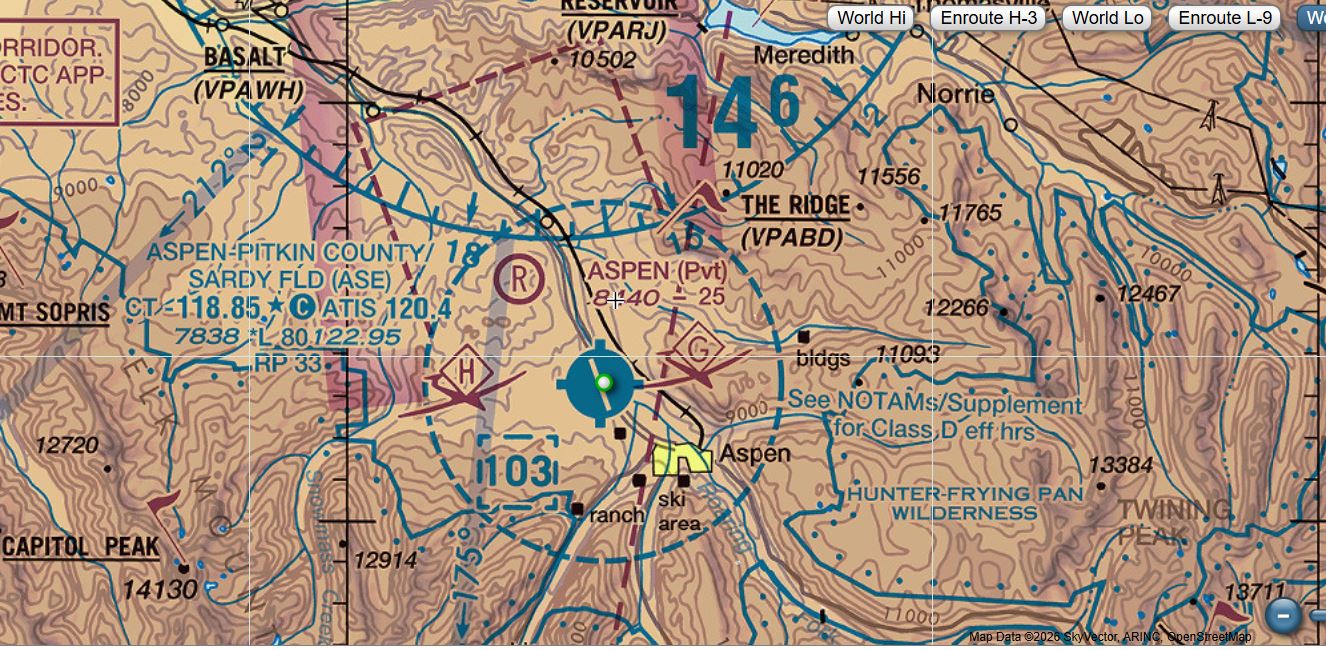

Honeywell has received FAA approval for a new RNAV (RNP) approach into Aspen/Pitkin County Airport (KASE) Runway 15, one of the country’s most challenging mountain airfields. The move promises safer, more predictable access to the high-altitude airport, especially in tricky weather.
The Aspen RNAV (RNP) N Rwy 15 procedure offers lower minimums and a stabilized descent compared with the “dive and drive” approaches pilots have traditionally used to navigate the canyon. Minima are set at 537 feet height above touchdown with 1¼‑mile visibility, with a 3.5° approach angle designed to reduce pilot workload in marginal conditions.
The procedure also includes a guided missed approach for safe terrain escape and is approved for night operations and Category D aircraft, expanding usability for business jets and well-equipped operators.
To fly the Aspen RNP approach, operators must ensure both aircraft and flight crew meet qualification standards: aircraft must support RNP 0.1 lines of minima, RNP < 1.0 in the missed approach, and RF (Radius to Fix) legs, and both pilots must complete FAA‑approved RNP training and review the appropriate briefing package.
U.S.‑registered operators will also need the applicable FAA Letters of Authorization/Operations Specifications, specifically LOA/Ops Spec C384 for RNP approaches and LOA/Ops Spec C081 for special instrument procedures. Foreign operators should consult their own regulatory authorities.
Honeywell says the approach is now available to customers with up-to-date navigation databases, and the company will continue to support operators through approval and briefing.

0 replies