















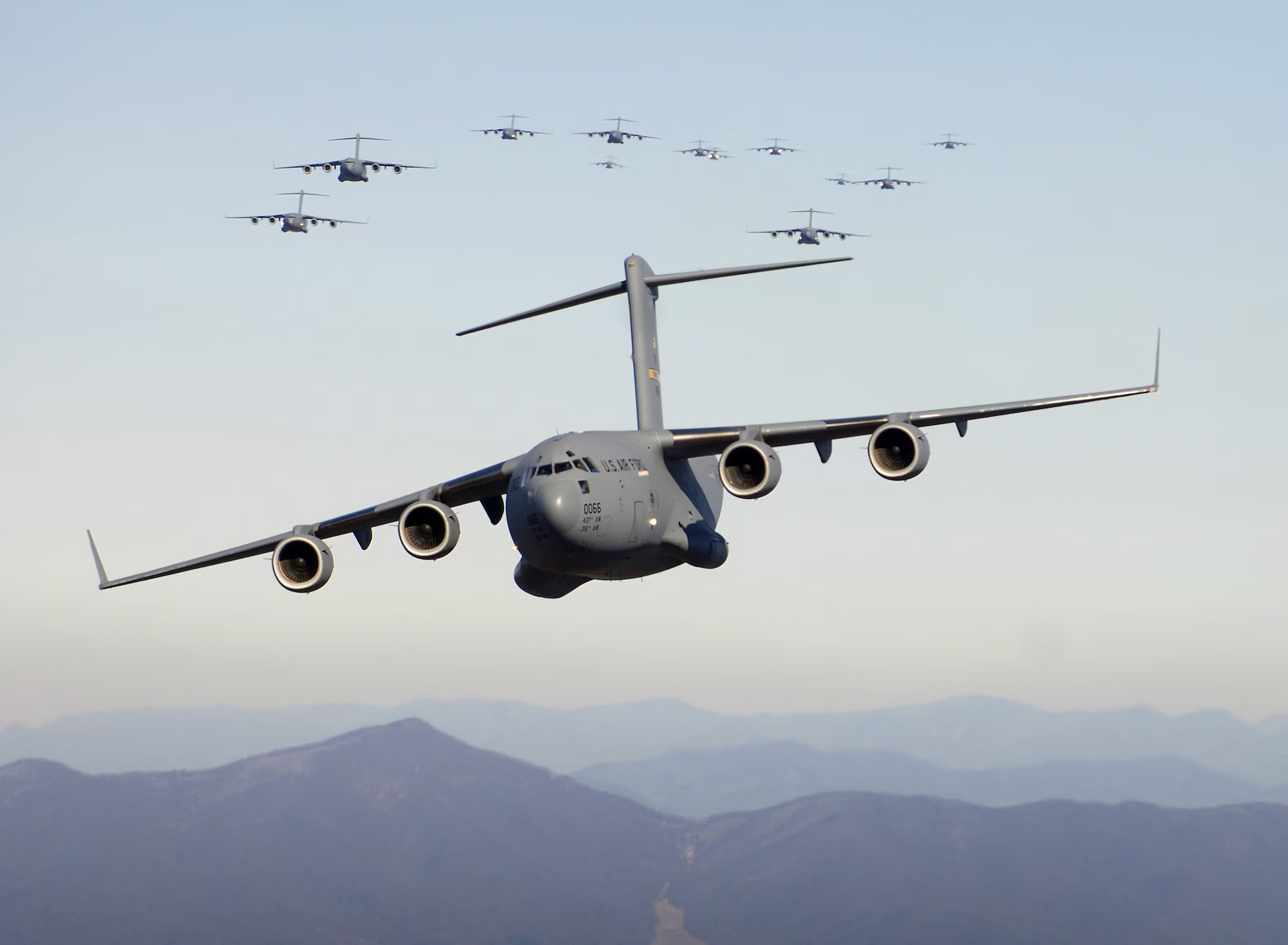

The U.S. Air Force is considering whether production of the Boeing C-17 Globemaster III could be restarted as the service evaluates its future airlift needs. Air Mobility Command chief Lt. Gen. Daniel Tulley said the option will be examined during an upcoming analysis of alternatives for next-generation airlift, according to National Defense.
Production Restart Studied
The review is expected to examine several possibilities for replacing or extending the service life of the C-17 and C-5 Galaxy fleets. Boeing closed the C-17 production line in 2015 after building 279 aircraft for the U.S. and international customers, although it has recently hinted at the possibility of resuming. No decision has been made to restart production, and Tulley said the cost and practicality of restoring the manufacturing operation remain open questions.
“Once we terminate an assembly line, can we ever bring it back?” Tulley told National Defense. “Does somebody store the machinery and the diesel and whatnot and bring that out? So, we’re asking that question.”
Air Force Weighs Alternatives
The Air Force currently operates 222 C-17s at 17 locations, according to the service’s airlift office. The aircraft remains the service’s primary strategic airlifter for moving troops and equipment. Current modernization efforts include replacement head-up displays, satellite communications and countermeasure upgrades.
The analysis could also consider a service-life extension or a new aircraft incorporating updated technology. Tulley told TWZ that the service is interested in future capabilities such as improved self-protection, greater network connectivity and potentially increased autonomy.


I work and live near Long Beach Airport where MCDD built all the C-17’s. All the tooling for that program was destroyed and scrapped in 2015. All they have are the plans. Could the line be restarted, no, but it could be rebuilt. The question is, is the cost worth it? The C17 was and is still is the best in class mil air transport.
Some military forces might purchase A400s.
C17 probably faster over long trips, and existing operators have much knowledge and maintenance capability.
On the smaller side is the Brazilian twin.
What is the driving justification to reopen a C-17 production line? Though an extremely capable lifter, the primary reason for its existence was to deliver M1A1 main battle tanks (today’s vulnerable drone targets) and other out-sized cargo to forward austere locations. Does our military need to expand this capability or has the DoD determined a new additional lift requirement? The battlefield environment is now more dynamic and changing than when the C-17 was conceived and developed. Any new airlifter must meet tomorrow’s anticipated military requirements and should benefit from improved design and construction techniques.