















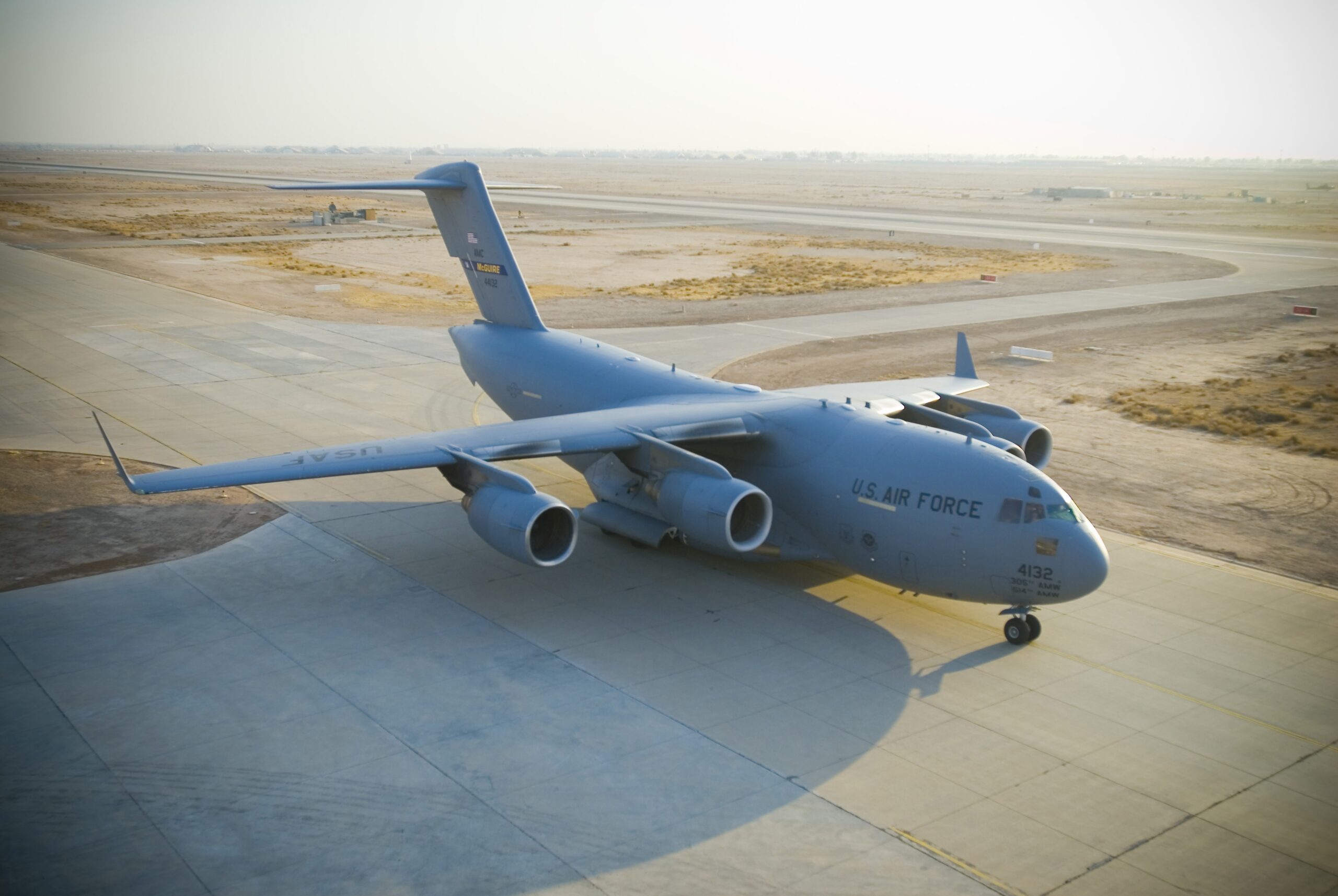

The U.S. Air Force Air Mobility Command (AMC) released its airlift recapitalization strategy last week, outlining a multi-decade plan to maintain uninterrupted inter-theater airlift while replacing the service’s two largest transport fleets. According to a memorandum signed by Brig. Gen. David Fazenbaker, the Next Generation Airlift (NGAL) program is set to succeed both the C-5M Super Galaxy and C-17A Globemaster III.
Even so, current projections require the C-5M—first delivered in its earliest form in 1970—to remain viable until 2045, placing the airframe at roughly 75 years old at retirement. The C-17A, which entered service in 1993, is planned to remain operational through 2075, making the newest examples more than 80 years old by the time they are expected to be fully phased out.
Boeing hinted earlier this year that it could be considering restarting production of the C-17. The last example left a Long Beach, California, factory a decade ago.
An accelerated Analysis of Alternatives (AoA) is planned for fiscal year 2027, with initial production of NGAL aircraft beginning as early as fiscal year 2038. Initial Operational Capability could follow in fiscal year 2041. The command said it intends to replace the C-5M fleet first on a one-for-one basis before moving to the C-17A inventory.
To reduce risks from potential delays, funding variability or technological challenges, AMC emphasized that both legacy fleets must remain fully capable until NGAL is fielded. This may require extending each platform’s Military Type Certificate and associated service life. The command noted that sustaining the C-5M and the wider C-17A fleet across active-duty, Guard and Reserve units will be essential as the mobility enterprise prepares for its next-generation airlifter. According to the memorandum, the approach is designed to ensure that global operations continue without interruption throughout one of the largest recapitalization efforts in Air Force airlift history.


I find it shocking how old our Air Force fleet is. From the B-52’s and KC-135’s to our frontline fighters, our stuff is really old.