
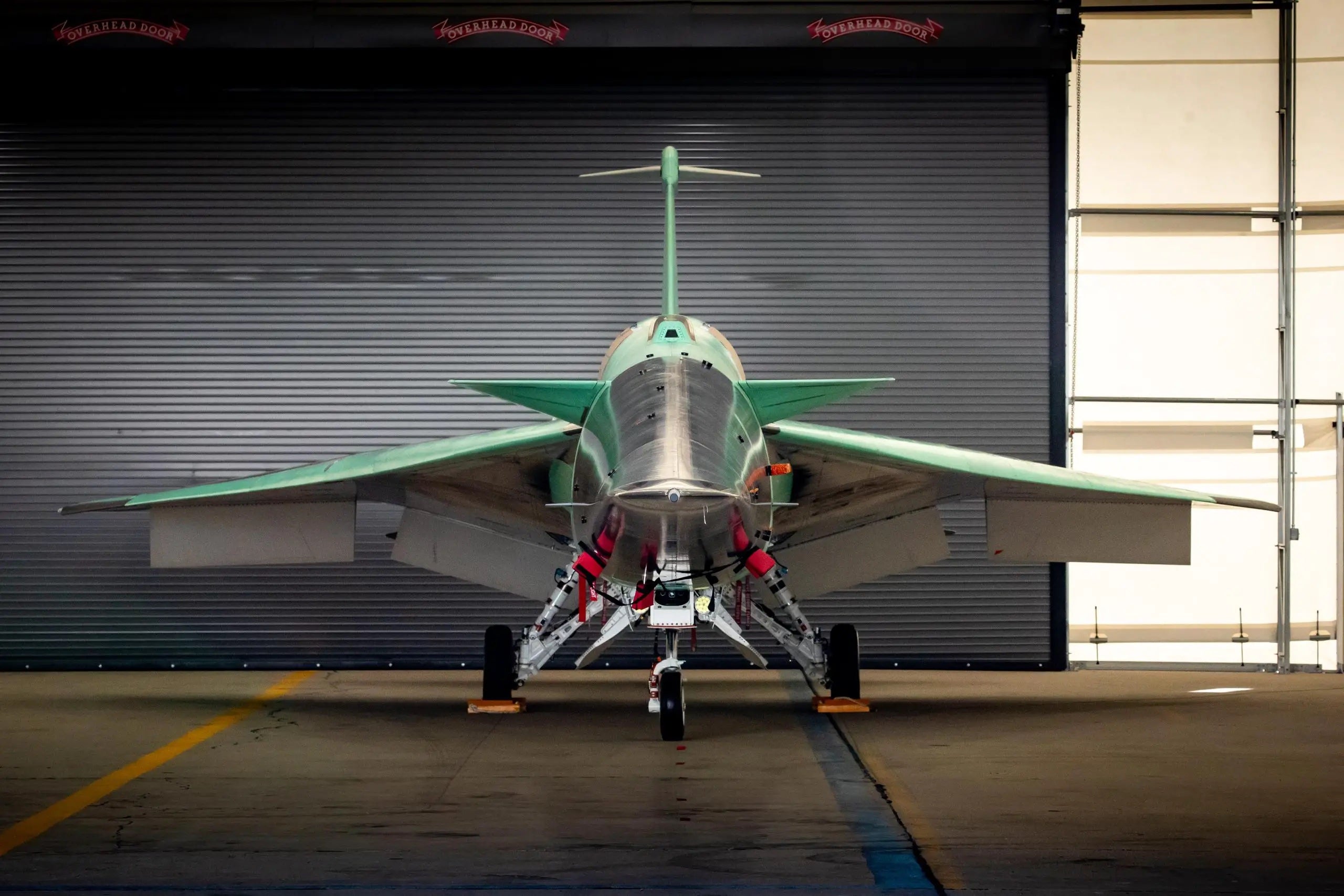

NASA has announced its X-59 supersonic research aircraft has emerged from its construction facility and now sits on the flightline at Lockheed-Martin’s “Skunk Works” in Palmdale, California. The transition occurred in late June, leading up to ongoing ground tests to ensure a safe first flight. The X-59 is expected to help demonstrate that modern technology can reduce sonic booms to much less intrusive “sonic thumps.”
The technology involves using atmospheric data to identify areas that are more—or less—conducive to sonic boom sound waves reaching the ground. Temperature, humidity and other environmental factors affect the transmission of sound waves, and part of the research into mitigating the surface impact of supersonic flight involves locating and, if necessary, circumventing the vulnerable areas, or changing altitude to avoid the atmospheric conditions.
NASA plans to operate the X-59 above several select communities in the Southwest U.S. to gather data from inhabitants on the effects of the reduced-intensity sonic booms. The data will be presented to U.S. and international regulators to help determine if supersonic flight over land—currently not allowed—can ultimately be permitted. The goal is to use the data to help formulate and implement next-generation regulations based on acoustic science pertaining to supersonic flight over land.
The X-59 is the centerpiece of NASA’s Quiet Supersonic Technology (QueSST) initiative, described as a collaborative pioneering initiative between government and industry.