



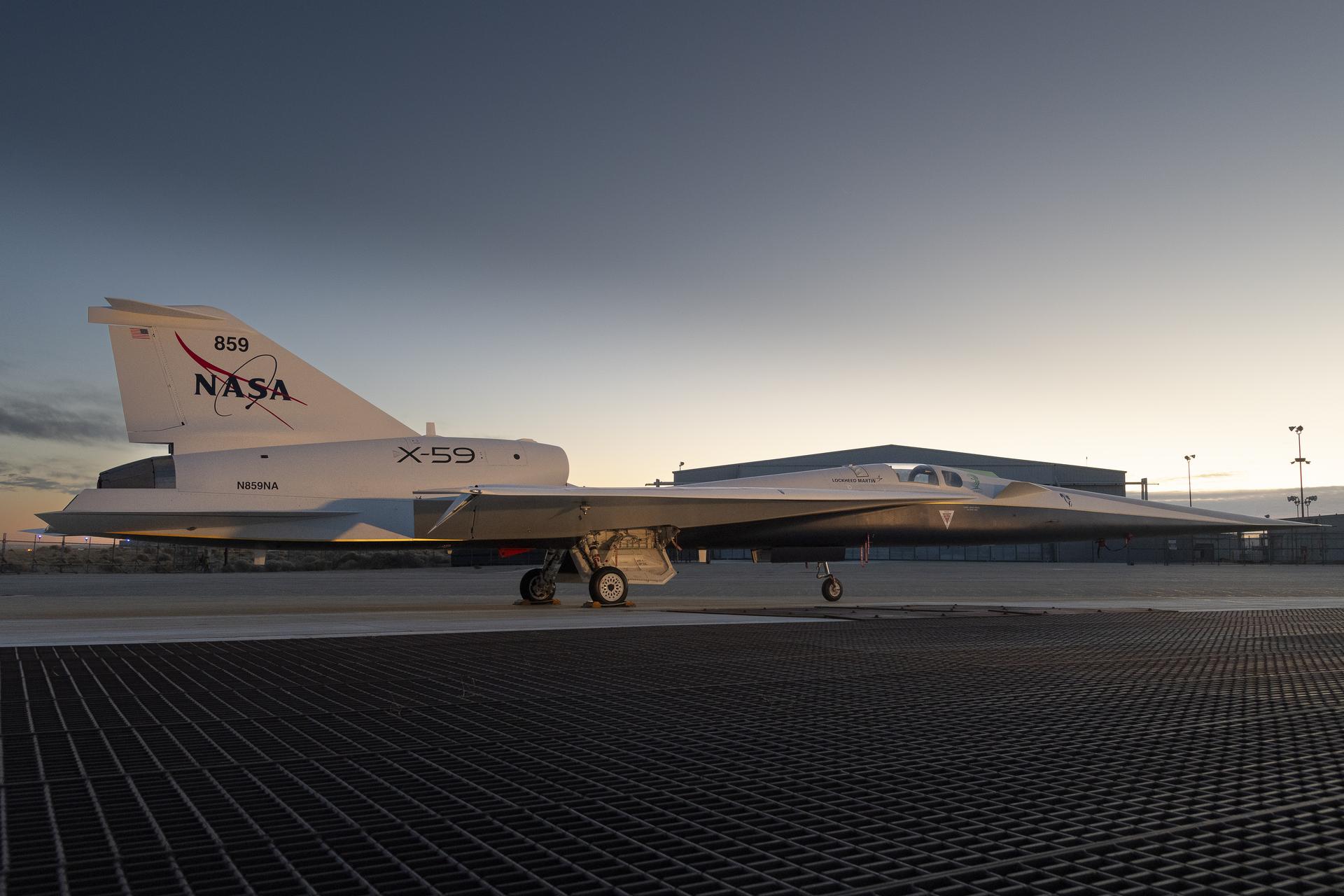

NASA conducted the second flight of its X-59 quiet supersonic research aircraft Friday, but the sortie ended after about nine minutes when a cockpit warning prompted an early return to base. The aircraft departed from NASA’s Armstrong Flight Research Center in Edwards, California, and landed safely shortly after takeoff. According to NASA officials speaking during a postflight briefing, the flight had been planned to last about an hour and to expand the aircraft’s flight envelope to higher speeds and altitudes.
Associate Administrator Bob Pearce said the decision to terminate the flight followed established procedures.
“After a few minutes, our pilot and our team made the correct call to land,” Pearce said during the briefing. “It was the right decision.”
Project manager Cathy Bahm said the warning in the X-59 occurred shortly after takeoff and was unrelated to an earlier caution indication encountered during a first takeoff attempt.
“We are early in the flight test. Findings are normal,” Bahm said, adding that the aircraft has been returned to the hangar for evaluation as teams determine the cause and next steps.
Test pilot Jim Less said the aircraft performed as expected during takeoff, climb and landing.
“The takeoff roll and liftoff was uneventful,” Less said. “The plane performed beautifully.”
He added that the aircraft returned approximately nine minutes after departure and that the landing was routine.
Despite the abbreviated flight, NASA officials said the sortie produced additional data, including information on handling, braking and onboard systems, as the program progresses through early flight testing.
The X-59 is part of NASA’s Quesst mission, developed with Lockheed Martin, and is intended to gather data on reducing sonic boom impacts during supersonic flight over land.


0 replies