















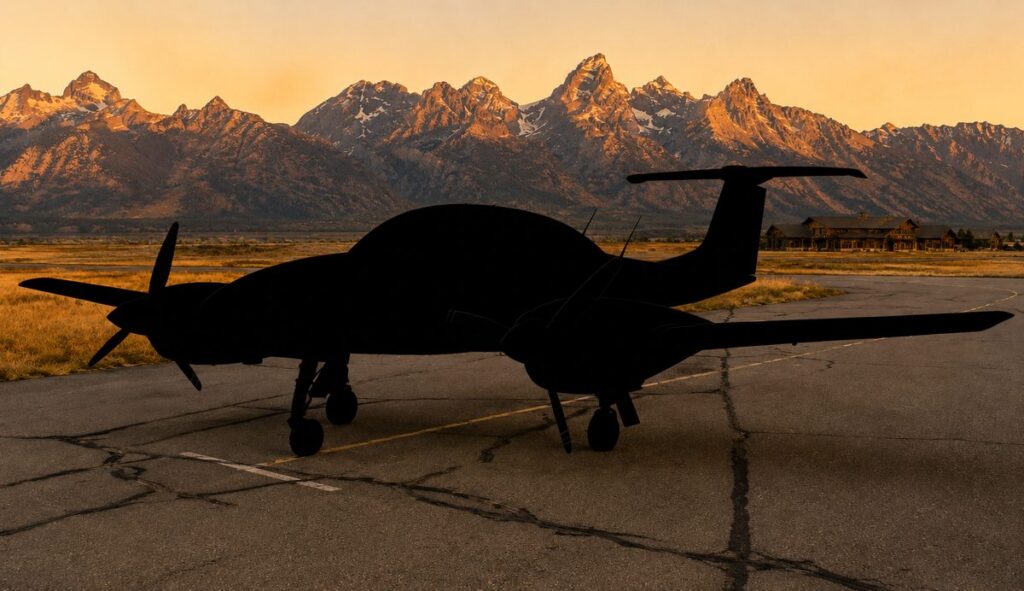

Utah-based aircraft developer Wasatch Aero last week outlined plans for a four-seat, twin-turboprop aircraft designed for multiengine flight training and personal aviation. The new aircraft is part of the company’s development roadmap, which begins with its two-seat SD3 and turbine-powered SD3T trainers before expanding into larger aircraft.
Twin-Turboprop Design
The proposed twin will use two Turbo Tech turbine engines, each producing 148 horsepower, matching the powerplant used in the single-engine SD3T. Wasatch lists preliminary performance targets of a 200-knot cruise speed, fuel consumption of 12 to 14 gallons per hour and a service ceiling of 23,000 feet. The company has not announced pricing or a delivery schedule for the aircraft, which remains in the design phase.
“For flight schools, that creates true fleet commonality: shared parts, familiar maintenance practices, and a more efficient path from single-engine to multi-engine training,” Wasatch Aero said in its published roadmap.
MOSAIC Certification Path
The aircraft is being developed as the FAA’s MOSAIC rules expand certification options for light-sport aircraft. Under the revised certification standards, manufacturers can produce aircraft with up to four seats, multiple engines and turbine propulsion. Wasatch is targeting initial prototype flights of the SD3 and SD3T in late 2026, followed by anticipated deliveries in 2027. The company has not established a comparable timeline for its twin-engine model.
“While you could have a multi-engine or powered-lift aircraft certified as a light-sport category aircraft, there are no multi-engine or powered-lift privileges available to sport pilots,” FAA aviation safety inspector Marcel Bernard said in an agency MOSAIC explanation.
Pilots would still need the appropriate higher-level certificate and multiengine rating to operate the proposed twin.


Good luck packing all that shit into an airframe with a Vs of 59 or less to qualify for MOSAIC pilot operations. So far just the jabiru J432 can do it with twin 80’s on stalks.