



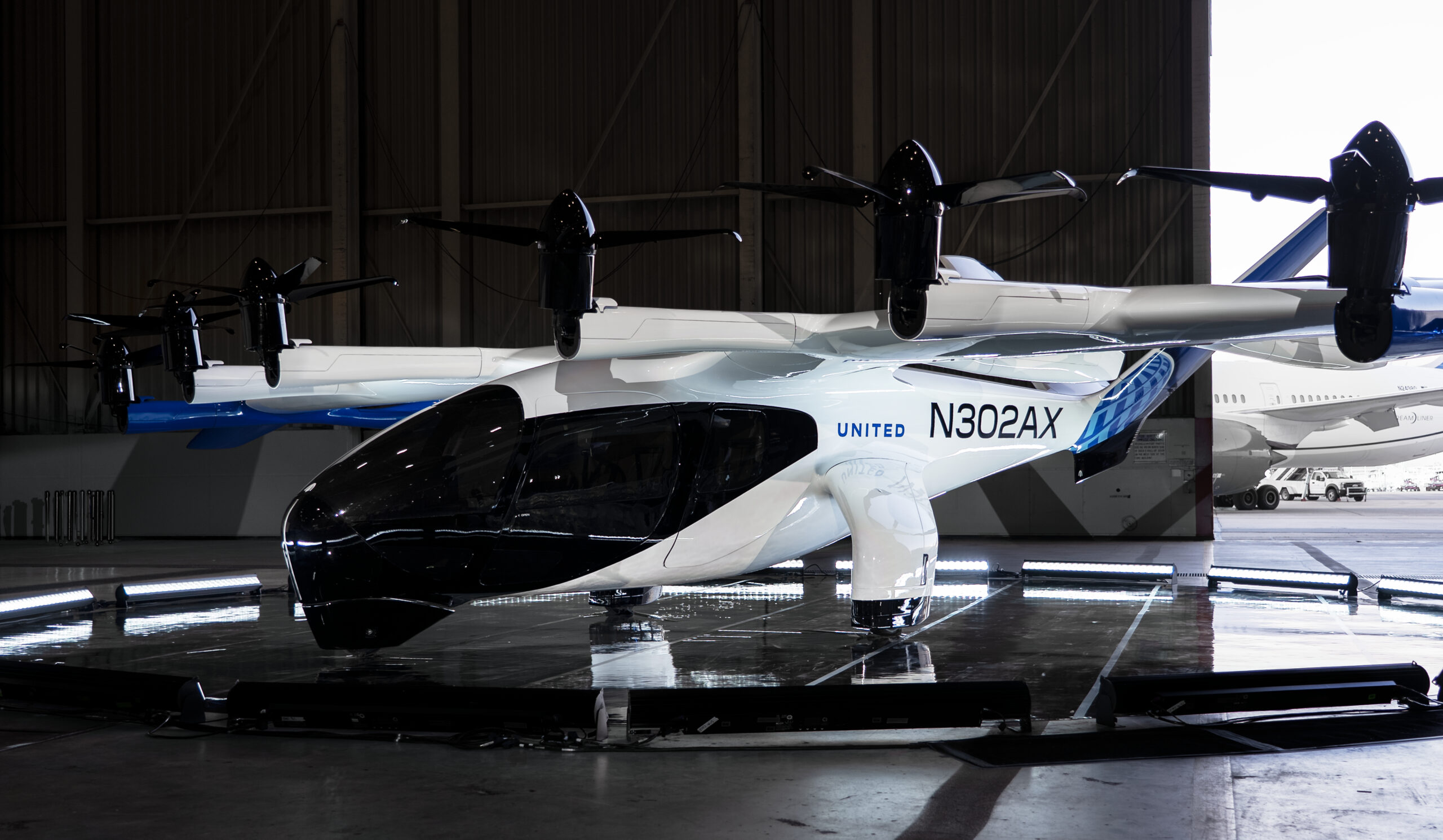

Archer Aviation and Joby Aviation both announced plans Friday to participate in a new White House eVTOL Integration Pilot Program (eIPP), a federal effort designed to fast-track electric air taxi operations in American cities. The initiative follows President Trump’s June executive order, “Unleashing American Drone Dominance,” which directed the Department of Transportation and the FAA to establish supervised trial environments for advanced air mobility aircraft.
Transportation Secretary Sean Duffy confirmed Friday the program will pair private manufacturers with state and local governments for at least five pilot projects across the country.
Archer said it intends to partner with airlines such as United and with interested municipalities to trial its Midnight aircraft under the program. CEO Adam Goldstein called the eIPP “a landmark moment for our industry and our country” and emphasized that early operations will demonstrate that eVTOL flights can be conducted “safely and quietly.”
United Airlines executive Mike Leskinen noted that the carrier’s investment in Archer in 2021 was driven by a belief that electric taxis would change the way travelers move through major airports and surrounding cities.
A huge step for eVTOLs in the US.
— Archer (@ArcherAviation) September 12, 2025
With today's announcement beginning the implementation of the @WhiteHouse’s Executive Order on eVTOL’s with an RFP, Archer is now exploring pathways to work together with U.S. airlines, including @United, and interested cities under the new… pic.twitter.com/vbpWtxg06P
Joby, which has logged more than 40,000 miles of flight testing, also announced plans Friday to join the eIPP. The company highlighted progress toward FAA type certification, its expanded manufacturing sites in California and Ohio, and partnerships with local governments in Texas, Florida, and New York. The company also announced plans earlier this week to integrate certain services within Uber’s platform by next year.
“We’ve spent more than 15 years building the aircraft technology and operational capabilities that are defining advanced aerial mobility, and we’re ready to bring our services to communities,” said Greg Bowles, Joby’s chief policy officer.
The White House eVTOL Integration Pilot Program (eIPP) launches today to select and test electric aircraft use cases like passenger rides, cargo delivery, and emergency response. And we’re ready! (1/5) pic.twitter.com/lik6Vhbli6
— Joby Aviation (@jobyaviation) September 12, 2025
FAA Administrator Bryan Bedford said the lessons from the pilot projects will help regulators enable “safe, scalable AAM operations nationwide.”


The program objectives may make sense in terms of emergency response but I have to wonder in that regard what these vehicles can do that the present generation of helicopters can’t. In terms of cargo delivery, the eVTOL would seem to be severely limited by payload and range constraints compared to say an electric delivery truck. I’ts the passenger rides part of the application that seems the most flawed. The concept is brilliant for the 0.1% that wouldn’t blink an eye to pay $1,500 for a ride to the Hamptons from Manhattan but as a means of offloading traffic from congested freeways? There is no economic model that makes sense in this application at scale.
I agree. I also would like to know if it can autorotate or does it use a parachute. Would really love to see the flight manual chapter on emergency procedures.
As a rated helicopter pilot, I don’t see how one of these eVTOL aircraft could be capable of autorotation. There’s not enough mass in all of the rotor systems to produce the required lift. I’m guessing a ballistic parachute is what they use. They are all anticipating unmanned operation but I think that will be a long time coming for passengers. Maybe sooner for cargo. I think passenger carrying air taxi operations will be few and far between because it’s not much different than a helicopter from a passenger’s viewpoint. Integrating eVTOL aircraft into the Uber app is a novel approach but there aren’t many vertiports around now and it will take a long time to be as convenient to get to one as it is to call an Uber on the ground. On the other hand, I can see value in air cargo operations. The range and load carrying capability are limited but the operations and maintenance costs are much less than a helicopter.