
















The NTSB’s final report determined that a loose elevator counterweight plug jammed the flight controls of aerobatic pilot Rob Holland’s MXS before his fatal accident at Langley Air Force Base. The agency published its final report July 2, more than 14 months after the April 24, 2025, accident.
An earlier preliminary report identified damage around the customized elevator counterweight system as a possible explanation for the loss of control. The final report confirms that theory and details how contact between the plug and nearby horizontal stabilizer hardware restricted the elevator.
Final Report Details Failure
Holland was arriving from Smyrna, Tennessee, to perform at the Air Power Over Hampton Roads airshow. Witnesses and recovered flight-instrument data showed that the airplane made a stable approach to Runway 08 and leveled about 50 feet above the runway. It traveled several hundred feet before pitching up and down twice. The airplane then climbed several hundred feet, rolled 90 degrees left and descended into the ground.
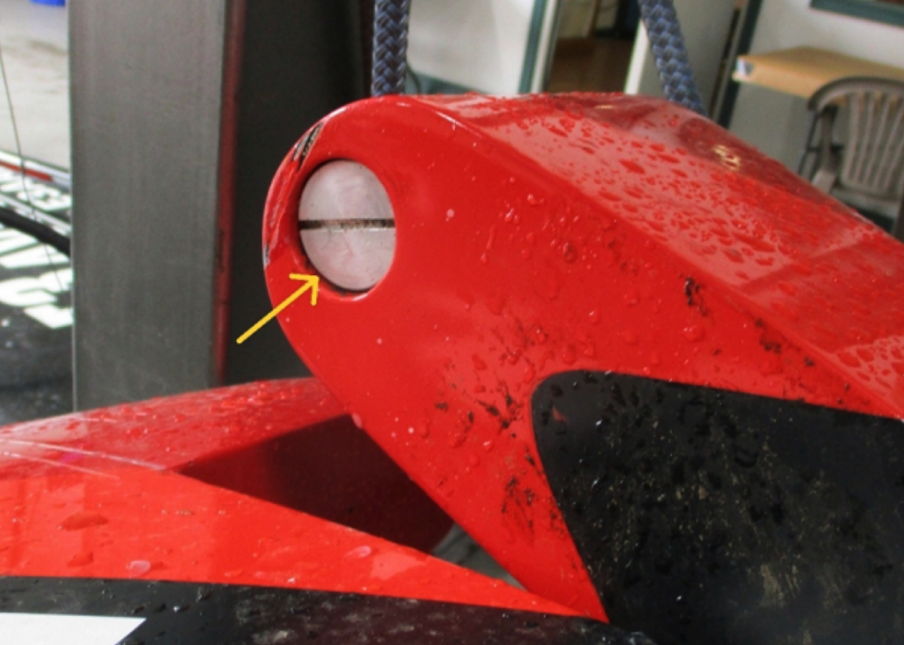
Investigators found the left elevator counterweight plug in the grass about 10 feet behind the wreckage. Gouging and paint transfer were present around part of its circumference, and the horizontal stabilizer had corresponding dents and paint scrapes. Laboratory examination showed that impressions on the plug matched a nearby washer and screw, indicating repeated contact between the components.
The adjustable elevator balance tube was a custom feature Holland had asked the manufacturer to add during construction. MX Aircraft described the plugs as a short-term solution, according to the report. The manufacturer did not provide continued-airworthiness instructions or specify installation torque values. Its design drawing also called for an O-ring to serve as a secondary locking device. Investigators found no O-ring on either elevator plug, and the installed plugs did not match the dimensions in the drawing.
The NTSB said in its probable-cause determination that it was “a counterweight plug that loosened during the accident flight, jammed the elevator, and resulted in loss of control during landing.”
Safety Action And Holland’s Career
Following the accident, MX Aircraft issued a mandatory safety notice for MXS and MX2 airplanes fitted with adjustable balance tubes. The notice instructed owners to replace the adjustable counterweight arrangement by filling the tubes with a lead-and-resin mixture.
Rob Holland, 50, had reported 15,387 hours of flight experience and held an airline transport pilot certificate. He was known internationally for his airshow performances and aerobatic competition record. AOPA reported that Holland won six World 4-Minute Freestyle championships and 13 consecutive U.S. National Aerobatic Championships.
“Rob was one of the most respected and inspiring aerobatic pilots in aviation history,” Rob Holland Aerosports said in a Facebook statement after the accident.


0 replies