














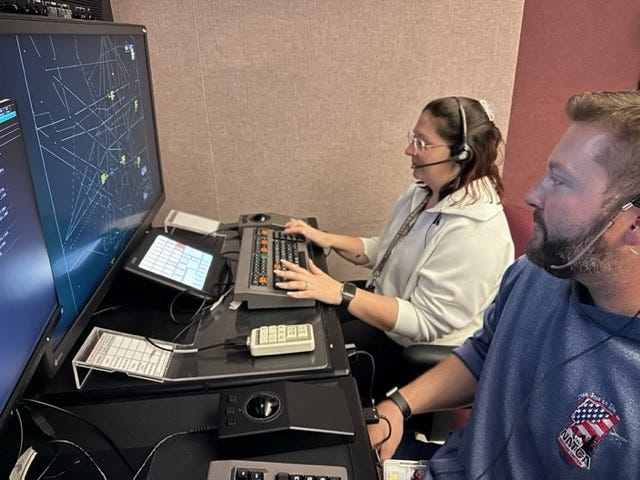

The FAA is crediting the quick thinking of two Boston Center controllers with preventing a pilot from being disabled by hypoxia. Rosilla Owen and Scott Elms were working the Stewart Sector west of Boston when New York handed off a Cessna 310 on a photo mission at 13,500 feet. Owen said she noticed the pilot wasn’t as responsive as most pilots are in that congested airspace and asked if he was OK. She asked him if he was on oxygen, and he replied that he was but his performance didn’t match the level of experience he had as a pilot.
She directed him to descend to 9,000 feet and within minutes his radio transmissions were “getting clearer and sharper every time,” Owen said. The pilot subsequently found a kink in his oxygen line. “That confirmed what we knew was going on,” said Owen. “If he’s up there for another three to 10 minutes, we might be dealing with something different,” said Elms. The duo was congratulated by their boss in Boston and also on the frequency that day. “Good catch out there. I appreciate you guys,” said another pilot who had been monitoring the exchange.
