

















Image: Alec Wilson – CC BY-SA 2.0
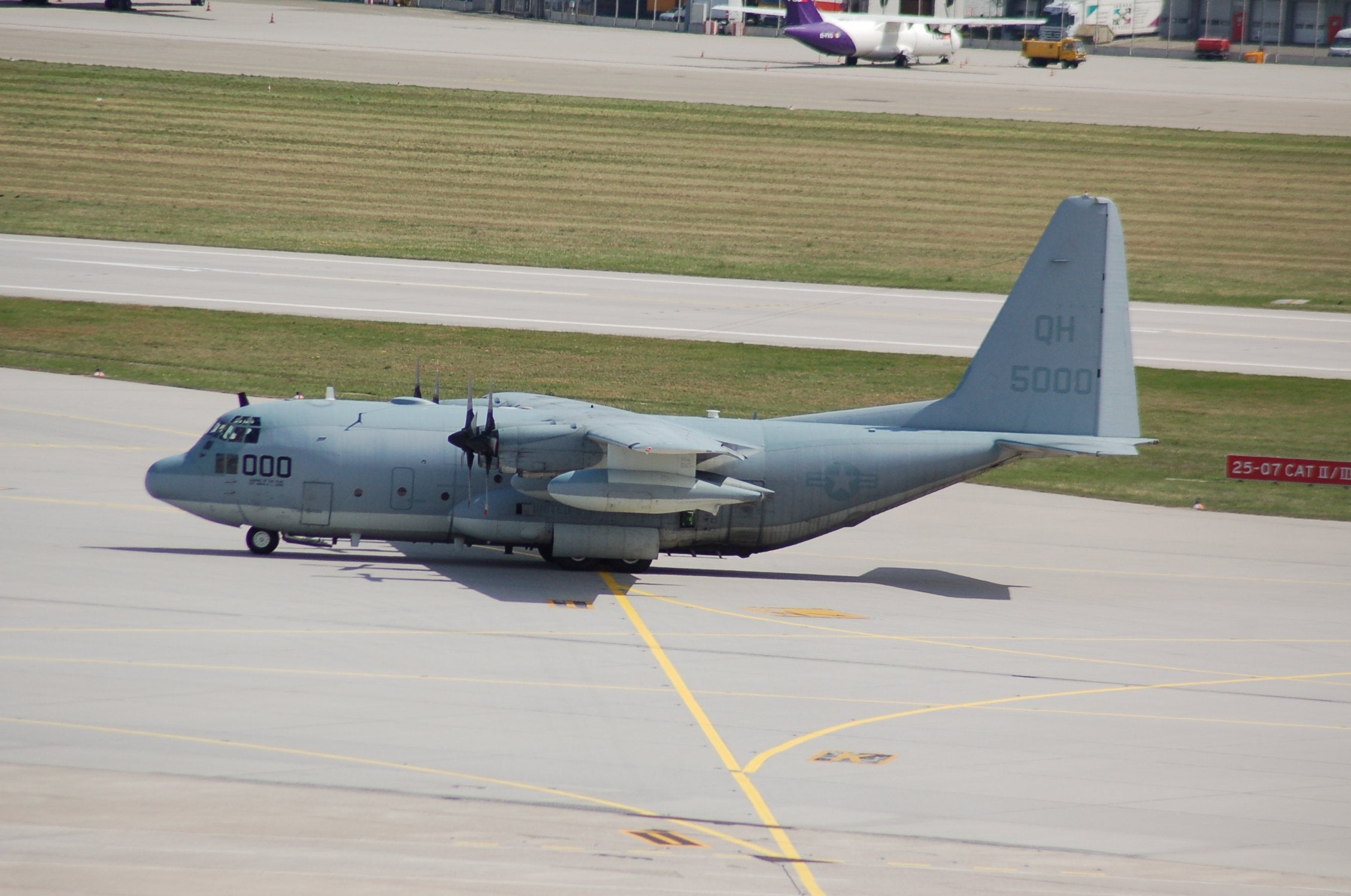
The inflight breakup of a U.S. Marine Corps-operated KC-130T on July 10, 2017, was the result of “deficiencies in the propeller blade overhaul process,” according to a report released by the Marine Corps on Thursday. The report (PDF) states that a corroded propeller blade broke off in flight, sliced through the left side of the fuselage and impacted the interior of the right side, triggering a “catastrophic sequence of events resulting in the midair breakup of the aircraft.” Fifteen Marines and one Navy sailor were killed in the accident, which occurred near Itta Bena, Mississippi.
Investigators identified the source of the blade failure as fatigue cracking. Additionally, they found that the cracking had been present at the time of the aircraft’s August 2011 overhaul at the Warner Robins Air Logistics Complex (WR-ALC) in Georgia. The investigation also explored whether operational and intermediate level maintenance inspections would have been able to detect the crack, but concluded that there was no way to know if those inspections could have identified the issue prior to the accident.
After the accident, a Navy engineering team conducted an audit of the WR-ALC propeller blade repair facility. The audit found deficiencies in areas including procedural compliance with technical publication requirements, borescope inspections, quality assurance checks and standardization of Air Force and Navy repair processes. Blade overhauls at the facility were temporarily halted in September 2017 to “allow all parties involved with the propeller overhaul process at WRALC to make the necessary changes in an attempt to fix all known deficiencies and begin better practices.”
The investigation found that the conduct of the crew was “professional and in accordance with standard operating procedures.” In an assessment of the accident, commanding general of the 4th Marine Aircraft Wing Brig. Gen. Bradley S. James stated that “Neither the aircrew nor anybody aboard the KC-130T could have prevented or altered the ultimate outcome after such a failure.”
Further details of the accident scenario can be seen in the U.S. Navy video below.

