













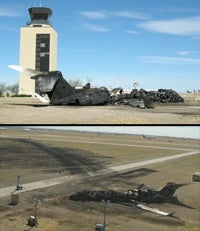
The fiery crash of a Gulfstream G650 during flight testing in April 2011 was caused by an aerodynamic stall and subsequent uncommanded roll during a one-engine-out takeoff flight test, the NTSB determined on Wednesday. Those events were the result of several human failures, according to the NTSB: Gulfstream’s failure to properly develop and validate takeoff speeds for the flight tests and recognize and correct a takeoff safety speed (V2) error during previous G650 flight tests; the G650 flight-test team’s persistent and increasingly aggressive attempts to achieve V2 speeds that were erroneously low; and Gulfstream’s inadequate investigation of previous G650 uncommanded roll events, which would have shown that the company’s estimated stall angle of attack while the airplane was in ground effect was too high. Two pilots and two engineers died in the crash, in Roswell, N.M. The G650 was type-certified last month.
“Two prior close calls should have prompted a yellow flag, but instead of slowing down to analyze what had happened, the program continued full speed ahead,” said NTSB chairman Deborah Hersman. “This crash was as much an absence of leadership as it was of lift.” Later, she acknowledged that after the accident, Gulfstream recognized “that many changes needed to be made and began to implement them.” The investigation showed that Gulfstream’s flight-test schedule was “aggressive,” with “pressure to get the aircraft certified,” Hersman said. “Assumptions and errors were made, but they were neither reviewed nor evaluated when review data was collected.” The board’s conclusions and recommendations are posted online.