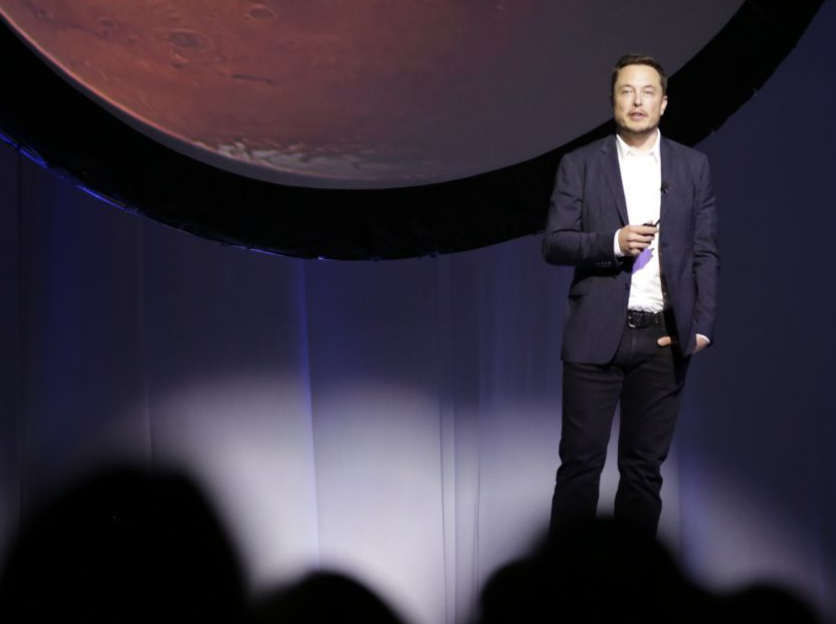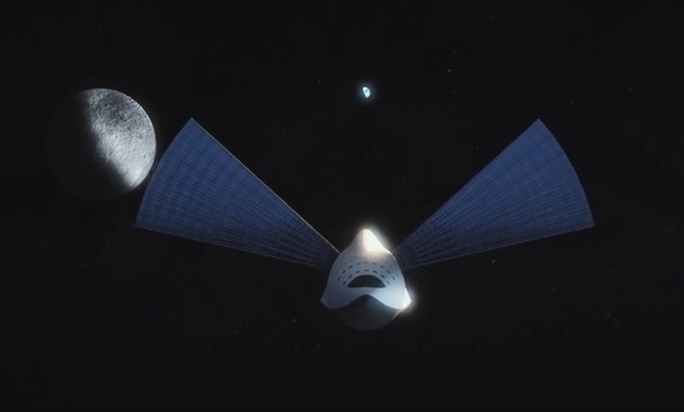
Elon Musk, CEO of SpaceX, said on Tuesday his company is working on a plan for manned flights to Mars, with the aim of establishing a permanent colony there. Speaking before a crowd at the International Astronautical Congress in Guadalajara, Mexico, he set out a number of parameters and goals for the project, noting that each trip should cost no more than $200,000 — about the average cost of a house in the U.S. “We want to make Mars seem possible,” he said. Musk’s strategy includes sending spaceships into orbit, where they could be “parked” while the booster rocket makes multiple trips to supply it with fuel, cargo and passengers. Every two years, when the planets are closest together, the spaceships could launch en masse, each one carrying about 450 tons of cargo and 100 to 200 passengers. The system could be up and running in about 10 years, he said.
“It would be quite fun to be on Mars,” Musk said, thanks to low gravity that would let humans bounce around and lift heavy weights. “The key is making this affordable to almost anyone who wants to go.” It’s not just a dream, he said, but something that can be made real. “It’s going to be a challenge to fund this whole endeavor,” he added. “Ultimately this is going to be a huge public-private partnership.” The goal should be to relocate at least a million people and create a sustainable population on Mars. Humanity has just two options, he added — to stay on Earth and eventually go extinct, or to become a multi-planet species. The transport system could also be expanded to provide access to the entire solar system, he said.
SpaceX, founded in 2002, has succeeded in developing reusable booster rockets, but also has had its share of setbacks, including a recent explosion on the launchpad. So far the company has not launched any manned vehicles.