
















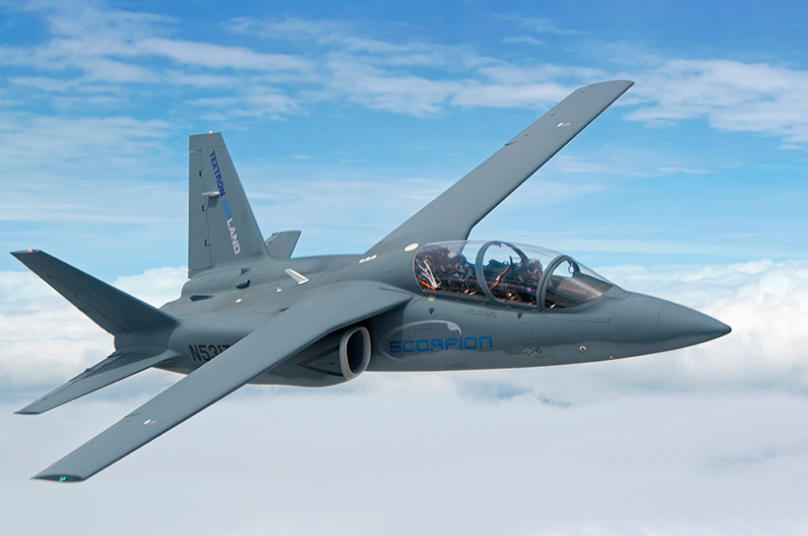
The U.S. Air Force has created a new kind of testing regime for evaluating military aircraft, and recently announced that Textron AirLand’s Scorpion jet will be the first product to go through the process. The process, called a cooperative research and development agreement, or CRADA, is open to any industry partner, on a first-come, first-served basis, the USAF said. “This process enables the Air Force to gain a much deeper understanding of the state of civil aviation,” according to the USAF news release, “while providing industry with an expert, independent evaluation of the safety and reliability of their products.” The manufacturer benefits by gaining an expert assessment of its design, while the USAF says it will gain a better understanding of commercial innovations and advance its broader research and development goals.
“These partnerships will help our military maintain its technical superiority while supporting a robust defense industry base,” said Jorge Gonzalez, of the Air Force’s Technical Airworthiness Authority. The standard CRADA will take about two years to complete, and the industry partner will cover all expenses, the USAF said. The Scorpion jet first flew late in 2013. The design aims to fill a gap between a turboprop light attack aircraft and multi-role strike fighters, according to Textron AirLand. It has a composite airframe, two turbofan engines, an internal payload bay and a tandem cockpit. It sells for under $20 million and operates at $3,000 per hour, according to the company.

