















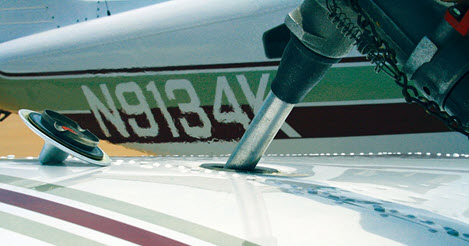

Colorado’s Rocky Mountain Metropolitan Airport became the latest in the state to offer unleaded aviation fuel in February through Sheltair Aviation. The airport, one of the state’s busiesst general aviation fields, added Swift Fuels UL94 as an alternative to 100LL.
The move followed community concerns about lead emissions and comes with a state-supported price subsidy intended to keep unleaded avgas at the same retail price as leaded fuel. According to RMMA’s transition materials, the airport is also reimbursing eligible aircraft owners up to $115 for the Supplemental Type Certificate required for approved aircraft to use the unleaded avgas.
The rollout is so far limited by aircraft eligibility and fuel certification requirements. RMMA’s transition plan estimates that about 20% to 25% of its piston-engine fleet, or roughly 75 to 100 aircraft, can currently use UL94 either directly or with an STC, while 100LL is expected to remain available during the phased transition due to federal and fleet constraints.
Centennial Airport spokesperson Samantha Blymyer said her airport launched a similar program recently as well.
“There’s definitely some challenges that we’ve seen with the use of it,” Blymyer told The Colorado Sun. “Naturally, you get a little bit of hesitation from pilots wanting to make the switch.”
She said some pilots reported engine overheating while using unleaded fuel during hot summer months.
The move comes as questions about aviation lead exposure remain active in both public discussion and litigation. The Colorado Sun reported that a Colorado Department of Public Health and Environment analysis found children living near airports had higher-than-average blood lead levels.
Acording to the study, lead emissions from aircraft using leaded avgas had “a small but statistically significant effect” on children living near airport locations in Colorado.
The same report said a lawsuit brought by Boulder County and the town of Superior over lead pollution will continue in part after a recent appellate ruling.
Bri Lehman, a area resident active on the issue, told The Colorado Sun that the issue is an important one for the community.
“I couldn’t know something like that and then ignore it,” Lehman said. “It was sort of an invisible public health crisis.”
More broadly, the FAA plans to eventually transition the American GA fleet to unleaded avgas. It published a draft transition plan in January that sketches out a phased national path away from leaded avgas by the end of 2030, although it left key questions unresolved about fuel availability, cost, infrastructure and enforcement. The FAA described the process as a “safe and orderly” shift, but also made clear that the document is “not a final rule” and that the details of how a nationwide phaseout would work are still to be defined.


It is unfortunate that the best and maybe the only current choice of an unleaded alternative to 100LL in the USA is Swift 94 UL. In Europe there is ASTM approved UL 91 and alcohol free 91 octane auto fuel available at many of their airports, and it is sold at a lower price than 100 LL without being subsidized. Part of the problem may be the fact that the FAA who promised a fleet authorization for ASTM approved UL 91 in the United States has not happened as they had promised, probably due to their incompetency.
In Sweden Hjelmco Oil has produced and sold unleaded AVGAS with nationwide distribution for 46 years at a lower price than leaded AVGAS. Currently Hjelmco AVGAS 91/96 UL (exceeds UL94 requirements) which has been on the market since year 1991 is sold at about 95 US cents/US gallon lower than AVGAS 100 LL. Hjelmco AVGAS 91/96 UL was approved by Lycoming already year 1995 in their SI 1070.
Taxpayers subsidize, government control, of a lower octane product.
!
Details of overheating not reported.
For what engines does Lycoming’s Service Letter support Hjelmco 91/96UL?
Is the 1995 issue still current?
Lycoming has updated their Service Instruction SI 1070. Search on the webb for their latest issue. Hjelmco 91/96 UL has been listed there all the time since 1995 and up to today. Visit www.hjelmco.com for more info. There are lots of information in English too.
Swift 94 UL is NOT the only alternative. Gami’s 100 UL is approved for 100% of piston engine aircraft. That this is a publicity stunt to get citizen activists off politicians’ backs is patently obvious.
Swift is a bigger company than Gami and can afford to promote themselves to bureaucrats. And they gain more STC’s, and good publicity, at zero cost to them. I’m betting the press release for this article (with zero investigation by Avweb before publishing) was sent out by Swift fuels.
Many aircraft say to use 100 octane or higher. 94 will not suffice. End of story.
Thanks.
Much to wade through.
According to Hjemco their 91/96UL has some lead in it.
Lycoming SI 1070 latest edition is clear which fuels that are accepted.
All unleaded gasoline contains lead - the amount of lead is however so small so they can still be labelled as unleaded.
The Hjelmco 91/96 UL contains less than 0,0025 grams Pb per liter as per ASTM D3237, Maximum allowed as per the definition unleaded is 0,013.
The Hjelmco initiative as from year 1981 was furnished 100 % without subsidies from airports or authorities and has so been now for 46 years.
EASA allows the Hjelmco 91/96 UL AVGAS to be used without any STC.
BS! With around 200,000 small aircraft needing leaded avgas spread over the entire US, no reason exists for getting rid of leaded avgas. Especially since as these aircraft will be turning into antiques, they will need leaded avgas. Certainly looks like no one is looking or thinking ahead. Sad, sad, sad!!! Especially since over 635 Jetson 1s have been sold in the last 18 months which run on batteries and/or alternators. Avgas is history except in antique fixed wing aircraft!!! Why mess with an antique aircraft market? No reason exists? The blind leading the blind is offensive!!! Around 50,000 homebuilt aircraft do run on unleaded gas; except their reliability is in question!!! And these homebuilt aircraft engines are water cooled and why unleaded avgas works for them. Air cooled aircraft engines need a coolant for exhaust valves and nothing better than lead has been found for cooling exhaust valves in air cooled aircraft engines.