














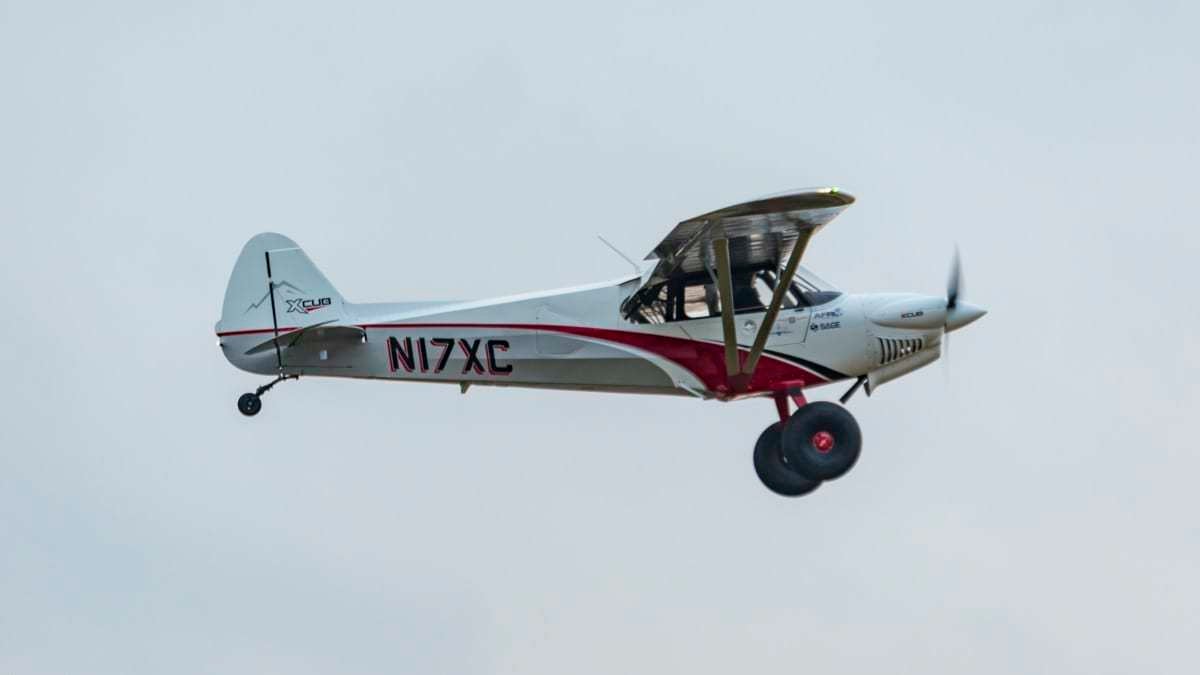

The Air Force’s latest test aircraft is probably the slowest in the fleet but that’s the whole point. A CubCrafters XCub has been delivered to the Air Force Research Laboratory in Maryland where the aircraft, an updated version of an 83-year-old design, will be fitted with a state-of-the-art helmet and sensor system for “personnel recovery and other ‘featherweight airlift’ special missions,” the Air Force said in a release earlier this week. The XCub will be the first aircraft outfitted with the Low Altitude Sensing Helmet System (LASH). It’s owned by the prime contractor for the project, Sage Technologies, according to Sage’s Program Manager Ofir Shavit. It’s part of a larger effort called Project Lysander to create a system for recovering people from isolated locations, sometimes in the heat of battle. Lysanders were high-wing piston aircraft used in the Second World War to insert and extract British spies behind enemy lines using fields and country roads for runways.
“The Air Force’s CODE (Combat Operations in Denied Environment) program determined that these types of missions could not be executed effectively by the large aircraft that we have been using over the last 20 years in areas where we have air dominance,” said Dr. Darrel G. Hoppers, who is heading up the project for the 711th Human Performance Wing. “Project Lysander was conceived as a method of rescuing isolated personnel in both heavily defended and undefended airspace.” The XCub was chosen for its remarkable performance, notably its STOL capabilities and low-speed, low-altitude characteristics. The sensor package is designed to be quickly installed on any GA aircraft so the correct platform can be chosen for the circumstances. After the helmet system testing is done, the Air Force lab will hang on to the XCub for future projects.
An earlier version of this story suggested the Air Force owns the XCub but Ofir Shavit, program manager for Sage Technologies, the prime contractor on the project, told AVweb the aircraft is owned by his company.
