















The advanced air mobility industry now has a blueprint to follow for certification best practices for their vehicles. Just as most of the aviation industry was getting ready for AirVenture, the FAA published, with no fanfare, an advisory circular (scroll down to AC 21.17-4) that details various things the agency will be looking for in certification of the aircraft. Its existence was brought to light by our colleagues at FLYING Magazine last week.
The agency stresses the 64-page outline is not a legally binding document but manufacturers will be wise to devour every word. “This advisory circular (AC) provides guidance for the type, production, and airworthiness certification of powered-lift,” the agency said in its preamble. “This AC also designates the airworthiness criteria in appendix A as an acceptable means, but not the only means, of showing compliance with title 14 of the Code of Federal Regulations (14 CFR) 21.17(b) for Federal Aviation Administration (FAA) type certification of certain powered-lift.”
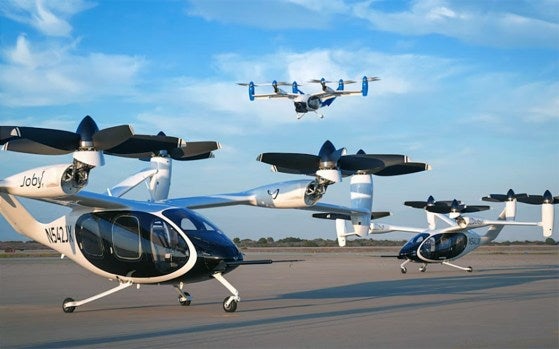
Joby aircraft, which may be the first to achieve certification, said the publication of the document is a positive move and the content aligns with its plans. “We’re pleased to see the FAA’s release of their Advisory Circular regarding powered-lift aircraft. Along with their commitment to continued global leadership in aviation certification through the NAA Network, this guidance reinforces the FAA’s focus on bringing advanced air mobility to market,” Joby said in a statement to AVweb. “The new guidance aligns with our approach to certification and will help streamline the certification process of powered-lift aircraft generally. Our specific FAA certification continues to make industry-leading progress, and we are excited to be pushing through the final stages towards type certification.”

I have been wondering why we have not seen more experimental entrants into the eVTOL space. I would have expected them to be all over EAA by now.
Is this a case where they are unable to achieve Phase 1 approval because there are (were) no guidelines in the certified space?
Apparently as of this morning the AC is published yet on the DRS.
Development of ‘novel’ configurations is costly, requires skill, pockets, and perseverance.
Hype is common when something is faddish or promoted by government - second-rate persons often try to do something but expect government money or private funding that never appears because investors look at track record and honesty.
New ideas come and go - I knew someone who worked on a concept for helicopter mechanisation - didn’t work out. (He went on to work on fighter airplanes and teach aeronautical engineering.)
Even with conventional configurations ability, honesty, and money are crucial.
A VLJ prototype flew in western Iowa but flight tests showed significant tweaking needed - combined with funds being needed for production funding did not come forth.
And Eclipse botched - poor weight estimation pushed design beyond planned engine, whose maker then rejected the project. Did go on to actually fly and to sell some elsewhere, but never became profitalbe.
French (and thus European) authorities gave out guidelines in 2022/2023, with the intention of Volocopter getting certified for passenger travel in time for the 2024 Olympic Games.
As we all know they did not, went bang, and have been bought by Chinese investors no-one knows much about.
Archer now faces a slightly longer time-frame to get certified for the LA Olympics in 2028.
In theory Olympic Games are ideal test beds because normal rules around traffic and circulation are suspended. Good luck to them.