















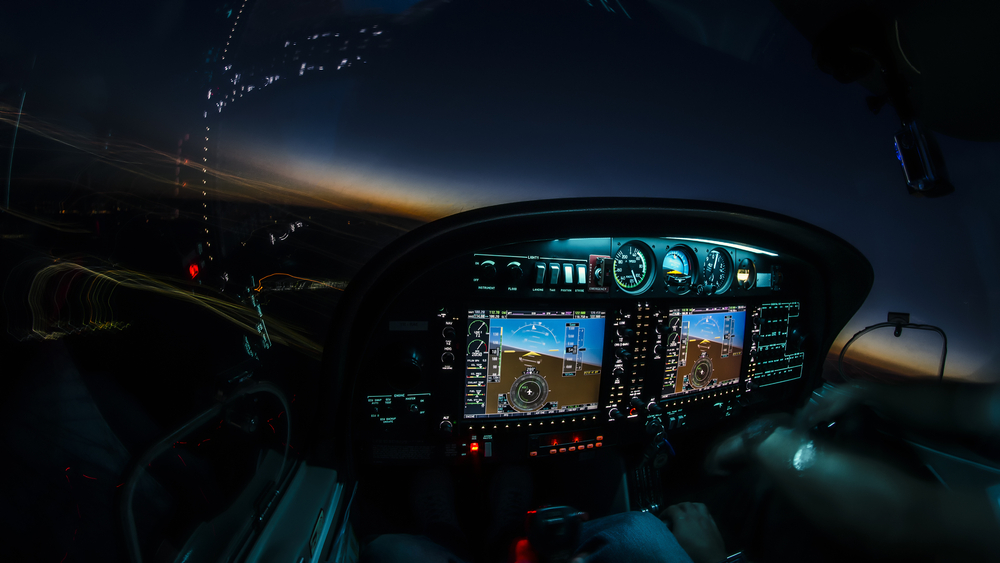

NASA on Thursday announced about $30 million in funding for four university aeronautics projects, including a Stanford University effort to develop machine-learning-enabled aircraft avionics. The multiyear awards are part of NASA’s University Leadership Initiative, which pairs university researchers and students with partners from industry and government.
Learning-Enabled Avionics
Stanford researcher Somil Bansal will lead the four-year avionics project. The team plans to develop a system that uses machine learning to control aircraft communications, navigation and other electronics while continuously reinforcing safety during operation. NASA said the research could help establish a framework for eventually integrating AI-enabled avionics into the national airspace.
“With these four new awards, the University Innovation project is leaning in on NASA’s aeronautics mission priorities,” said Andrew Provenza, project manager at NASA’s Glenn Research Center.
Other Projects
The University of Minnesota will spend four years developing a fuel-flexible propulsion system designed to operate as a conventional turbofan during takeoff and subsonic flight before transitioning to ramjet operation. NASA says the proposed system could cruise at Mach 4. A second Stanford team will develop high-fidelity simulations for planning lower-noise flight paths for future small aircraft operating over populated urban areas.
Virginia Tech received a three-year award for research into aircraft design and certification. Its project will combine model-based systems engineering, multidisciplinary design and analysis tools and uncertainty modeling to incorporate certification considerations earlier in aircraft development. NASA said the approach is intended to reduce the need for costly redesigns later in the development cycle. The four awards mark the ninth round of funding under the University Leadership Initiative.


0 replies