















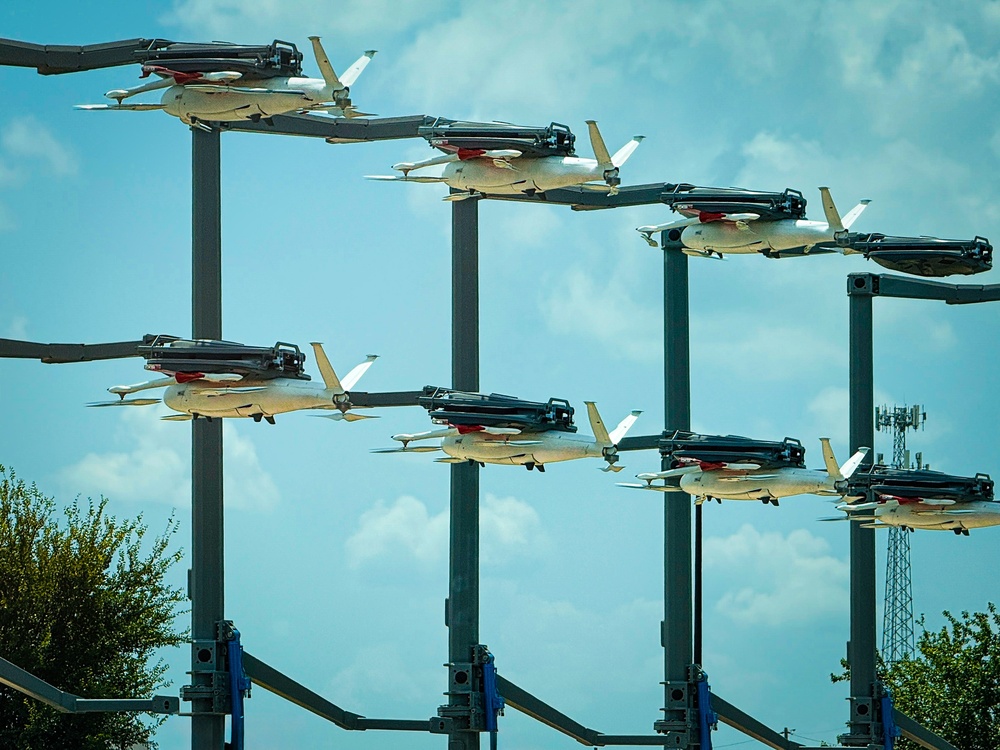

A peer-reviewed study published this week in Collegiate Aviation Review International found no statistically significant difference in collegiate pilots’ willingness to fly near unmanned aircraft based on whether the UAS were remotely piloted or fully autonomous. The study surveyed pilots at an FAA Part 141 flight school in southwest Michigan.
Researchers presented participants with two hypothetical VFR flights in a G1000-equipped Cessna 172 under clear-weather conditions. Medium-to-large civilian UAS were operating below FL180 and segregated from manned aircraft in both scenarios. One scenario involved remotely piloted UAS and the other involved autonomous aircraft. The final sample included 52 pilots whose highest ratings ranged from private pilot through CFII, and participants averaged about 168 flight hours.
Preliminary Finding
The study found no significant effect associated with the UAS control method and no significant difference associated with pilot rating.
Author Selim Ozyurek suggested the result could indicate younger pilots place less importance on whether a human directly controls the UAS, although he cautioned against drawing that conclusion from the study alone.
“The nonsignificant findings are therefore more accurately characterized as inconclusive rather than as evidence of equivalence or indifference,” Ozyurek wrote.
The study was substantially underpowered for comparisons among rating groups, some of which included only one to three pilots. Researchers also presented the remotely piloted scenario first to every participant rather than randomizing the order, and the UAS remained segregated from manned traffic in both scenarios.
Earlier Research Found A Difference
A 2022 study of 380 U.S. pilots produced a different result while examining highly automated urban air mobility aircraft operating alongside manned traffic. That research compared passenger-carrying UAM aircraft that had a pilot aboard against aircraft monitored remotely, and it found a statistically significant effect associated with the automation arrangement.
“The results indicated that automation level influenced pilots’ willingness to operate an aircraft in integrated airspace,” researchers Lakshmi Vempati, Sabrina Woods and Scott Winter wrote.
Professional pilots in the study were more willing to operate around UAM aircraft when a human pilot was aboard than when the aircraft was monitored remotely.
Ozyurek identified factors such as traffic density, weather and emergency procedures as areas for further research into what affects pilots’ willingness to share airspace with unmanned aircraft.


0 replies