















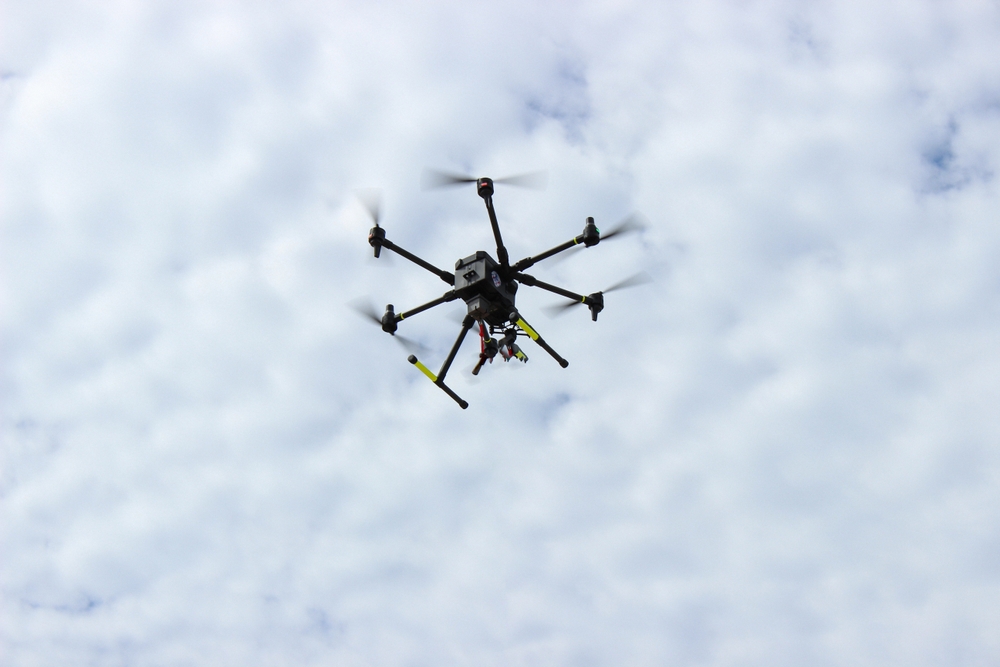

The FAA announced Monday it has awarded $12 million for 19 drone research and testing projects through its Unmanned Aircraft Systems Broad Agency Announcement Program. The work covers technologies including detect-and-avoid systems, satellite communications, drone identification and integration between UAS traffic management and traditional air traffic systems.
Detect-and-Avoid Research
Several projects address technology needed for longer-range operations beyond visual line of sight. General Atomics will develop ground-based systems intended to help drones avoid other aircraft, while Skydweller will work on an onboard system for large UAS. OneRadio will test passive radar, Censys Technologies will evaluate satellite communications for long-range flights and Lighthouse Avionics will develop surveillance tools for long-range drone routes. ANRA Technologies received awards for several projects, including technology intended to connect drone traffic-management systems to conventional ATC at airports.
“The UAS Broad Agency Announcement Program gives us another way to directly work with industry and our test site partners on technologies that are critical to safe drone integration,” FAA Administrator Bryan Bedford said in the agency’s announcement. “The research supported through this program will give us better data, help us identify and understand operational challenges, and inform how we safely integrate these aircraft into the National Airspace System.”
Part 108 Context
The awards come as the FAA continues work on its proposed Part 108 framework for routine BVLOS operations. The proposal has raised questions for general aviation over electronic conspicuity, right-of-way and detect-and-avoid requirements. A February GAO report also identified gaps in planning for reliable communications and collision avoidance as drone operations expand.
The FAA currently operates nine designated UAS test sites, where research includes BVLOS operations, command and control, detect-and-avoid technology and UAS traffic management. A 2025 executive order directed the agency to make greater use of those sites and prioritize testing that supports routine BVLOS and increasingly autonomous operations.


0 replies