















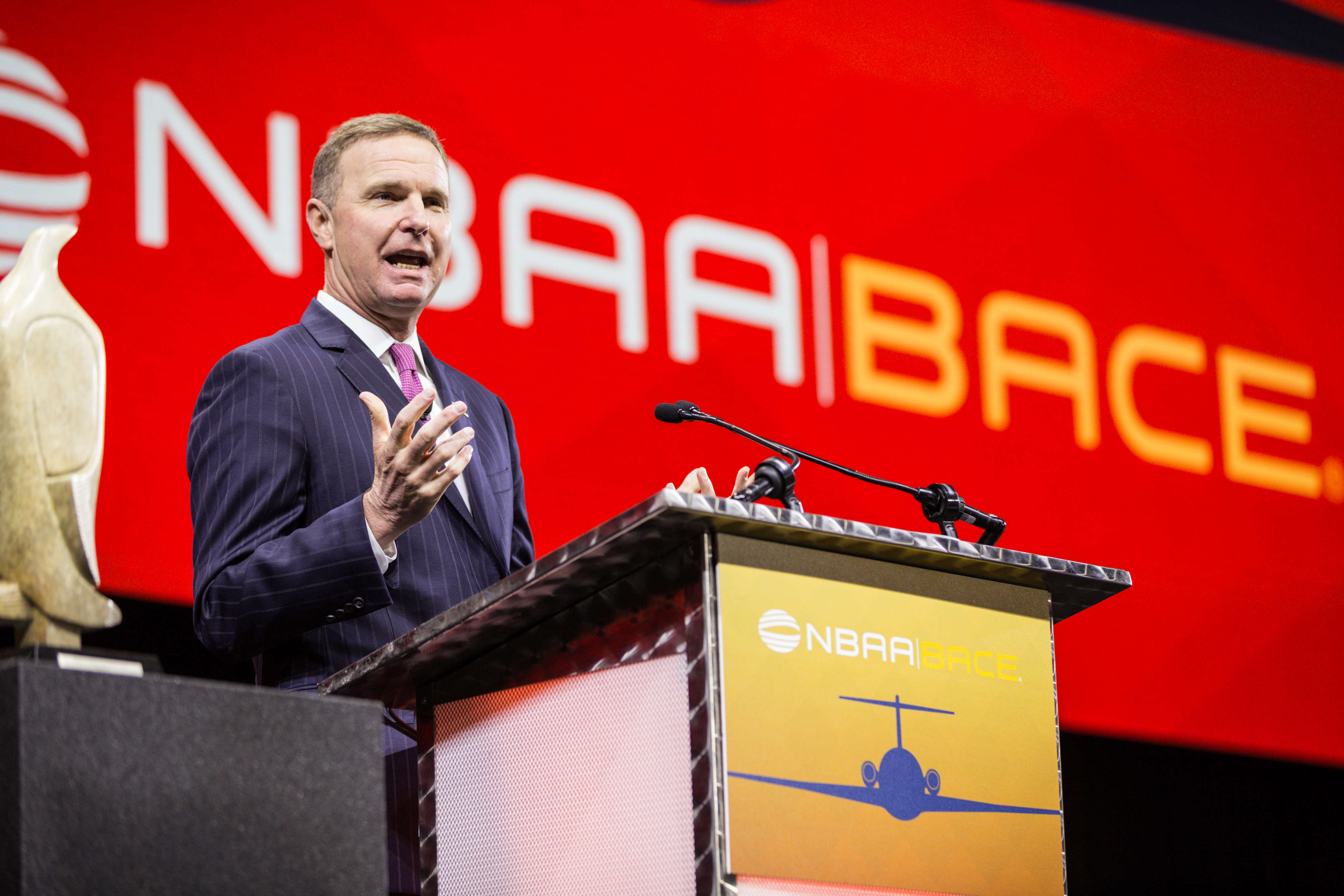

The National Business Aviation Association (NBAA) announced Friday that President and CEO Ed Bolen is retiring after more than 22 years leading the organization. The announcement follows Bolen’s decision to take a medical leave in September to undergo cancer treatment. Bolen, who has led NBAA since 2004, said his health was the reason for his retirement.
Leadership Transition
“I regret having to step down because of my health, and I have been touched by the outpouring of your support,” Bolen said in NBAA’s retirement announcement. “Business aviation is at its best when we come together, and I have never been more confident in NBAA’s brilliant future.”
NBAA’s board of directors has named Dan Hubbard acting CEO. Hubbard will also continue serving as senior vice president of communications. He previously served as interim chief operating officer following Bolen’s medical leave.
The association has established an executive search committee to identify a permanent successor. The committee will be chaired by Matt Byrd, NBAA board vice chair and president and CEO of Hillwood Aviation.
Aviation Industry Response
“I’ve known Ed for decades, and general aviation is stronger today because of him,” AOPA Acting Co-President Katie Pribyl said in a Friday statement. “He’s spent his whole career looking out for pilots, starting as a Senate aide when he helped pass the General Aviation Revitalization Act, and then leading GAMA and NBAA. Through all of it, Ed has been a true friend to AOPA. We’ve stood together against user fees and ATC privatization, and we’ve worked side by side to protect airports. General aviation has had no better friend than Ed Bolen.”
Before joining NBAA, Bolen served as president and CEO of the General Aviation Manufacturers Association from 1996 to 2004. He also worked on the General Aviation Revitalization Act of 1994 as an aide to Kansas Sen. Nancy Kassebaum and chaired the FAA’s Management Advisory Council from 2000 to 2004.
During his tenure at NBAA, Bolen was involved in aviation policy issues including airport access, safety regulations and efforts to modernize the national airspace system. He also represented business aviation during repeated debates over ATC privatization.


0 replies