
















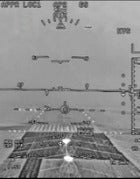
A new rule proposed by the FAA this week would permit aircraft to land at airports with zero visibility using an Enhanced Flight Vision System. The proposal also would allow commercial operators to dispatch aircraft when the destination airport is forecast to be below minimums, and would establish training and proficiency criteria for pilots. An EFVS uses real-time imagery derived from imaging sensors such as forward-looking infrared, millimeter wave radiometry, millimeter wave radar, or low-level-light intensification, the FAA said. Synthetic vision systems, which create a computer-generated image of the external scene derived from a database of terrain and obstacles, are not included in the new rule.
The proposal would meet the NextGen goals of increasing access, efficiency and throughput at many airports when low visibility is the limiting factor, said the FAA. It also would enable EFVS operations in reduced visibilities on a greater number of approach procedure types while maintaining an equivalent level of safety. The FAA said it has nine years of data on EFVS operations that show that, when visibility is marginal, such as during rapidly changing weather conditions, or when the reported visibility hovers at or near the minimum, EFVS provides a “significant operational advantage.” The FAA previously granted exemptions to both FedEx and NetJets to operate below minimums using EFVS. The systems are most widely used in general aviation turbojet aircraft, the FAA said.

