















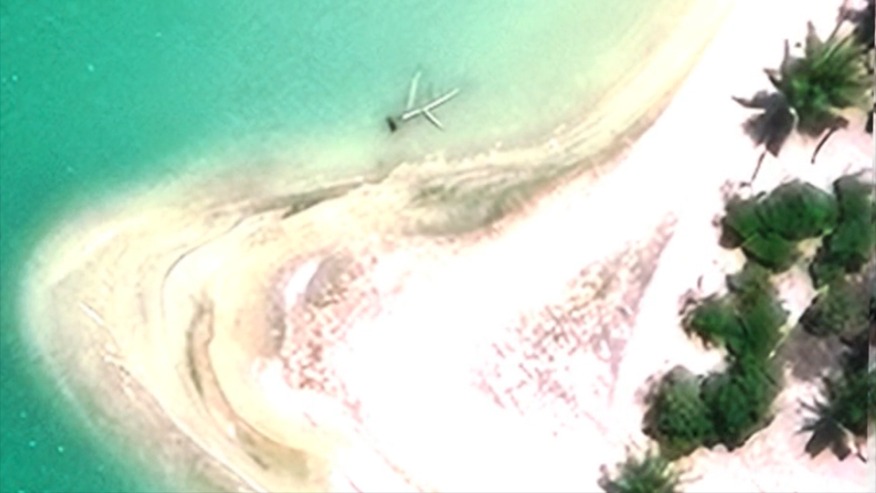

Purdue University and the Archaeological Legacy Institute (ALI) are less than a month from embarking on an expedition to the South Pacific this November in an effort to determine whether a submerged object in the lagoon of Nikumaroro Island is the wreckage of Amelia Earhart’s Lockheed Electra 10E. The Taraia Object, as it is known, was first identified in 2020 from satellite images and has since been confirmed in photographs dating as far back as 1938.
The project, announced in July, is jointly organized by Purdue Research Foundation and ALI. Research will focus on the remote atoll, located roughly 400 miles southeast of Howland Island. The island was Earhart’s planned destination before her disappearance in 1937.
The 15-person team will use magnetometers, sonar, and underwater excavation techniques to document and identify the object in question. The field crew will include Purdue alumni Sirisha Bandla and Marc Hagle, along with senior vice president and general counsel Steve Schultz.
ALI executive director Richard Pettigrew said the mission could “close the case” on one of aviation’s greatest mysteries.
“We gathered up many more satellite images, did historical research, found other imagery that relates to it,” Pettigrew told CBS News. “We’re going to go look and identify it. We could be wrong, but the evidence is very, very strong that this is, in fact, what it is.”
The search follows nearly nine decades of speculation over Earhart’s fate. The Nikumaroro hypothesis suggests that Earhart, along with her navigator, Fred Noonan, landed and were marooned there before their deaths.
Schultz said that if the object proves to be the Electra, Purdue hopes to eventually return the aircraft to campus.
“A successful identification would be the first step toward fulfilling Amelia’s original plan to return the Electra to West Lafayette after her historic flight,” he said.
The expedition is expected to conclude on Nov. 21, with future excavation work planned in 2026 if the findings confirm the discovery.


0 replies