
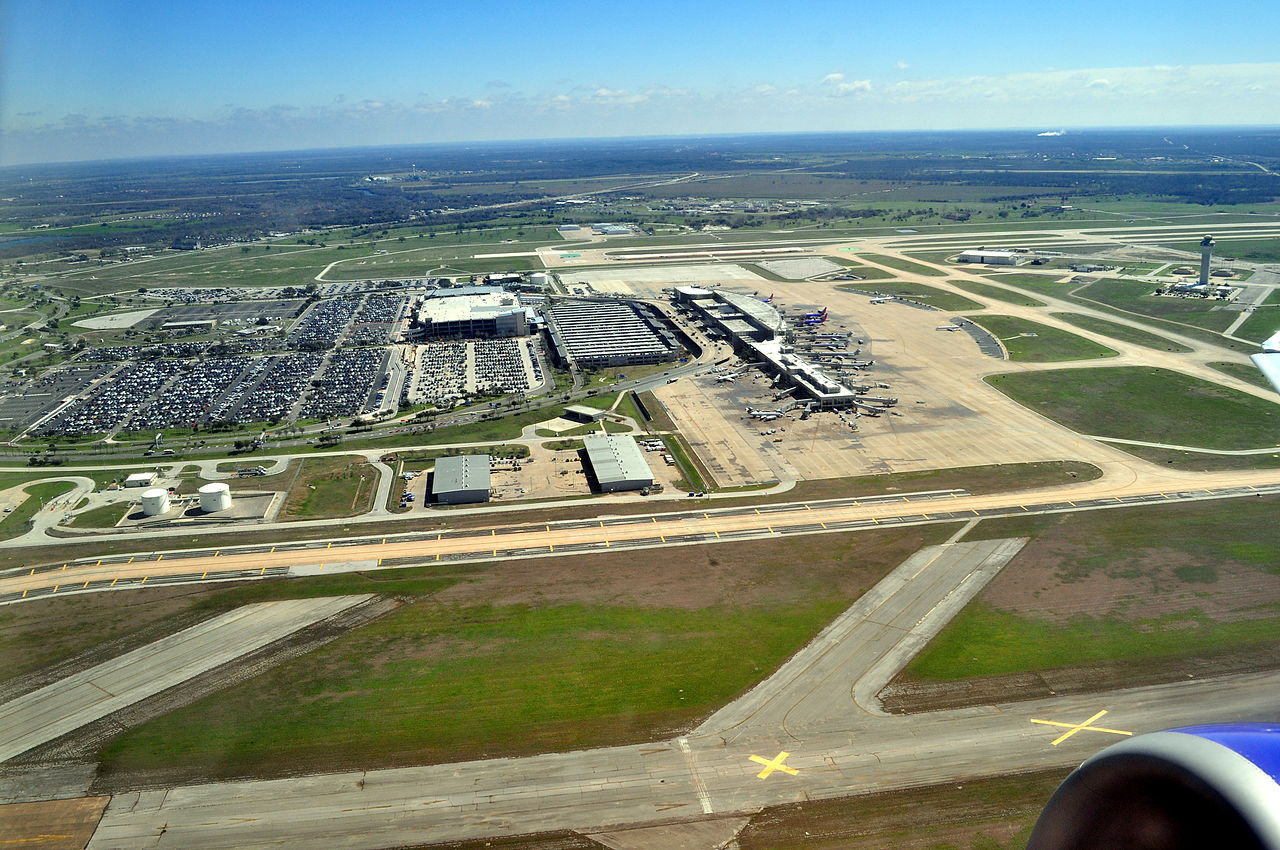

The Federal Aviation Administration has denied a request to upgrade Austin-Bergstrom International Airport’s airspace from Class C to the more restricted Class B designation, despite safety concerns raised by local leaders and air traffic officials. The decision follows nearly two years of appeals from U.S. Rep. Lloyd Doggett, D-Austin, who has pressed the agency to act after a series of near collisions at the airport.
“An unresponsive FAA took almost a year to deny an application to make our airport safer,” Doggett said in a statement reported by the Austin American-Statesman.
Doggett added that the move could have helped prevent a 2024 runway incident involving an American Airlines jet and a small Cessna.
Class B airspace, which surrounds the nation’s busiest airports, requires stricter rules for pilots and grants controllers greater authority. The FAA said Austin does not meet all the criteria for reclassification, including a guideline benchmark of 300,000 annual takeoffs and landings. FAA data show Austin recorded fewer than 261,000 operations in 2024, according to KUT News. Still, the airport exceeds some metrics, such as annual passenger boardings and is already busier than several existing Class B airports, including those in Memphis, Tampa and St. Louis. Internal FAA documents obtained by KUT revealed some regional staff considered the change overdue.
An upgrade would have likely raised Austin’s control tower from a Level 9 to a Level 10 facility, increasing base pay for certified controllers from about $124,000 to $141,804. Proponents said the pay boost could have helped with staffing at a tower operating with fewer than half the recommended number of controllers. The FAA may still expand Austin’s Class C boundaries under a “Super Charlie” designation, an option last implemented in Nashville, though Doggett called the measure inadequate.
“This is bureaucratic delay on top of delay at a time that we really could use a better margin of safety,” Doggett told KUT News.