
















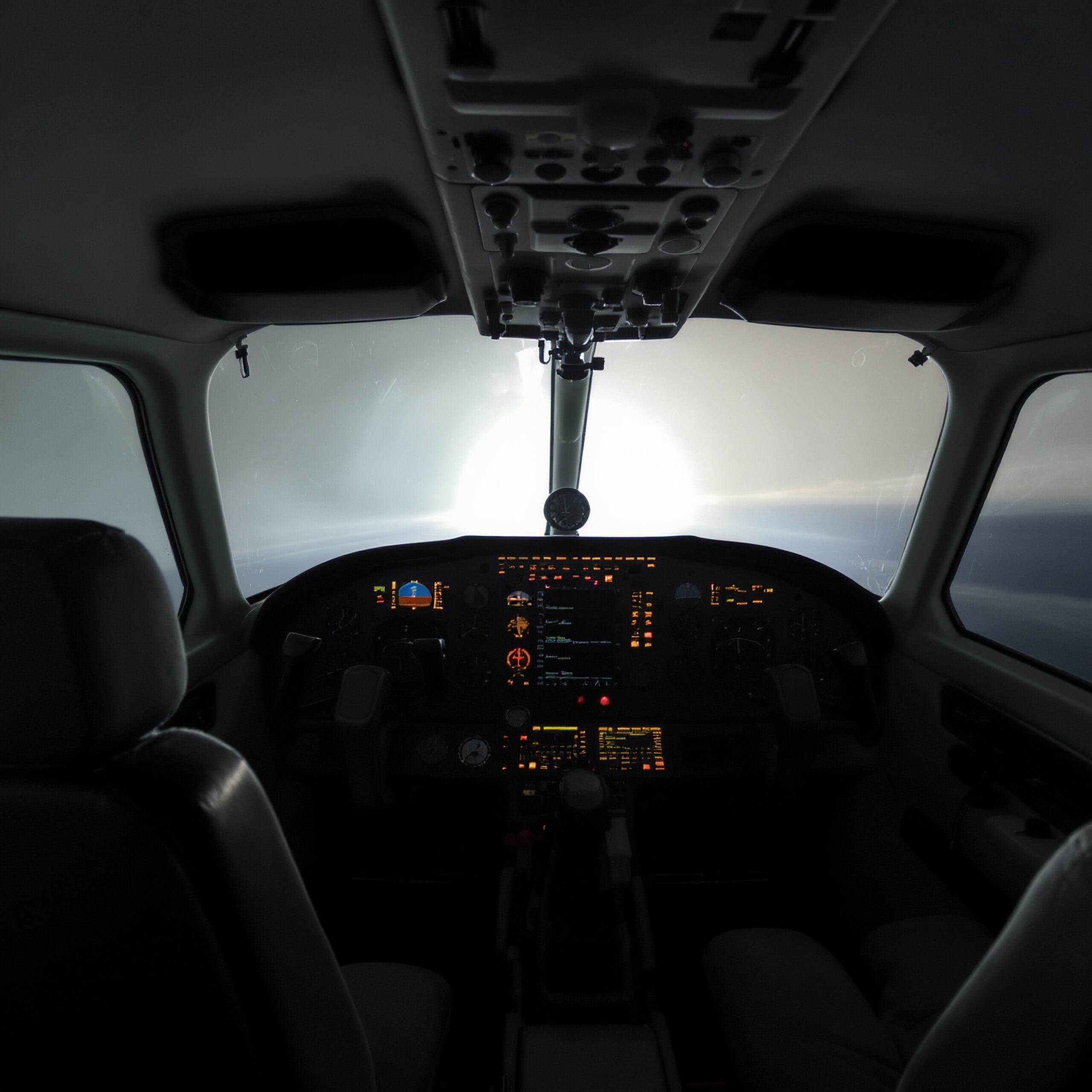

The Federal Aviation Administration (FAA) is encouraging Part 91, 91K, and 135 operators to expand spatial disorientation (SD) training for pilots, according to recent Information for Operators (InFO) guidance.
The InFO cites the National Transportation Safety Board (NTSB), which continues to identify spatial disorientation as a serious safety concern. High-profile accidents—including the 2020 helicopter crash that killed Kobe Bryant and eight others—showed how SD can have fatal consequences. Following the crash, the NTSB directed the FAA to evaluate training methods and convene a panel to assess simulation technologies for effectively preparing pilots to recognize and manage SD.
FAA’s guidance suggests operators include a mix of scenario‑based and maneuver‑based training, combining ground school, simulator sessions and in‑flight practice to help pilots recognize, avoid and recover from disorientation. It also notes conditions where SD commonly occur—such as low light, lack of visual references and changing weather—and stresses reliance on instruments over sensory cues.
While not mandatory, the FAA says enhanced SD training can address human‑factors issues, which contribute to some 80 percent of aviation accidents.


I agree with the FAA’s encouragement to expand spatial disorientation (SD) training—for all Part 91/135 helicopter operations, even when operating in marginal VFR conditions, changing weather conditions and at night.
From my own background—50 years in aviation, about 12,000 hours in helicopters, and time as a training captain and check airman—I’d add two practical points.
First, SD training should include deliberate, hands-on training in using the autopilot as an immediate escape tool. At the companies I worked for, I trained pilots who were not IFR-proficient to use the autopilot specifically for SD situations. If the autopilot is engaged or immediately available, selecting the go-around mode can level the aircraft and command a climb profile; the pilot’s immediate job becomes adding power and the helicopter transitions to a safe climb away from terrain. Used correctly, that capability can be life-saving.
Second, any aircraft carrying passengers in marginal weather—even if technically above basic VFR minimums—or at night should be equipped with a 3-axis (or better) autopilot. In my view, Part 135 operations should have a mandate requiring a 3-axis (or better) autopilot, and Part 91 operators should treat the same standard as a best practice. We owe that level of safety to the public we fly. Training matters, but equipment capability matters too, and the best results come when the two are paired: a capable autopilot and recurrent training that makes its use instinctive when visual references disappear.
I am not sure what the reluctance is to basic safety by many helicopter pilots and to cost adverse operators.
While I agree that spatial disorientation is a significant issue, the so-called “Kobe Bryant” crash was CFIT as a result of attempted continuation VFR flight into IMC (“scud running”), not spatial disorientation.