
















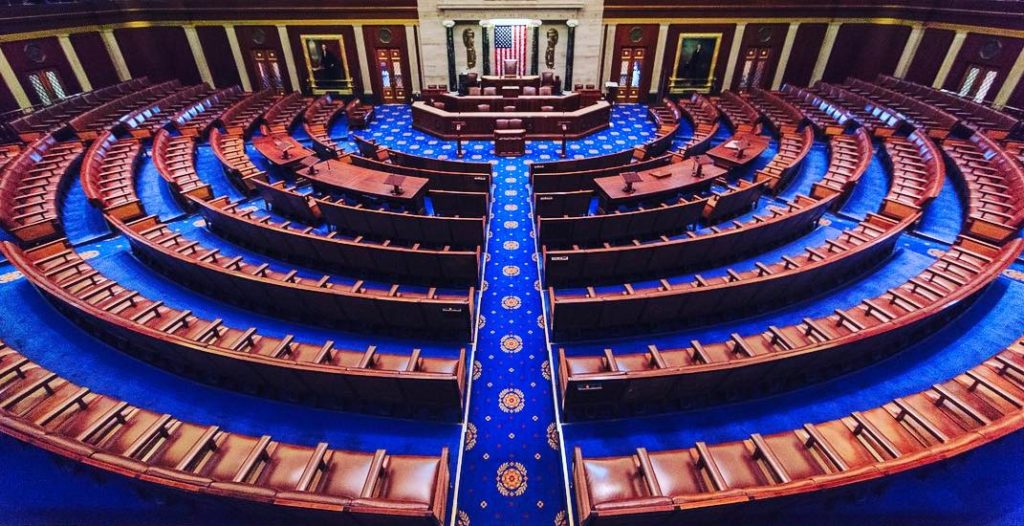

On Tuesday, the U.S. House of Representatives passed the ALERT Act, aviation safety legislation designed to prevent a repeat of last year’s fatal collision between an Army helicopter and a commercial aircraft
The Airspace Location and Enhanced Risk Transparency (ALERT) Act of 2026 cleared the House by a 396–10 vote, underscoring broad bipartisan support for reforms tied to the accident that exposed gaps in coordination, airspace management, and risk awareness in congested terminal environments.
Rather than focusing on a single point of failure, the ALERT Act takes a system-wide approach. Lawmakers say it incorporates recommendations from the National Transportation Safety Board (NTSB) investigation, with an emphasis on identifying and mitigating risks before they lead to incidents.
The Aircraft Owners and Pilots Association (AOPA) praised the measure, citing provisions that would require ADS-B In in ADS-B Out airspace, permit portable units for Part 91 operations, and support future equipage of airliners with next-generation collision-avoidance systems. AOPA also commended the legislation for including key provisions from the Pilot and Aircraft Privacy Act (PAPA), which prohibits the use of ADS-B for anything other than its original purpose—safety and airspace efficiency.
“By including PAPA, this bill is positioned to dramatically enhance aviation safety—as it ensures there is no disincentive for pilots to not use this important technology,” said AOPA Vice President of Government Affairs and Advocacy Jim Coon.
The ALERT Act now heads to a House–Senate conference committee, where lawmakers will reconcile it with the Rotorcraft Operations Transparency and Oversight Reform (ROTOR) Act, which cleared the Senate in late 2025 but stalled in the House in February.


Really weak reporting. Yes, the House passed the ALERT Act. It will likely fail in the Senate which previously passed the alternate ROTOR Act, which is preferred by the NTSB. I wonder how these two aviation safety bills differ? If only an aviation news source would compare them…
This article reads like a press release and offers no insight into differences between the competing bills, differences that are important to AVweb readers and differences that would be readily understood by AVweb readers.
AVweb used to provide actual insights into aviation issues. Now, it couldn’t be more superficial.
The problem is and will always be for the military to stay in their military operation areas (MOAs) and never fly in commercial airspace. Every US state has at least one MOA, some states have two or more MOAs. Dancing around an issue as is the case here is just unacceptable. Of course, during times of a declared war, I emphasis a declared war, the military will be free to go where ever they need to. Tell Congress to stop screwing around and to reiterate and use what has been in place for over 50 years. It is worse than it appears because solid state devices usually fail and usually at the most inopportune times; and should never be the primary method of aircraft separation. ADS-B in and out be dammed. And the GPS system should be turned over to the Coast Guard, a responsible organization compared to the military. One never knows when and where the GPS system will be down. The Coast Guard operated LORAN system never had this problem; and was probably better than GPS. What you get from avionics manufacturers lobbying congress: CRAP!!!
Aviation is not inherently dangerous, but it is terribly unforgiving. The problem is, and has always been, the federal agencies intentional ignorance and their attitude that someone else did something wrong. They didn’t, the FAA and NTSB did. This and other tragedies are the intended results of their aims. These departments must be swept clean of the personnel that made this and all the other tragedies of this aviation destroying way of thinking possible. Given the authority, they will ground every private pilot and military operation and say they are keeping people safe to fly the airlines. That never has been their job. Theirs is and always should be, to encourage a “safe environment” for the free and unimpeded access to all things aviation. What happened at Reagan was the latest example of how far off mission they are in their attitude toward safety in one of the most traffic sensitive corridors in the system. THEY AND THEY ALONE ALLOWED THIS. Along with their controller selections and staffing, it is they alone who orchestrated the eventual outcome of this catastrophe. I say again, it is intentional. People are policy and the policies of the FAA are killing people indiscriminately. All the congressional bills passed so far and in the future, won’t stop it until they look deep inside and fix themselves and prove it with the data showing large increases in the freedom to fly while enjoying increased safety of these tragedies.