















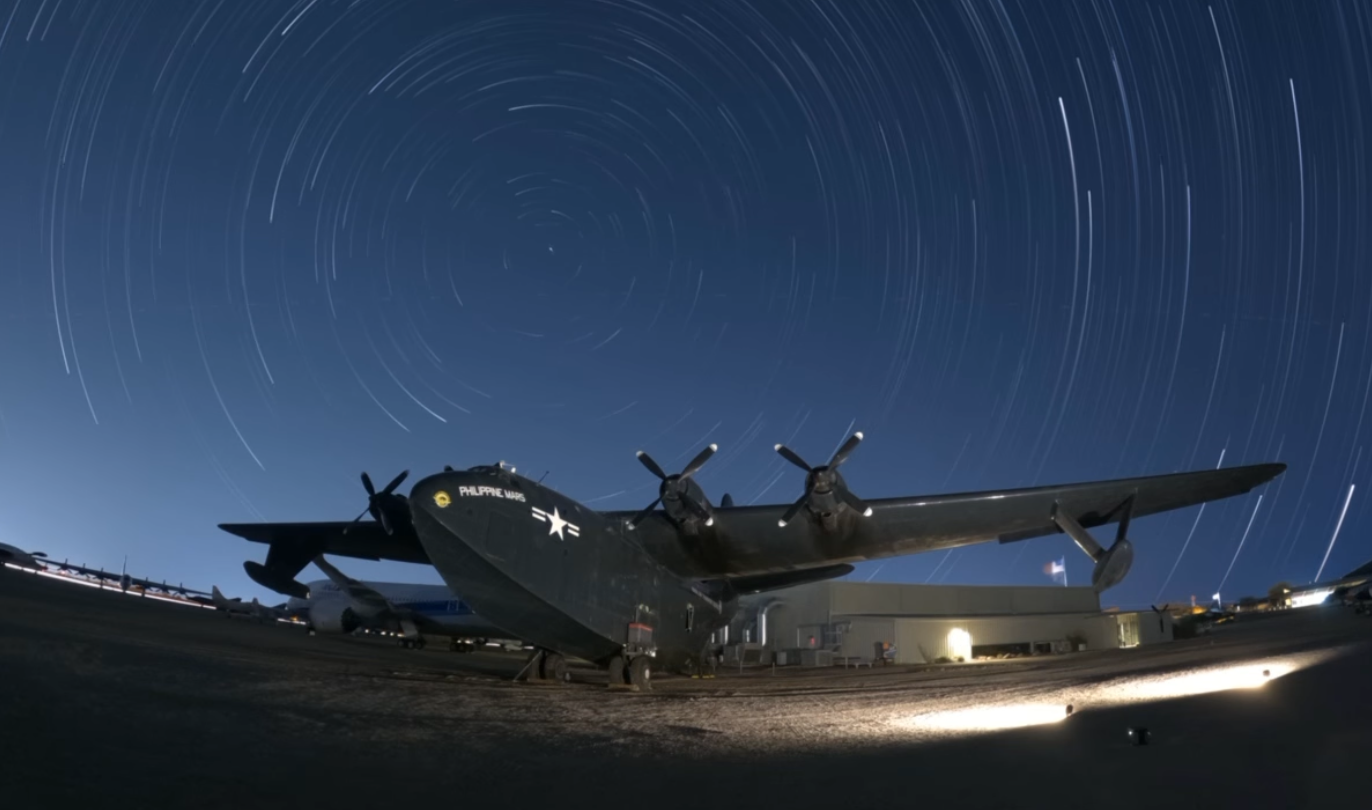

The Pima Air and Space Museum has completed the reassembly of the Philippine Mars, placing the historic aircraft on its public grounds after months of preparation. The four-engine flying boat made the final move from its staging area last week, towed into position where visitors can now see it up close. Museum staff said the placement marks the beginning of its permanent preservation.
“We … are proud and humbled to be her forever home in her final chapter—preservation,” the museum wrote in a Facebook post.
The Philippine Mars, one of only two surviving Martin JRM Mars flying boats, arrived in Tucson earlier this year following a complex transport effort. The aircraft was flown from Vancouver Island to Lake Pleasant, Arizona, in February before being dismantled for a 150-mile road journey south to Tucson. Because the aircraft is a pure flying boat, it required a large body of water to land on and, therefore, had to be driven to its final destination.

Its 26-foot-tall fuselage required convoys of as many as 40 vehicles and the removal of traffic lights and powerlines along the route.
“At any given point, we [had] at least 20 vehicles in the convoy,” said Ramon Purcell, founder of Boneyard Safari, which helped oversee the move.
Built near the end of World War II, the Philippine Mars was originally operated by the Navy for trans-Pacific transport and patrol before being converted to a water bomber in British Columbia. It fought wildfires for nearly four decades before being retired in 2015. Its sister ship, Hawaii Mars, was donated to a Canadian museum last year.
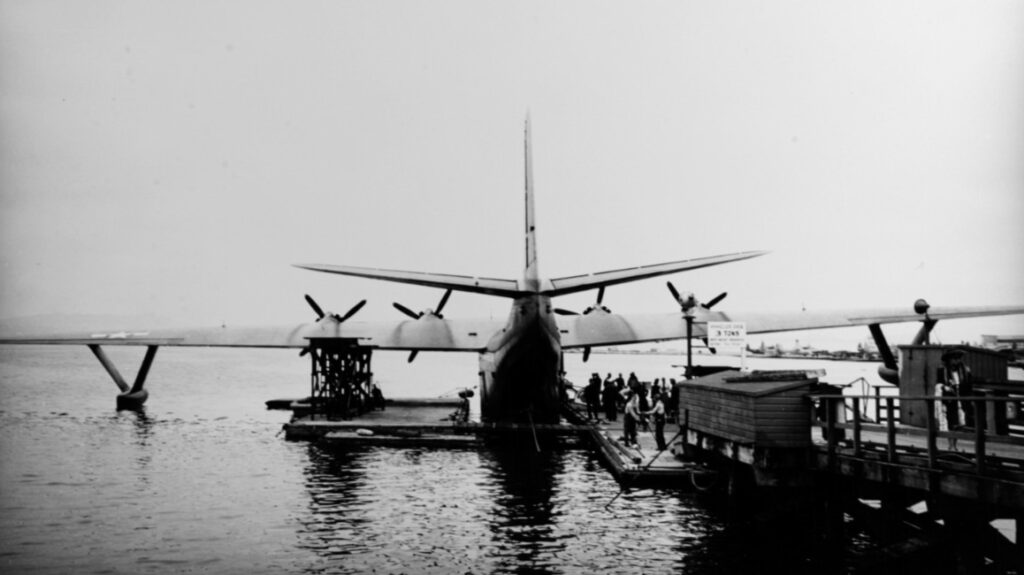
Crowds in Tucson lined highways earlier this spring to catch a glimpse of the Philippine Mars’s arrival.
“It was breathtaking. I got goosebumps. I still have goosebumps,” local resident Catalina Hammond told KOLD 13 at the time.
The aircraft now joins more than 400 others on display at Pima, where staff say its new role is to serve as a symbol of aviation history and preservation. Other Pima residents include NASA’s retired 747 SOFIA Airborne Observatory and GE Aviation’s original Boeing 747 Flying Testbed. It is also home retired airliners and even boneyard aircraft art exhibits.


0 replies