
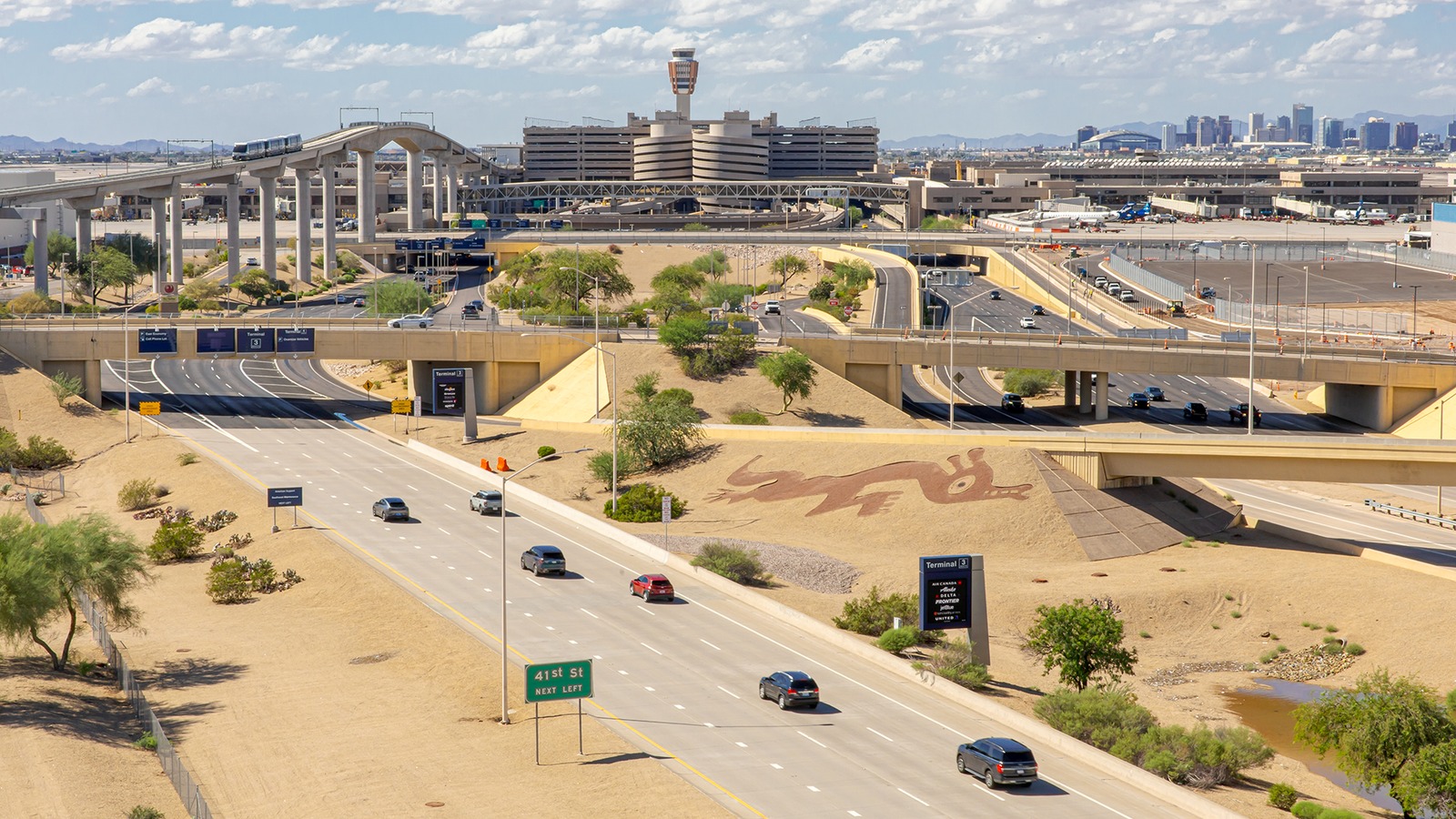

The City of Phoenix Aviation Department on Thursday released the results of a yearlong study exploring how advanced air mobility (AAM) technologies could be integrated into its airport system. The summary report outlines a framework for introducing AAM at Phoenix Sky Harbor International Airport (PHX), Phoenix Deer Valley Airport (DVT), and Phoenix Goodyear Airport (GYR). The study addresses infrastructure, regulatory and policy considerations as the city evaluates its readiness for supporting new forms of air transportation, including vertical takeoff and landing (VTOL) aircraft. Its release comes just one day after the U.S. Department of Transportation released its own Advanced Air Mobility National Strategy report.
The report identifies potential short- and long-term uses for AAM, such as flight training and cargo transport in the next three to five years, with expanded applications anticipated over the next two decades. Each of the city’s three airports has been assessed for possible roles in the AAM ecosystem.
Report authors said that Sky Harbor will be best positioned for passenger and freight operations with campus modifications. Deer Valley has an innovation park designated for related development, and Goodyear could expand existing facilities to accommodate maintenance for AAM vehicles.
Necessary planning steps would still need to take place in order to follow the framework, the report said. These include a utility infrastructure review, coordination with state and regional agencies, and potential public-private funding models. The study also acknowledged that the regulatory landscape around AAM is rapidly evolving on state and federal levels. FAA guidance on vertiports and a recently enacted Arizona law mandating state-level planning for AAM infrastructure will therefore play important roles in any future actions.
The Arizona Commerce Authority, in partnership with the Phoenix Aviation Department, is submitting a proposal to the FAA’s eVTOL Integration Pilot Program (eIPP). The federal initiative is designed to accelerate the adoption of advanced air mobility through collaboration between government and private industry.
Nearby in Mesa, Ariz., Falcon Field (FFZ) is currently weighing landing fees for most flights operating to the airport. Although officials have generally framed the proposal as a solution to budgetary constraints, local pilots have pointed out that the fee structure would likely impact flight school operations disproportionately, potentially forcing some of the field’s 15 flight schools deeper into the Phoenix area, further crowding some of the nation’s busiest airspace.