















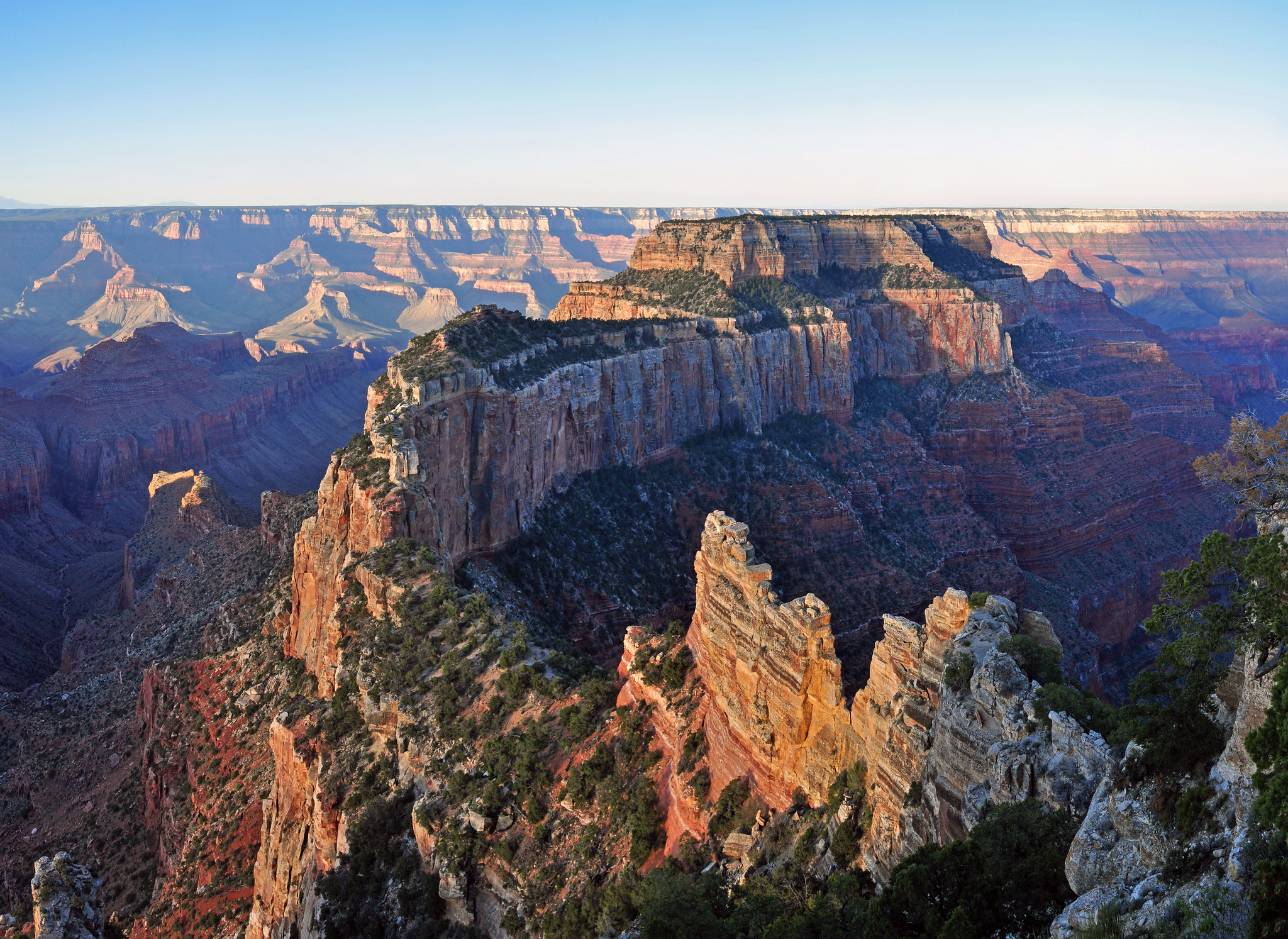

Three people were killed Sunday evening when a Piper PA-24 Comanche was involved in an accident near the North Rim of Grand Canyon National Park in Arizona. According to the FAA, the accident occurred at approximately 7:15 p.m. local time on Nov. 15. The National Park Service confirmed Monday that all three occupants had died. Their identities have not been released.
Search Crews Locate Wreckage
According to a National Park Service statement, the Grand Canyon Regional Communications Center received a report of the missing aircraft at approximately 11:30 p.m. Sunday. Its last known position was near the Basin area along the park’s North Rim. The Arizona Department of Public Safety launched an aerial search early Monday using forward-looking infrared and night-vision equipment. Search and rescue personnel from Coconino County, Utah’s Kane County and the Air Force Rescue Coordination Center also participated.
Park Service personnel located the aircraft and a debris field at approximately 10:15 a.m. Monday. The remote North Rim area includes high-elevation terrain and limited ground access. The aircraft’s departure airport, destination and registration have not been publicly confirmed.
Investigation Underway
The cause of the accident remains under investigation. According to Arizona’s Family, conditions around the Grand Canyon Sunday evening were reportedly neither windy nor rainy. However, detailed weather observations for the accident location have not been established. The accident occurred after sunset, although investigators have not determined whether darkness or weather played a role.
The National Transportation Safety Board will lead the investigation, assisted by the FAA and National Park Service. NTSB spokesperson Peter Knudson told the Arizona Daily Star that investigators would examine flight-track information, air traffic control recordings and available surveillance footage.
The Grand Canyon has been the site of several previous aviation accidents, including a 1956 midair collision that killed 128 people and prompted changes to U.S. aviation safety oversight.


Well, one thing’s for sure: they weren’t sightseeing. It was a routine family commute for them from DVT to BTF but one that requires substantial confidence in that beautiful old aircraft considering the terrain passing below in the unpopulated dark. NOT sure the relevance of the Connie disaster. I was one of the last folks legally to fly fixed wing below the rim when in June of 1986 a deHavilland DHC-6 Twin Otter sightseeing plane (Grand Canyon Airlines) and a Bell 206 JetRanger sightseeing helicopter (Helitech) collided over Crystal Rapids inside the canyon, killing all 25 people on both aircraft. Following the disaster, the Federal Aviation Administration (FAA) and Congress (led by young Senator John McCain) implemented sweeping air-tour restrictions—including Special Flight Rules Areas (SFAR), altitude floors, and flight-free zones—leading to strict limits on flying below the canyon rim for both safety and species noise sensitivity reasons. Based on his performance to date, once our newly-brown-topped Lame Duck hears those regulations were designed to protect wildlife and promulgated by McCain, he may ludicrouslyblame them for this crash and rush to rescind while his congressional automatons are still in the majority.
I formerly owned a part 135 air charter company based in Sedona and have flown over the Grand Canyon at night. With low moon light it is extremely dark with very little ground lighting and no horizon reference, I would absolutely not recommend crossing the Grand Canyon at night unless your are instrument rated and current and even then I would think twice if single engine.
While that 1986 accident was the final straw, noise complaints about overflights had been building since the helicopter tours began. It used to be a uniquely beautiful experience to fly light aircraft into the Canyon, and if they avoided the area close to the Village (easy to do in the vastness of the Grand Canyon), they were barely audible to hikers or visitors. I used to cross the rim in my Marchetti SF.260 well clear of the Village and established trails, roll inverted, and dive into the interior. Pure heaven!
Now, the SFAR restricts VFR flight to above 14,000 ft, except in three narrow north-south corridors where 11,500, 12,500 and 13,500 are available. The view is still magnificent, but it cannot equal flying into the Canyon.
And, of course, the helicopter tours, the source of most of the noise complaints, are still there, annoying the hikers, campers and visitors. One more triumph in John McCain’s legacy.
SteveR, why do you insist on bringing polotics into this discussion? What you said is irrelevant and not appropriate. Lets stick to aviation…
I just looked up your Marchetti!
Man that IS a beautiful plane…I bet that was really fun!
Exactly DannonRV6, They are useless, Old & Boring.
It looks like the pilot was attempting to fly northbound through the Dragon Corridor in the Grand Canyon SFRA. That route requires an altitude of 11,500 MSL but the pilot was clearly maintaining altitude at 10,500, exactly the wrong level given that it’s reserved for southbound traffic. Sunset was 5:18 local that night so if the crash happened around 7:30 it was definitely pitch black outside. Those innocent passengers must have been terrified.