















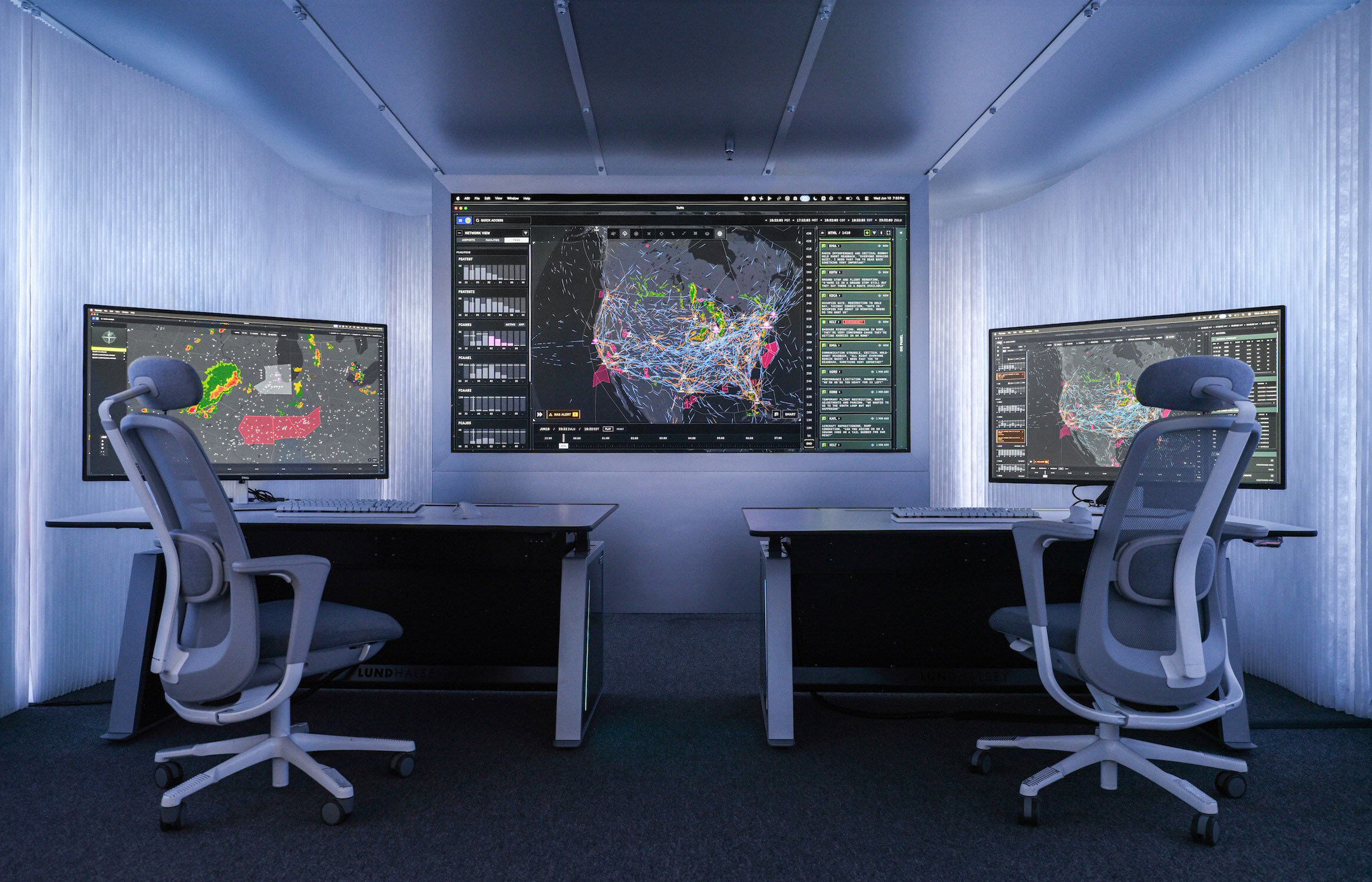

The FAA has awarded Air Space Intelligence (ASI) a 12-year contract to deploy new air traffic management software intended to help the agency schedule and manage flights across the National Airspace System. Reuters reported the contract is valued at $875 million.
The award includes Flow Management Data and Services, or FMDS, which will replace the FAA’s existing Traffic Flow Management System, and Strategic Management of Airspace, Routes, and Trajectories, known as SMART, which will work as an added capability within FMDS.
According to the FAA, FMDS is being developed as the future technology backbone of traffic flow management at the FAA’s Air Traffic Control System Command Center. The system is designed to analyze flight plans, airline schedules and real-time aircraft position updates to estimate traffic demand and capacity limitations.
SMART will use airline schedules, weather, airport capacity, airspace conditions and operating constraints to identify potential congestion before aircraft depart. The FAA says initial SMART operations are planned for this fall.
“Every day, our air traffic professionals knowingly manage thousands of scheduling conflicts across the National Airspace System, which ultimately end up as delays for the traveling public,” FAA Administrator Bryan Bedford said. “FMDS with the SMART capabilities will help us address that challenge by improving how we manage airspace before flights depart, reducing congestion, easing controller workload, and directly cutting down delays across the system.”
ASI said its Flyways AI platform is already in operational use with several aviation customers, including Alaska Airlines, Delta Air Lines, United Airlines and the U.S. Air Force. The company said it has invested nearly $100 million in the platform.
“ASI has spent years building and proving our technology in the most demanding operational environments in American aviation with the major airlines and the Department of War,” Bernard Asare, president of civil aviation at ASI, said. “We have invested nearly $100 million of our own resources to develop a platform that is operational today, and we are honored to bring that same proven capability to the FAA and to the American people at national scale.”
According to the FAA, the broader modernization effort is aimed at replacing aging radar, software, hardware and telecommunications infrastructure by the end of 2028.


0 replies