
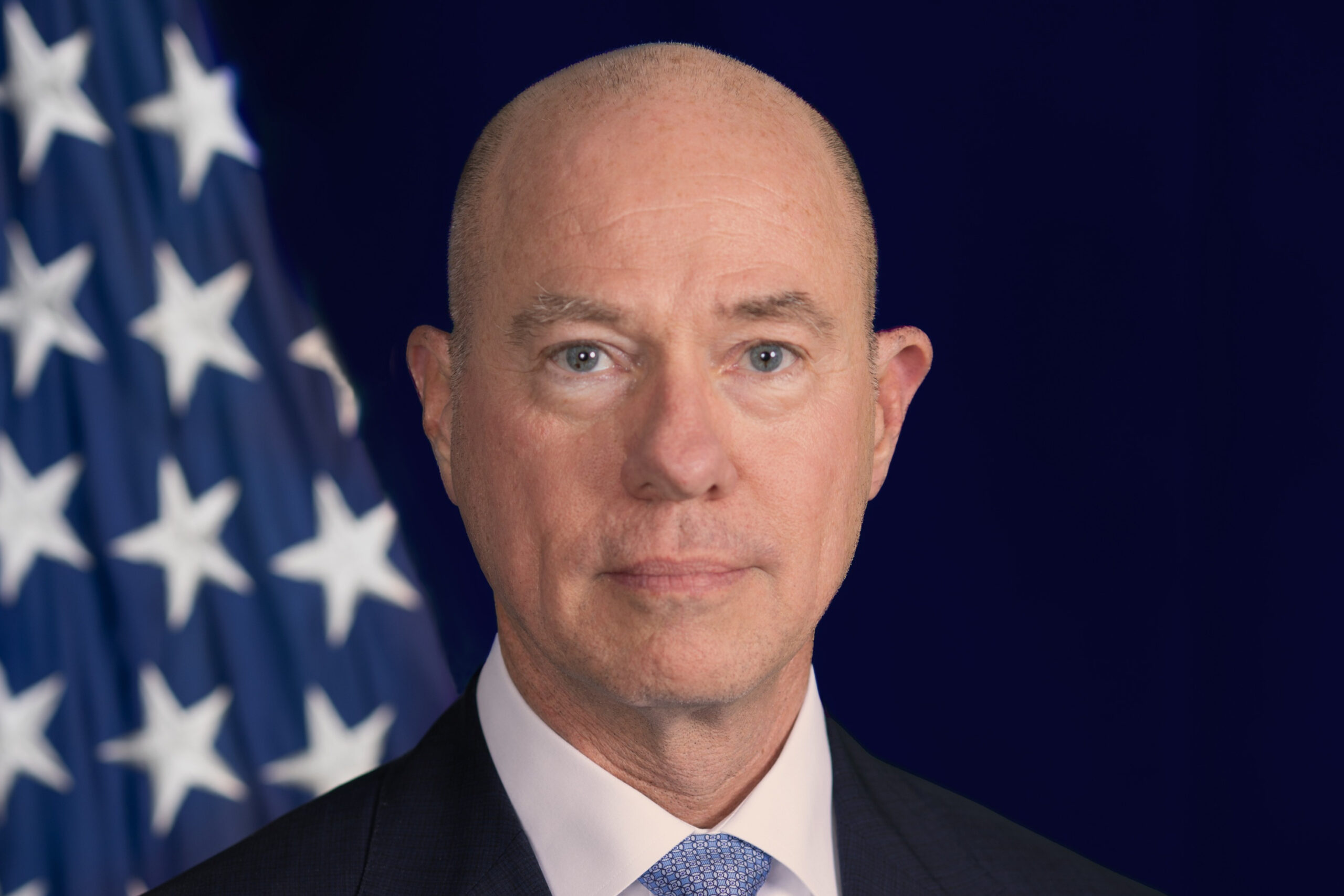

Federal Aviation Administration administrator Bryan Bedford appeared before the House Aviation Subcommittee on Tuesday to outline the agency’s assessment of the U.S. aviation system and steps taken following a fatal January collision near Reagan Washington National Airport. The hearing, titled “The State of American Aviation,” brought together lawmakers and agency leadership to review airspace safety, air traffic control staffing, and the pace of long-planned modernization efforts.
Safety Measures Following January Collision
Bedford, who took office in July, said January’s deadly accident between a CRJ700 and a military Black Hawk helicopter near DCA that killed 67 people prompted immediate operational changes and a broader review of risk management practices.
“The DCA accident was a defining moment for the FAA and for the country,” Bedford said in prepared testimony.
During the hearing, Bedford pointed to new helicopter restrictions around Washington-area airports, along with expanded airspace assessments and procedural updates for the area that were intended to reduce conflict in congested environments.
At the same time, lawmakers questioned why similar measures were not implemented earlier, noting that close calls in the region had been documented for years.
Subcommittee Chairman Troy E. Nehls described the aviation system as increasingly strained.
“So, what is the state of American aviation? From my vantage point, the state of American aviation is busy,” Nehls said, as members discussed traffic growth and operational complexity.
Staffing and System Capacity
Much of the hearing focused on air traffic control staffing and infrastructure. Bedford said the FAA met its fiscal year 2025 hiring goal of 2,026 controllers, and aims to add 8,900 more by 2028 while expanding training capacity. He said longstanding shortages cannot be resolved through incremental changes alone.
“If we continue with business as usual, never. We’ll never catch up,” Bedford said in response to questions about fully staffing facilities nationwide.
House members also raised concerns about aging towers, radar systems, and repeated delays in modernization programs, with several pointing to cost overruns and past schedule slippage. Bedford said the FAA is attempting to compress what had been a 15-year modernization roadmap into a significantly shorter timeframe, supported by $12.5 billion already appropriated for air traffic control rehabilitation.
The effort relies on a prime systems integrator to coordinate radar replacements, facility upgrades, and technology deployments across the national airspace system. Bedford acknowledged that oversight and execution remain key concerns, particularly in light of questions raised related to the relatively young company chosen as the integrator, Peraton, which was founded in 2017.
Reuters reported Monday that Transportation Secretary Sean Duffy has said the department would need an additional $19 billion to complete the broader modernization effort
Broader Context and Oversight
Reuters reporting from Monday also said the FAA is planning to open a new aviation safety office as part of a broader effort to improve oversight, hiring, and hazard identification following the January collision near Reagan Washington National Airport. The report said the move is part of a new initiative, known as Flight Plan 2026, that would establish the Safety Integration Office, expand agencywide risk management processes, and increase transparency after criticism that the FAA failed to act on repeated near-miss incidents.
Duffy said the agency had recorded dozens of near misses in Washington-area airspace in the years before the crash without taking corrective action, while National Transportation Safety Board Chair Jennifer Homendy said the FAA ignored earlier warnings about serious safety issues.