
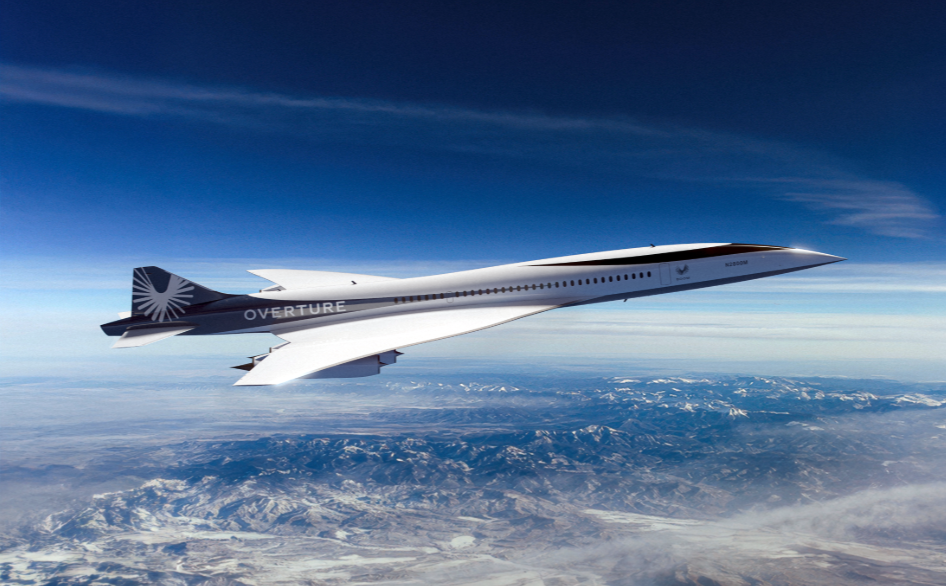

The House Transportation and Infrastructure Committee approved a bipartisan measure Thursday aimed at lifting the decades-old ban on supersonic flight over the United States, provided an aircraft does not generate a sonic boom that reaches ground level.
H.R. 3410, the Supersonic Aviation Modernization Act, would have the FAA make changes to current regulations in order to allow civil aircraft to operate at speeds greater than Mach 1 within the National Airspace System (NAS), contingent on preventing sonic boom impacts on communities below.
With the exception of limited military operations, supersonic flight has been prohibited over land in the U.S. since 1973.
During Thursday’s committee discussion, House lawmakers cited modern improvements in available noise mitigation technologies, including NASA’s ongoing X-59 QueSST demonstrator testing. They also noted industrial operations that utilize atmospheric modeling tools to help redirect shock waves away from populated areas.
Supporters of the bill have said it opens the door to greater innovation and progress in commercial aerospace.
“By balancing innovative technologies with a continued focus on safety, this legislation is a smart solution to help advance what looks to be a revolutionary technology enabling rapid point-to-point connectivity,” NBAA President and CEO Ed Bolen said. “This measure will also enable the U.S. to maintain its competitive edge and remain the global leader in aviation.”
The bill was introduced by Aviation Subcommittee Chairman Troy Nehls (R-TX) and co-sponsored by Rep. Sharice Davids (D-KS).
It is not without its detractors, who raised concerns around the potential social and environmental impacts of supersonic flight.
“There’s a reason we haven’t had civilian supersonic flight over land for fifty years, and it’s not because we lack the technology to go fast,” Rep. Steve Cohen (D-TN) said during Thursday’s full committee markup session. “It’s because of the social and environmental cost.”
Cohen argued that introducing supersonic civil aircraft into the national airspace system would be premature without “a serious reexamination of community impact and public health data.”