















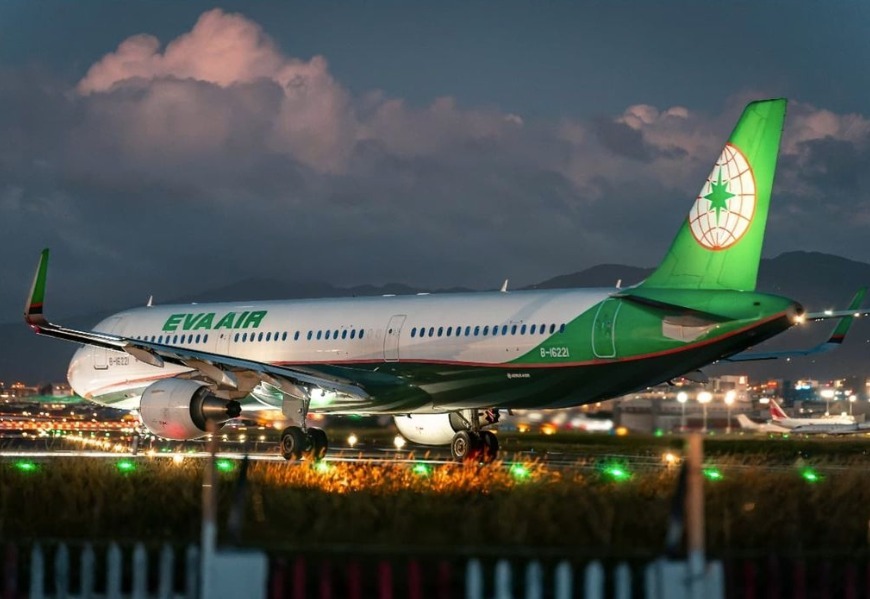

Taiwan’s Ministry of Transportation and Communications announced Tuesday that it has revised the Regulations Governing the Certification and Qualification of Aviation Personnel, lowering the minimum pilot age requirements for pilot certification to expand the supply of qualified flight crews.
The changes reduce the minimum pilot age for commercial and multi-crew certification from 20 to 18, and for airline transport pilot certification from 23 to 21. The ministry said the adjustments bring Taiwan’s standards more closely in line with the International Civil Aviation Organization (ICAO) and European Union Aviation Safety Agency (EASA), as well as the practical needs of aviation license management.
The amendments also raise the pilot age limit for airline operations to 65, a move officials said would improve scheduling flexibility for airlines. The Civil Aeronautics Administration (CAA) noted that pilots over 60 must receive medical examinations every four months. While ICAO allows both pilots on international routes to be older than 60, Taiwan will maintain its rule permitting only one pilot over that age on such flights. The CAA said the revisions were informed by regulatory practices observed in other major aviation markets. This rule has been called into question by some governments recently, including in the U.S., where senators have argued for an increase to 67.
The CAA said Taiwan’s decision to align with those international benchmarks supports the country’s goal of harmonizing safety and certification frameworks while helping address the aviation industry’s growing demand for qualified pilots.


Competency has nothing to do with age per se.
Arbitrary ages have had the effect of extending careers that should be over,
Arbitrary ages have also caused the loss of some of the best talents in the industry.
A lifetime as a Training Captain in the industry;
A continuing career managing pilots; teaching and flying unique aircraft.
Age is a distraction from reality.
Aviation is the most monitored profession in the world.
Deal with reality, not arbitrary paramaters placed by no-nothing politicians!