

















[Editor’s Note: This is a guest post by Ze’ev Nafte, an airline pilot and ALPA union leader.]
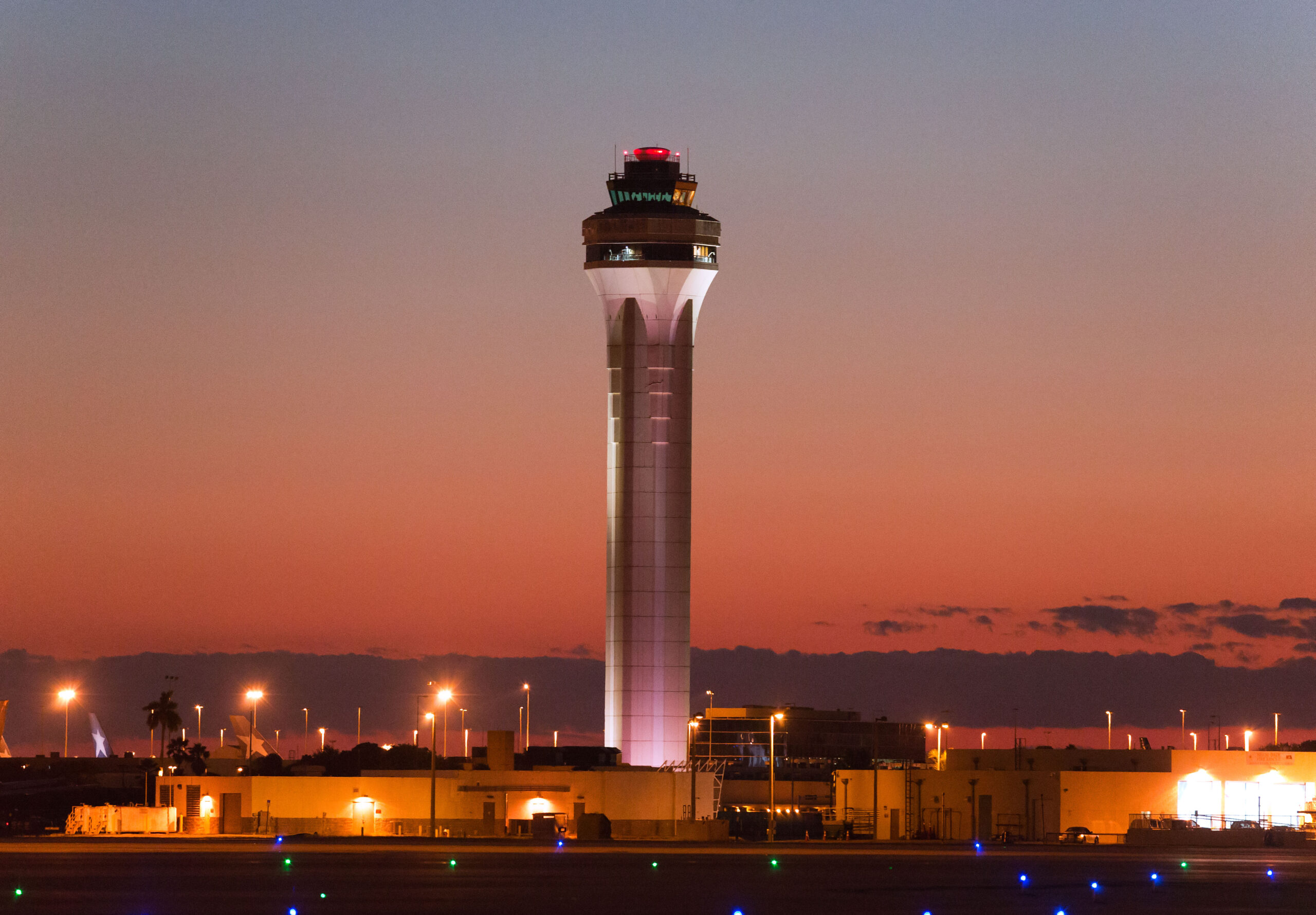
Miami International Airport, late at night: I was sitting at the hold-short line trying to call for clearance, but the frequency was impenetrable. One controller; just one, was working clearance, ground and tower at the same time at one of the busiest airports in the United States. His voice never stopped. Every second was another instruction, another aircraft to move, another conflict to untangle.
Out on final, a Boeing 787’s captain kept trying to request landing clearance. He couldn’t get in either. His calls were swallowed in the constant stream of radio traffic as the lone controller tried to run an entire airport by himself, taxiways, approaches, departures, all of it.
This wasn’t a dramatic movie moment. It was a real-world snapshot of an air traffic control system stretched far past safe limits, now pushed even closer to failure by the ongoing U.S. government shutdown.
Shutdown Strains an Already Fragile System
As the federal shutdown grinds through November 2025, critical aviation safety operations are feeling the impact. Air traffic controllers, deemed essential employees, have been working without pay since the shutdown began on Oct. 1, staffing towers and radar centers to keep flights moving. Morale is plummeting and fatigue is soaring.
“During the shutdown, these professionals are required to oversee the movement of the nation’s passengers and cargo while many are working ten-hour days and six-day workweeks due to the ongoing staffing shortage, all without pay,” says Nick Daniels, president of the National Air Traffic Controllers Association (NATCA).
Financial and mental strain is mounting, creating “substantial distractions for individuals who are already engaged in extremely stressful work” and making the skies “less safe with each passing day of the shutdown.”
The Federal Aviation Administration (FAA) itself has acknowledged the pressure on air traffic controllers. Facing a record-length funding lapse (now the longest U.S. shutdown in history), the FAA has resorted to extraordinary measures to maintain safety. U.S. Transportation Secretary Sean Duffy announced a nationwide reduction of airline flights by up to 10% at 40 major airports, an unprecedented step aimed at easing the workload on besieged controllers. Starting with a 4% cut in flights and scaling up to 10%, this plan seeks to alleviate controllers after tens of thousands of flights have been delayed since the shutdown began.
Airlines report at least 3.2 million travelers have already been impacted by air traffic control shortages and resulting delays. By early November, on a single day, more than 1,500 flights were canceled and 6,700 delayed as staffing issues spread to a dozen major facilities. The FAA even warned it might have to double those flight cuts – reducing traffic by 20% – if more controllers begin to stay home for relief .
Front-line controllers describe doing their best to keep the system safe, but under increasingly tough conditions.
“After 31 days without pay, air traffic controllers are under immense stress and fatigue,” the FAA itself admitted in a recent advisory.
At airport terminals, NATCA members have been leafleting passengers about the dangers: the shutdown is introducing risk into an already fragile air traffic control system that was already stretched thin before this stalemate. The union warns that key safety activities have stalled. Training of new controllers is halted, equipment maintenance and modernization projects are suspended, and even routine safety oversight like inspections and software updates are delayed.
In other words, the safety net that supports the controllers in the tower is fraying.
“When [staffing] shortages happen, the FAA slows traffic into some airports to ensure safe operations,” an FAA spokesperson noted.
That means more delays for travelers, but officials say it’s necessary to avoid overloading the few controllers left on position.
A Longstanding Shortage Reaches a Breaking Point
The current air traffic control crisis did not appear overnight. The United States has faced an air traffic controller staffing shortage for years, and the shutdown has poured fuel on an already smoldering fire. Even before October, the FAA was short by roughly 3,500 certified controllers compared to its target staffing levels. In late 2024, there were only about 10,800 fully certified controllers on the job – about 3,800 fewer than the FAA says it needs to adequately handle traffic.
That gap – nearly 25% of the workforce – meant mandatory overtime and six-day weeks had sadly become routine at busy facilities.
“Many [controllers] are already working six days a week,” NATCA’s Daniels noted, and the system has become “increasingly dependent on mandatory overtime” just to keep up.
This air traffic controller shortage is a slow-moving crisis years in the making. A wave of retirements and a training pipeline that can’t keep up have hollowed out the ranks. By law, controllers must retire by age 56, and many retirees have not been fully replaced. The training process for a new air traffic controller takes as long as 2–5 years of intense education and on-the-job experience, and not all trainees make it through.
Hiring has lagged behind attrition; despite bringing on 1,500 new air traffic controllers in 2023, the FAA still fell far short of needed numbers. When the shutdown hit, it slammed the brakes on what hiring and training was in progress. All new controller classes at the FAA Academy in Oklahoma City were paused, and no new trainees can be added until funding is restored.
It’s a déjà vu of 2019: during the 35-day shutdown that winter, the FAA’s academy closed and the pipeline of new air traffic controllers was severed – a disruption the system never caught up from. Today, NATCA’s president says the nation has 400 fewer controllers on board than it did even during the last shutdown in 2019, highlighting how much ground has been lost.
Alarmingly, the shutdown is now accelerating the loss of veteran air traffic controllers. With paychecks on hold, resignations and retirements are spiking.
“Controllers are resigning every day now because of the prolonged nature of the shutdown,” Daniels warned in one interview.
Many air traffic controllers who were eligible to retire have decided to walk away rather than work indefinitely with no pay. Secretary Duffy reported that retirements have quadrupled – up from about 4 per day to as many as 15–20 per day – since the shutdown started. Each departure takes years of experience out of the tower cab and leaves remaining staff to pick up the slack. The FAA is already short by thousands of air traffic controllers, and could be facing an even deeper staffing hole by the time this impasse ends.
“Safety Last” – Controllers and Pilots Voice Concerns
From the control tower to the cockpit, professionals are raising red flags about what this means for aviation safety. Exhausted controllers worry that an already stressful job is becoming downright untenable.
“We’re not just tired; we’re broken,” one controller confided about the relentless workload in Florida’s packed airspace.
Another described every shift as “a marathon, and there’s no finish line.”
The level of fatigue is unprecedented, union leaders say, and it’s already manifesting in mistakes. Senator Ted Cruz, after being briefed by the FAA, said that pilots have filed more than 500 safety reports since the shutdown began about errors made by controllers due to fatigue. These are warning signs – confidential reports of aircraft getting too close, instructions that have to be corrected, or other lapses that could portend a serious incident if conditions don’t improve.
Both federal officials and outside experts have voiced unusually candid worries about degraded safety margins.
“Let’s not lie about the pressure,” Secretary Duffy remarked, acknowledging that controllers working six days a week, 10 hours a day will “get burned out” – and that a higher level of fatigue is now evident.
Ross Sagun, a former air traffic controller turned aviation consultant, likened the situation to a three-legged stool missing a leg: when you remove one layer of redundancy or staffing, “things get a little bit shaky.”
“I’m real concerned about the level of safety right now,” Sagun said bluntly.
Airline pilots are concerned, too. They’re trained to handle situations when a tower is short-staffed – or even closed – but no one likes flying blind without the extra set of eyes that controllers provide on the ground. If one controller is doing the work of three, critical calls can go unanswered.
Holiday travel season is looming, compounding fears about a cascading gridlock. Millions of Americans typically fly around Thanksgiving at the end of November, but this year many may find fewer available flights and longer journey times if the stalemate continues.
“It’s only going to get worse… the two weeks before Thanksgiving, you’re going to see air travel reduced to a trickle,” Secretary Duffy warned.
Airlines have already canceled hundreds of flights and are preparing to trim even more from schedules in the coming days. The trade group Airlines for America estimates that over 4 million passengers’ travel plans have been disrupted since Oct. 1 due to staffing shortages.
The ripple effects extend beyond frustrated passengers: economists caution that a sustained hit to air travel during the busy holiday period could even dent the broader U.S. economy, as business trips and holiday spending are curtailed.
Back in Miami
Back in Miami, the late-night scene at the airport offers a snapshot of this fragile status quo. The solitary controller in the tower somehow keeps all the pieces moving – clearing a jet for takeoff on one runway while guiding an inbound flight onto another, and instructing ground crews all at once.
Planes are still taking off, still landing; the traveling public is largely unaware of the tightrope being walked above them. The fact that it works, day after day, is a testament to the dedication of those unsung individuals on the other end of the radio.
But as the shutdown drags on and the air traffic controller shortage worsens, the margin for error is razor thin.
“When you take one of the legs off the stool, things get a little bit shaky,” warns Sagun, the former controller. Aviation has always layered backup upon backup to make flying the safest mode of transport – yet today, many of those layers are wearing threadbare.
The nation’s airspace remains safe – for now – but it is operating on the sheer willpower of a workforce under extraordinary strain. Air traffic controllers and pilots alike are urging leaders to restore the support system before luck runs out.
As my experience in Miami illustrates, it’s an apt metaphor for America’s aviation system in this shutdown: overloaded, overworked and in urgent need of relief. Each day without a funding deal is another day that relief is delayed – and another day that the people guiding us home do so under growing duress.
The hope is that help comes before the situation crosses an unforgivable line. In the meantime, if you find yourself on a flight arriving in Miami or any major airport, spare a thought for the voice on the other end of the radio – and the heavy burden they carry to get you safely on the ground.

Thanks to all those who stuck it out while waiting to get paid. To those who were unable to show up for work, I understand. Someone has to pay for all the bills that show up. Even transportation costs money whether in gasoline to power a personal vehicle or mass transportation. If you don’t have the funds it’s a little difficult to show up unless you want to walk to work. I think the president’s and Secretary Duffy’s comments on those who were unable to show are completely out of line. Once again thanks to those who kept the system running. I am a charter pilot and have had no complaints with those who worked during what had to be a difficult period for everyone.
The old saying goes “don’t bring me problems, bring me solutions.”
Preventing a recurrence means re-imagining everything — including privatizing ATC and TSA. The funding stream under government oversight is fragile by which service interruptions will happen whenever diametrically opposed viewpoints crop up in Congress.
Pay interruptions are considered “leverage”, according to some members of congress. This is no way to run things.
Turning adversity into opportunity is what makes us special. Now is the time to forge ahead with privatization.
Why not privatize the whole ATC system? Two of the airports including my home field are privatized and didn’t miss a paycheck.
As a former controller, this sounds like a broken record. Nearly 15 years ago, we faced exactly the same issues. I worked 6-day workweeks (scheduled overtime) on a regular basis, and stand-alone shifts when I was literally the only person in the building for up to 4 hours at a time. If you had to pee, you’d use an empty cup/bottle or you’d run to the restroom when there was a break in traffic, then when you got back, you’d transmit, “Calling XXX tower/approach, say again…” and hopefully nobody would answer. I even remember one colleague telling a story about when he just did his business in the garbage can while working. The recent shutdown without pay exacerbates the issue, but this is by no means a new problem. There’s only one permanent solution… hire people… more than are needed, because half of them won’t certify.
The tower at Oshkosh for several weeks of the year with no incidents and with minimum controller input. It deals with a significant percent of pilots who don’t know what to do and or are flustered and barely manage.
You tell me a groupd of highly trained pilots flying the latest gear, with TCAS, ADSB and still have eyeballs can’t figure out how to get in and out of an airport.
My understanding is ADSB was supposed to shift control from the ground to the air?
What happened?
Air traffic control privatization, especially in airline-dominated, user-fee models, tends to favor the interests of the airlines over general aviation. The United States has by far the largest GA sector in the world, partly because operating GA here is relatively affordable. No ATC user fees for most operations, abundant airports, and a large used-aircraft market combined with a regulatory and cultural environment that encourages private flying. That’s also why the U.S. is one of the world’s major pilot-training hubs: many foreign students come here because flight training is often cheaper and more accessible than in their home countries. GA and small training operators form a crucial pipeline for airline pilots and aviation mechanics. According to FAA’s 2022 economic impact report, GA contributes roughly $66 billion per year to U.S. GDP, compared to about $216 billion from airline operations, so GA is on the order of a third of the airlines’ GDP contribution. And if you want a real-world comparison, talk to GA pilots in Canada or Europe: under corporatized, user-fee ATC systems, they face higher fixed costs and more user charges than U.S. pilots, and many will tell you GA is harder to afford and grow there than it is in the U.S.
When I reported on duty as an air traffic controller developmental after the strike, my facility had one journeyman, 4 supervisors and a tower manger, and a bunch of newbies that didn’t know much. The facility manager conducted OJT at least two hours a day. They went by the Marines creed that everyone is a rifleman first and something else second. Since probably 95% or more of FAA staff and management comes from the controller ranks, these folks should also be manning the boards. That’s what management did during my time in the FAA, and we were always short-staffed my entire career, the only group never short-staffed was management positions. I don’t know how it is now, but that was the way it was in my day. 29 years working, the 5th busiest airport in the country. On my 56th birthday, I applied for a wavier to work on and was denied.
I’m a Canadian GA pilot. I read a lot of negatives about NavCanada, the Not For Profit corporation which runs the Canadian ATC system, in US publications. I will give you my experience. I pay about C$80.00 per year to NavCanada for my C182. This rate varies according to the weight of the aircraft. This gives me unlimited use of their services, all across Canada, Flight Planning, Weather, Enroute contact, Flight Following, and of course SAR services. I have never been refused service, though I have been advised VFR is restricted in the CYVR control zone on occasion, so I go around. This is usually a staffing shortage.
I have flown as far east as Ontario, and received the same excellent service all the way across.
The Board of NavCanada consists 15 people, 4 from commercial aviation, 1 from GA, 3 from the Government of Canada, 2 from the ATC Union, 4 independent members, and the President /CEO of NavCanada.
To learn more their website is Navcanada.ca
By the way, I am not an employee of NavCanada, just a satisfied customer.
Thinking out loud:
Regarding privatization, occasional pain may be better than a daily dose.
Shutdowns: we have data from multiple shutdowns how ATC is impacted but we push the system to its limits. I would propose we consider rolling with it throttling the system at the start. The politicians are incentivized by constituent complaints. We give them a false sense of leverage and endanger lives by pushing the system. Perhaps the shutdown would have ended sooner if ATC services would have impacted the pols’ travels sooner. Perhaps too, the retirement numbers would have been lower. I know the devil’s in the details. Just something to ponder.
Real change will only happen through something radical and simple.
Just tie traffic volume to ATC staffing levels.
Low staff count, low flight count.
The public might be mad, but the airlines will be absolutely pissed. You can bet, funding and staffing will quickly follow.
We operate a Flight School in Canada (Winnipeg). NavCanada provides very poor service. Everything is about the airlines. We are faced with our terminal area being closed for more then 150 days so far in 2025. We are limited in the pattern for more then 80 days this year. (life blood of a flying school). I fly in the states a lot, the current FAA system is far, far better then NavCanada monopoly.
G4381/25 NOTAMN
Q) CZWG/QACCH/IV/NBO/AE/000/030/4955N09714W007
A) CYWG B) 2511142100 C) 2511150230
E) DUE TO REDUCED SYSTEM CAPACITY:
LIMITATIONS IN EFFECT WITHIN THE WINNIPEG/JAMES ARMSTRONG
RICHARDSON INTL (CYWG) CTL ZONE CLASS C AIRSPACE: ALL ACFT
REQUESTED TO REMAIN CLR OF THE CTL ZONE EXC DEP/ARR AND IFR OR
VFR TRAINING CERTIFICATION FLT WITH PPR.
REPETITIVE CIRCUITS NOT AUTH. HOT AIR BALLOON FLT NOT AUTH.
FOR INFO CTC 204-983-8338)
DUE TO REDUCED SYSTEM CAPACITY: VFR TFC IN VANCOUVER TWR CLASS C AND D AIRSPACE IS RESTRICTED TO ARR AND DEP ONLY FROM CAM9 AND DESIGNATED HELIPADS. VFR RWY DEP ARE EXEMPT
DUE TO REDUCED SYSTEM CAPACITY AND ANTICIPATED TFC DEMANDS VFR ACFT MAY ANTICIPATE DLA AND CIRCUIT TRAINING WILL NOT BE AVBL IN PITT MEADOWS TWR CLASS C AIRSPACE.
The president and secretary’s comments are completely “in line.” People accept or decline a job based on the conditions attached to it. One of those for controllers is that they WILL continue to work, and be paid full back pay, in the event of a shutdown.
You can’t take the good without the bad.
The lack of pay during a shutdown has already been pointed out by Secretary Duffy as something that makes it more difficult to recruit candidates for a controller position. Very few individuals will be willing to work without getting paid, no matter how well paid that job is. Sure, the government makes good on back pay once the shutdown ends, but what about paying for the bills that come up? Just because the government can get away with spending money it doesn’t have, doesn’t mean employees are able to do the same.
I get it. But airline crews don’t get to decide to just not come to work because it’s a holiday. That comes with the territory.
Military people don’t just go back home when they’re not paid (and I believe they SHOULD definitely be paid).
If you take the job, you’re obligated, by law AND by character, to follow the conditions of your employment.
I can’t believe no one is saying the obvious part out loud.
Controllers are some of the highest paid folks in the government. Their median wage is $150k per year before overtime, incentive pay, and locality pay. Experienced controllers in major centers can make upwards of $225k per year.
Unless they live under a rock, federal employees understand that shutdowns happen and you need to manage your finances accordingly. Controllers are paid well, are highly skilled, and the safety of our system relies on their judgement, their ability to assess complex dynamic situations and respond with the right decision, every time.
How then can some of these guys not have the judgement to live within their means and manage their liquidity to mitigate the political risk of their chosen career?
Zero sympathy here. The guys who blew off work while their colleagues tried to pick up the slack should go find a new career. Nobody needs that type of cancer on their crew.
Unable to show up for work? WTF does that mean? Unless they were sick or in the hospital, they should be fired! Its the unions mentality to keep ATC hardware archaic to protect job security. As they say “Only we know how to operate 50 yr equipmemt”. Job security … pfft! As mentioned ATC and TSA should be privatized. Better service, cheaper … not to mention hire and fire as needed! Only AmTrac beats ATC to the botton of the barrel of business run so poorly they continue to fail, over and over and over again! Hold EVERY person accountable for their actions … EVERY one …
Damn straight! Fire the deadbeats…
The fact that DOT and the FAA banned general aviation at certain airports during the shutdown proves that the airlines would get preferential treatment in any “privatization” scheme the government would come up with. Just like the system in Canada, and anywhere else ATC is “privatized”.
Convert Washington to a ghost-town…
This presumes that we start the big “deadbeat firing” at the top.
Senate: Gone
Congress: Gone
White House: Gone