















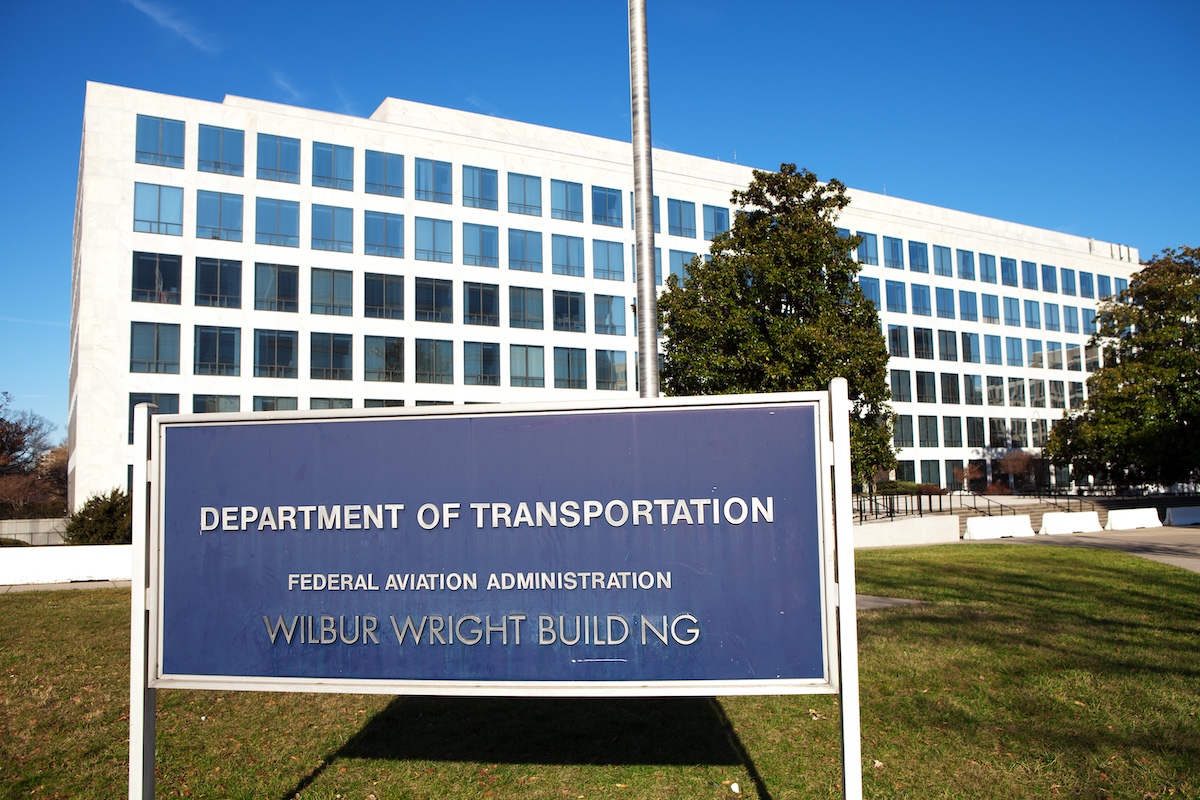

I’ll go ahead and spoil the ending; yes, I think too much is being asked of the FAA right now.
It’s not so much the ‘what’ of the ask that is the problem, but the ‘how much’. The FAA has always been pulled in two directions at once. On the one hand, it needs to modernize quickly enough to keep pace with technology and industry demand. On the other, it needs to do that carefully enough to preserve the layered safety model that defines U.S. aviation.
There is nothing wrong with asking for more modernized air traffic control systems, nor is it wrong to study new technologies or evaluate how new industry demands can be safely integrated into the larger system. Safety and early-stage progress have always been (often competing) priorities the FAA has been expected to deal with.
What feels so different now, though, is the pace and magnatude of the priorities the administration is being asked to balance. The FAA is being told by the White House to accelerate the integration of BVLOS drones and advanced air mobility integration. It is being asked to increase system automation and fully build-out and implement a sweeping new air traffic modernization program. All-the-while, the pressure to move forward fast is arriving at the same time the agency is being forced, quite publicly, to confront what look to be long-standing cultural and structural safety gaps.
Pace vs. capacity inside the system
The Senate Committee on Commerce, Science, & Transportation held a Thursday hearing with NTSB Chair Jennifer Homendy. It offered a rare, public look at that ramped-up tension at the FAA.
The conversation was nominally about a single (albeit major) accident and equipment requirements, but it kept returning to something broader: how decisions move (or don’t) inside the FAA.
Homendy told senators that the collision followed “years of unheeded warnings,” adding that recommendations had been “rejected, sidelined, or just plain ignored.” She described a safety culture at the FAA where people were hesitant to speak openly with investigators. A culture in which individuals feared retaliation if they put a spotlight on existing problems.
Senators also asked questions about how the FAA uses (or sometimes doesn’t use) safety data, internal communication breakdowns and coordination (or lack thereof) between agencies.
The picture that emerged was fairly bleak. It was a picture not of a single point of failure, but of a system that struggled to translate warnings into action.
That matters now because the FAA is being asked to move faster than at any point in recent memory, and to do so on multiple fronts at once.
Modernization as opportunity—and execution risk
President Donald Trump asked for a full overhaul of the nation’s air traffic control system last year, and it has already swung into motion. To be clear, that’s certainly not a bad thing and is a move that is widely viewed as necessary. Large portions of the current infrastructure date back decades, and officials have repeatedly pointed to aging equipment, reliability issues and rising traffic demand as reasons to accelerate replacement and upgrades.
The scale is unprecedented and includes nationwide communications, surveillance, automation and facility upgrades, alongside a broader push toward a new air traffic architecture later this decade.
On paper, the safety case is straightforward. Modern systems reduce equipment failures, improve situational awareness and give controllers tools that align with how aviation actually operates today.
But scale and timeline introduce their own pressures.
Executing a modernization program of this size requires sustained coordination across technical offices, operational units, contractors and regulators. It also depends on a culture that surfaces risk early and allows course correction without friction.
That’s the same environment lawmakers and investigators questioned in the aftermath of the DCA crash, citing long-term issues such as routes that had not been reviewed in decades, systematic communication barriers and safety concerns that came nowhere near reaching decision-makers.
Modernization is widely seen as the right move. The challenge is doing it well in what appears to be a problematic safety culture while the rest of the system is also changing.
Emerging technologies entering the airspace now
At the same time legacy infrastructure is being rebuilt, entirely new categories of aircraft and operations are moving toward routine use.
Federal policy has explicitly directed the FAA to accelerate integration of drones, beyond visual line of sight operations and advanced air mobility platforms. Programs tied to eVTOL and AAM deployment are coming from the White House, are being pushed with significant urgency, and are intended to generate data quickly and move promising concepts into fast, scalable operations.
The agency has even begun a recent internal reorganization to create offices focused on advanced aviation technologies and airspace modernization. Integration is no longer a future planning exercise but an active operational priority.
Oversight bodies have cautioned as recently as this month that integration is advancing alongside unresolved technical and operational questions. A new Government Accountability Office review of BVLOS operations found expansion is occurring and quickly ramping up even as core capabilities—such as detect-and-avoid technologies and standardized communications between aircraft types—remain under development.
The GAO also noted the FAA has described a long-term vision for an “information-centric” airspace but has not yet identified specific actions, timelines or clearly defined roles to achieve it.
That gap between a future architecture and present-day operations places more responsibility on procedures, automation and organizational safeguards while those capabilities mature. And it is up to an already-stressed FAA to bear the weight of those responsibilities safely.
The system absorbing everything at once
None of these developments exist in isolation. Modernization, advanced aircraft integration, automation and policy directives all feed into the same national airspace system, overseen by the same agency and influenced by the same organizational culture.
The FAA is not unique in facing that kind of convergence. Aviation has always evolved in waves, with technology, regulation and operations reshaping each other over time. What stands out now is the simultaneity: infrastructure replacement, new aircraft categories, new operating concepts and new performance expectations are all arriving together.
Aviation safety depends on layers. Technology, procedures, training, oversight and human judgment have always reinforced one another. When change occurs across multiple layers at once, as it is right now, maintaining that redundancy becomes much more complicated.
That does not mean progress should stop. Many of the initiatives underway are widely supported and overdue. But it does raise a practical question: whether the pace of integration is aligned with the system’s capacity to implement, monitor and adapt without missing signals along the way.
Thursday’s Senate hearing made clear that aviation’s safety margin is not defined only by equipment or regulations. It is shaped by how information moves, how concerns are elevated and how quickly the system responds when patterns appear.
The FAA is being asked to modernize infrastructure, integrate unprecidented new technologies and evolve its internal structure at the same time. Each of those efforts can strengthen safety. The challenge is ensuring the system absorbs them deliberately enough that speed does not outpace understanding—which I fear it is.
I, of course, hope I am wrong.


Possibly. I think the situation is more of refusal and foot dragging of long time managers in the FAA. The delays in enacting the BasicMed substitute of the third class medical is a classic example. It took congressional action to get the former FAA administrator to get this passed. That administrator was a career bureaucrat.
The planned FAA reorganization might be a way to remove people who are getting in the way of faster action. I went through a number of reorganizations during my 23 years in the federal government. In each case old jobs were abolished and new jobs were advertised. We could apply for the new jobs but there was no guarantee that we’d be selected. It’s easier to replace civil servants that way than to fire them due to all the documentation, regulations and unions that protect them. Still, trying to take on major projects like BVLOS integration, AAM, modernization of information systems and air traffic control overhaul is a lot for one agency to handle under time pressure. Different parts of the FAA are responsible for some of these projects but some of them fall on the same organizational segment. You can’t hire additional, experienced employees or bring on skilled contractors overnight to execute these projects. The administration needs to recognize that it’s better to take a slower pace that results in successful projects than to tackle everything at once and produce a series of failed projects.
I would definitely agree with that assessment. My medical was due when that legislation passed. I still had to have a full physical and examination, with an FAA doctor, because of their foot dragging. The only time one gets a quick response from the FAA is when one has an issue, and it’s with the pilot…
I don’t think this is a case of the agency being asked to move too fast, it is a situation where an agency has never been expected to move fast, and the culture cannot keep up. In my 30 year career, I have worked in IT and Operations in healthcare and the technology industry. I made the move out of healthcare to the technology industry because the pace of change in healthcare was too slow, and the constant pace of change in the tech industry excited me and gave me an environment of having to constantly learn. It drew me in and while I still cross boundaries, I love it.
I do a lot of CIO / CTO level consulting on a variety of technology topics, and while most of my activity is with large global enterprises, I also work with Federal, State, and local government agencies as well. The culture difference I see between being with a large manufacturing organization one week, and a federal government agency the next is night-and-day. Enterprise customers are looking for opportunities to improve, to increase productivity and to get ahead of their competitors. The federal government customers are more concerned about how they can get more headcount, and rarely is there a discussion about how to repurpose technology to do different tasks than what they have been doing for the past 10 years (an eternity in the tech sector).
When you have an organization the size of the FAA, there is no reason you cannot delineate the change agents from those serving the safety functions. Yes, you need some senior controllers, inspectors, and feet-on-the-ground safety individuals to participate in the governance of the change groups because it is these people who know the nuances of what a controller or inspector deals with on a daily basis. However, this relatively small group of experienced individuals can participate in these working groups without disrupting the daily activities of those actually doing the job. Small operational changes can be implemented in minuscule amounts, creating relatively little friction for those actually delivering the changes.
I think we have been conditioned to accept that the federal government is slow and unable to move quickly because of its size, but this is one of those self-fulfilling-prophesies because unless we create the expectation that these agencies move and deliver in the same way we expect U.S. industry to move, then they never will have a sense of urgency.
Unfortunately, the government’s way of fixing these kinds of problems is to go out and hire some giant, multinational consulting firm to develop a process, socialize it, and spend a year just coming up with a plan (if I were doing a presentation right now, I would put up this as a slide Consulting - Despair, Inc.) . This could all be done using internal resources if the government would just train some of their internal people on how to do these processes. Someone can learn the skills to facilitate these kinds of organizational change in about 3 months if they do it in a full-immersion, boot-camp like training. But…that isn’t how the government works, and no one is willing to put that expectation on a government employee.
As someone focused on GA safety for 20 years, I hope this effort includes strengthening, streamlining, and improving access to the vast GA safety resources within the FAASTeam. Like them or not, if done right, the GA accident rate WILL improve when real changes are addressed.
I don’t believe the agency is being asked to do too much, nor is that really the question. What they are being asked to do is the same thing Australia did in the mid-late 1990s. They commissioned an entirely new ATC automation system, complete with two new en route centers, consolidated the staff of the previous five centers into those two new buildings, and transitioned from a government agency to government-owned corporation, and did so successfully. That also included implementing ADS (both -B and -C, if I remember correctly) on top of new ATC operating procedures based on the new automation. While the scope of their operation is smaller, they started with about 5,500 total employees while the FAA has something near 46,000, not including support contractors. So, can all this be done? Based strictly on the precedent and numbers, yes.
The real question is whether this group is being asked to do too much. This is an agency affectionately known as the Tombstone Agency. While they claim to be “data driven,” they use data to not move. The current safety management process originated from the Challenger explosion. Over the years, that process has become little more than a bureaucratic check box that would not have prevented the decisions leading up to a Challenger-type incident. The rationale would be that there was no data to support an impending disaster. In other words, because it hasn’t happened yet, it can’t happen all trends in the data be damned. Then we have a DCA-type incident and low and behold, they now have data that it could happen.
There was an interview with someone who was a long-time air traffic controller turned lawyer a few months back. He supported Duffy’s plan, said it was essential, and wished it well. But he also said it could not be turned over to the same management who have created the current problems and culture, or at a minimum did nothing to change them or it was doomed. That is the problem.
Since safety, maintenance, and infrastructure are not glamorous the organization and upper management have largely ignored them, gravitating to things that are “glitzy.” That includes things that are of no benefit to anybody but sound great on paper to those on Capitol Hill. Some could have never worked, but the goal is to get funding and build an empire. All the while, the basic functions were taken for granted because, you guessed it, “there is no data…”
In short, asking an organization that strives to end every day the same way yesterday ended to change in any way is a tall order. The upside is the recent reorganization appears to be driven from the very top and, as someone stated earlier, potentially makes it easier to get rid of people and entire organizations that are not performing or even needed. But I’ll temper my hopefulness with the understanding that the only two things that will survive a meteor strike are cockroaches and bureaucracies.
Are they being asked to do too much? Simple answer is no. The ask to meet these requirements has just been long over due in coming.